



الصفحة 1
الصفحة 1

International Documents on Environmental Liability
This book in the field of international environmental liability into an easily accessible, practical handbook; details the work of the International Law Commission on this topic; and provides the latest versions of international liability conventions and their statuses

International Actors and the Formation of Laws
This book addresses the discourse that creates, modifies, and reshapes the law, as well as discourse participants. The book focuses on the actors operating in legal regimes and their subtly, bluntly, or even outright aggressive impact on the formation of laws. As the book examines the intersection of domestic, European, international, and even transnational, legal regimes where new law emerges as a product of this discourse, it contributes to the understanding of the mobility of law and contemporary law’s interactive nature. This book provides enlightening examples of diverse legal fields influenced by international, non-domestic actors. It covers a wide range of relevant topics, from financial sanctions to the rights of indigenous peoples, and addresses actors ranging from the European Union and the European Court of Human Rights to disability organizations. By exploring actors, the book stresses their objectives and driving forces behind their efforts to influence law. The book reveals an array of diverging methods used by international actors to influence law. Additionally, the book resonates with Nordic legal tradition and highlights Nordic commitment to rule of law and equality.

Intellectual Property in the Global Trading System : EU-China Perspective
Having explored multifaceted issues of IPR enforcement, this book argues that IPR enforcement problem is not an actual outcome of Confucian philosophy and "to steal a book" is not an "elegant offence." This book demonstrates that counterfeiting and piracy are common inevitable consequences of inadequate economic development and a by-product of a unique set of socioeconomic crises deriving from the development of a dysfunctional institutional regime. By examining areas of compatibilities between European and Chinese cultures and analysing painful lessons from the US-China negotiations over IPR protection.

Insurance distribution directive : A legal analysis
This book of the AIDA Europe Research Series on Insurance Law and Regulation offers the first comprehensive legal and regulatory analysis of the Insurance Distribution Directive (IDD).

Fundamentals of roman private law
Roman law forms a vital part of the intellectual background of many legal systems currently in force in Continental Europe, Latin America, East Asia and other parts of the world. Knowledge of Roman law, therefore, constitutes an essential component of a sound legal education as well as the education of the student of history. This book begins with a historical introduction, which traces the evolution of Roman law from the earliest period of Roman history up to and including Justinian's codification in the sixth century AD.

Formulation of Appropriate Laws : A New Integrated Multidisciplinary Approach and an Application to Electronic Funds Transfer Regulation
This book presents such an approach using the Electronic Funds Transfer (EFT) regulation in Australia as its vehicle of analysis. The two-pronged approach offered in this book can be applied to formulate efficient laws that maximise the social welfare of the country, irrespective of social, political and economic organisations of the country under study. As such, this book makes several distinct contributions to the literature in law as it: . develops a new integrated multi-disciplinary approach using quantitative methods to formulate appropriate laws; . applies recent developments in welfare economics.

Financial Compensation for Victims of Catastrophes : A Comparative Legal Approach
Some countries have created a specific fund solution; others follow a generous ad hoc approach whereby large amounts of compensation are made available on an ex post basis. This book shall pay attention to all of these seemingly quite different solutions. Experts from different countries report on the way catastrophes are dealt with in their particular jurisdiction from the angle of tort law, social security, insurance or alternative compensation mechanisms such as compensation funds. Various possible remedies for victims are critically discussed; attention is also paid to the economic analysis of law.

European Tort Law 2005
The European Tort Law Yearbook provides a comprehensive overview of the latest developments in tort law in Europe. It contains reports on the developments in most EU Member States, including the new Member States the Czech Republic, Estonia, Hungary, Latvia, Lithuania, Poland, Slovakia and Slovenia - as well as Norway and Switzerland. Furthermore, an overview of the developments in the field of EU law is provided. In conclusion, a comparative report reviews the essential aspects of all reports. The reports are written by scholars from the respective jurisdictions. Focusing on the year 2005, the authors critically report on important court decisions, present new legislation and provide a literature overview.

Essential Cases on Natural Causation
This first volume covers one key aspect of tortious liability – natural causation. The conditio sine qua non rule is examined and tested throughout all jurisdictions, in particular with an eye on whether and to what extent courts are willing to deviate from the strict concept of this formula.

English, French & German comparative law
This comparative analysis considers the differing approaches to important areas of law in England, France and Germany. In particular, constitutions, sources of law, rights against the state to prevent abuse of power, and rights of private individuals and organisations against each other in tort and contract are examined and compared, and the system of courts is also considered. Updated and revised, each sub-topic is introduced with the relevant material in the English system.

Encounters between Foreign Relations Law and International Law: Bridges and Boundaries
This book offers fresh perspectives on the encounters between foreign relations law and public international law. These can occur in a hybrid zone of interaction which requires both bridges and boundaries. A timely book with crucial relevance for scholars, students and practitioners in both foreign relations law and international law.

Economic Loss Caused by Genetically Modified Organisms : Liability and Redress for the Adventitious Presence of GMOs in Non-GM Crops
The cultivation of genetically modified (GM) crops in the EU may lead to cases, in which traditional agricultural products contain detectable traces of GMOs. On the one hand, such admixture may result from inadequate application of segregation measures by farmers. On the other hand, as agriculture is an open process that does not allow the complete isolation of individual fields, a certain degree of admixture between neighbouring crops is unavoidable in practice. The presence of GMOs in traditional products may lead to their devaluation, which would entail an economic damage to the producer of

Do Exclusionary Rules Ensure a Fair Trial? : A Comparative Perspective on Evidentiary Rules
This publication discusses exclusionary rules in different criminal justice systems. It is based on the findings of a research project in comparative law with a focus on the question of whether or not a fair trial can be secured through evidence exclusion. Part I explains the legal framework in which exclusionary rules function in six legal systems: Germany, Switzerland, People’s Republic of China, Taiwan, Singapore, and the United States. Part II is dedicated to selected issues identified as crucial for the assessment of exclusionary rules. These chapters highlight the delicate balance of interests required in the exclusion of potentially relevant information from a criminal trial and discusses possible approaches to alleviate the legal hurdles involved.

Cybercrimes and financial crimes in the global era
Presents the latest and most relevant studies, surveys, and succinct reviews in the field of financial crimes and cybercrime, conducted and gathered by a group of top professionals, scholars, and researchers from China, India, Spain, Italy, Poland, Germany, and Russia. Focusing on the threats posed by and corresponding approaches to controlling financial crime and cybercrime, management.

Covid-19 and Capitalism : Success and Failure of the Legal Methods for Dealing with a Pandemic
The book focuses on the situation in a number of Western regions (notably the USA, the UK, and the EU and its Member States). The author addresses the reasons why in many Western countries both pandemic prevention and response policies to Covid-19 have failed. The book concludes with recommendations concerning the rearrangement of the socio-economic order that could increase the resilience of (Western) societies against such pandemics.

Courts, politics and constitutional law : judicialization of politics and politicization of the judiciary
Examines how the judicialization of politics, and the politicization of courts, affect representative democracy, rule of law and separation of powers. This volume critically assesses the phenomena of judicialization of politics and politicization of the judiciary. It explores the rising impact of courts on key constitutional principles, such as democracy and separation of powers, which is paralleled by increasing criticism of this influence from both liberal and illiberal perspectives. The book also addresses the challenges to rule of law as a principle, preconditioned on independent and powerful courts, which are triggered by both democratic backsliding and the mushrooming of populist constitutionalism and illiberal constitutional regimes.

Combatting Illicit Trade on the EU Border : A Comparative Perspective
This book provides the first-ever comparative study on criminal policy concerning the illicit trade of tobacco, conducted among four comparatively new EU Member States (Lithuania, Poland, Slovakia and Romania) and two “old” EU countries (Germany and Italy).

Collective Actions in Europe : A Comparative, Economic and Transsystemic Analysis
This book offers an analytical presentation of how Europe has created its own version of collective actions. In the last three decades, Europe has seen a remarkable proliferation of collective action legislation, making class actions the most successful export product of the American legal scholarship. While its spread has been surrounded by distrust and suspiciousness, today more than half of the EU Member States have introduced collective actions for damages and from those who did, more than half chose, to some extent, the opt-out system. This book demonstrates why collective actions have been felt needed from the perspective of access to justice and effectiveness of law, the European debate and the deep layers of the European reaction and resistance, revealing how the Copernican turn of class actions questions the fundamentals of the European thinking about market and public interest. Using a transsystemic presentation of the European national models, it analyzes the way collective actions were accommodated with the European regulatory environment, the novel and peculiar regulatory questions they had to address and how and why they work differently on this side of the Atlantic.
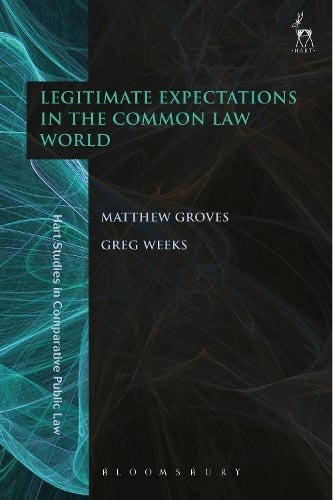
Legitimate expectations in the common law world
The sceptical and critical reception to Coughlan outside England is a striking contrast to the reception the case received within the UK. This book provides a detailed scholarly analysis of these issues and considers the doctrine of legitimate expectations both in England and elsewhere in the common law world. Volume 12 in the series Hart Studies in Comparative Public Law
Legitimacy in International Law
In recent years the question of the legitimacy of international law has been discussed quite intensively. Such questions are, for example, whether international law lacks legitimacy in general; whether international law or a part of it has yielded to the facts of power; whether adherence to international legal commitments should be subordinated to self-defined national interests; whether international law or particular rules of it – such as the prohibition of the use of armed force – have lost their ability to induce compliance (compliance pull); and what is the relevance of non-enforcement or failure to obey for the legitimacy of that particular international norm? This book contains fresh perspectives on these questions, offered at an international and interdisciplinary conference hosted by the Max Planck Institute for Comparative Law and International Law.
