



الصفحة 1
الصفحة 1

Modern socio-technical perspectives on privacy
This book provides researchers and professionals with a foundational understanding of online privacy as well as insight into the socio-technical privacy issues that are most pertinent to modern information systems, covering several modern topics (e.g., privacy in social media, IoT) and underexplored areas (e.g., privacy accessibility, privacy for vulnerable populations, cross-cultural privacy).

Impact of Information Society Research in the Global South
This book addresses two aspects— Impact of research: How is the research on ICTs in the Global South playing a role in creating an information society? (e.g. policy formulation, media coverage, implementation in practice) and Research on impact: What is the evidence for the impact of ICTs on society? (i.e. the objectives of socio-economic development). This volume brings together a multiplicity of voices and approaches from social scientific research to produce an engaging volume for a variety of stakeholders including academics, researchers, practitioners, policy-makers and those in the business and civil sectors of society.

Handbook of Visual Communication : Theory, Methods, and Media
Explores the key theoretical areas and research methods of visual communication. With chapters contributed by many of the best-known and respected scholars in visual communication, this volume brings together significant and influential work in the discipline. Thriteen major theories of communication are defined by the top experts in their fields: perception, cognition, aesthetics, visual rhetoric, semiotics, cultural studies, ethnography, narrative, media aesthetics, digital media, intertextuality, ethics, and visual literacy. Each of these theory chapters is followed by an exemplar study or two in the area, demonstrating the various methods used in visual communication research as well as the research approaches applicable for specific media types.

English for Business Communication
Key features of this book include: use of English in social media that reflects recent trends in business communication; coverage of the concept of communicative competence; analysis of email communication; introduction to informal English and English for socialisation as well as goodwill messages, such as thank you or appreciation messages, which are a part of everyday interaction in the workplace; examination of persuasive messages and ways to understand such messages.

Demystifying Academic Writing : Genres, Moves, Skills, and Strategies
Informative, insightful, and accessible, this book is designed to enhance the capacity of graduate and undergraduate students, as well as early career scholars, to write for academic purposes. Fang describes key genres of academic writing, common rhetorical moves associated with each genre, essential skills needed to write the genres, and linguistic resources and strategies that are functional and effective for performing these moves and skills.
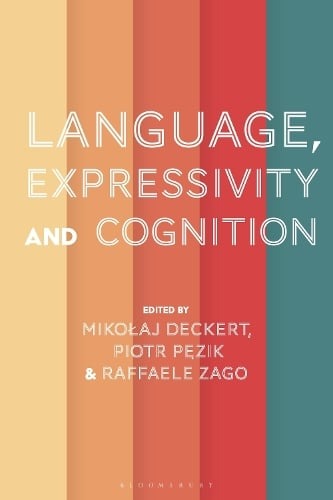
Language, Expressivity and Cognition
The book presents how language shapes communicative and cognitive processes but at the same time is also shaped by those processes. The chapters put forward a number of disciplinary and methodological perspectives encompassing insights from cognitive and social psychology, (critical) discourse analysis, cognitive linguistics, corpus linguistics and sociolinguistics. Both intralingual as well as contrastive, each chapter also engages with qualitative and quantitative methods.

Communication research into the digital society : Fundamental insights from the Amsterdam School of Communication Research
Media and communication have become ubiquitous in today’s societies andaffect all aspects of life. On an individual level, they impact how we learnabout the world, how we entertain ourselves, and how we interact withothers. On an organisational level, the interactions between media andorganisations, such as political parties, NGOs, businesses and brands, shapeorganisations’ reputation, legitimacy, trust and (financial) performance, aswell as individuals’ consumer, political, social and health behaviours. Atthe societal level, media and communication are crucial for shaping publicopinion on current issues such as climate change, sustainability, diversity,and well-being.
Communicating, Networking : Interacting : The International Year of Global Understanding - IYGU
illustrates the benefits to be gained from digitally networked communication for health, education and transitioning economies in developing nations (Sierra Leone and Papua New Guinea) and developed nations. Growing powers of e-citizenship can help build sustainable futures. This small volume provides a collection of examples and ideas from which the authors hope will help build a wider resource. Understanding how to link everyday lives with global networks in the digital world in ways that add benefit for the world’s people, and the health of the planet, is an ongoing project. IYGU recognises the integral roles of networking and communication systems, as well as interactions between people, near and far, as fundamental for building better futures. The global penetration of digital devices means everyday life, present and future, is inextricably linked with information technologies
Communicating Science in Social Contexts : New models, new practices
Science communication, as a multidisciplinary field, has developed remarkably in recent years. It is now a distinct and exceedingly dynamic science that melds theoretical approaches with practical experience. Formerly well-established theoretical models now seem out of step with the social reality of the sciences, and the previously clear-cut delineations and interacting domains between cultural fields have blurred. Communicating Science in Social Contexts examines that shift, which itself depicts a profound recomposition of knowledge fields, activities and dissemination practices, and the value accorded to science and technology.

Argumentation in multi-agent systems ; Vol. 3366 ; 1st International Workshop, ArgMAS 2004, New York, NY, USA, July 19, 2004, revised selected and invited papers
The theory of argumentation is a rich, interdisciplinary area of research lying across philosophy, communication studies, linguistics, and psychology (at least). Its techniques and results have found a wide range of applications in both t- oretical and practical branches of arti'cial intelligence and computer science. Several theories of argumentation with various semantics have been proposed in the literature. Multi-agent systems theory has picked up argument-inspired approaches and speci'cally argumentation-theoretic results from many di'erent areas. The community of researchers in argumentation and multi-agent systems is currently presented with a unique opportunity to integrate the various und- standings of argument into a coherent and core part of the functioning of - tonomouscompu...

Alternatives Considered But Not Disclosed : The Ambiguous Role of PowerPoint in Cross-Project Learning
This study investigates the role of PowerPoint in organizational communication, particularly in terms of a functional dilemma between its application for documentation as opposed to presentation purposes. The theoretical part of the analysis combines insights from both organizational communication studies (J. R. Taylor et al.) and social systems theory (N. Luhmann et al.). The empirical analysis shows that PowerPoint documents created for cross-project learning purposes contribute to an invisibilization rather than a visibilization of decision processes and their contingency.
