



الصفحة 1
الصفحة 1

Noncommunicable diseases
Focuses on cardiovascular disease, diabetes, cancer and chronic respiratory disease and their five shared main risk factors (tobacco use, harmful use of alcohol, unhealthy diet, physical inactivity and air pollution) as defined by the United Nations, this book provides a synopsis of one of the world’s biggest challenges of the 21st century. NCDs prematurely claim the lives of millions of people across the world every year, with untold suffering to hundreds of millions more, trapping many people in poverty and curtailing economic growth and sustainable development. While resources between and within countries largely differ, the key principles of surveillance, prevention and management apply to all countries, as does the need to focus resources on the most cost-effective and affordable interventions and the need for strong political will, sufficient resources, and sustained and broad partnerships. This compendium consists of 59 short and accessible chapters in six sections: (i) describing and measuring the burden and impact of NCDs / (ii) the burden, epidemiology and priority interventions for individual NCDs / (iii) social determinants and risk factors for NCDs and priority interventions / (iv) global policy / (v) cross-cutting issues / and (vi) stakeholder action.

Nanoformulations in Human Health: Challenges and Approaches
This book is an amalgamation of knowledge, experience, and expertise in various aspects of nanotechnology, by experts who are proficient in designing novel nanoformulations that are used in the treatment of various challenging and prevalent diseases. It is an exhaustive compilation of the multi-faceted arena of nanoformulations and the healthcare system that caters to the needs of academicians, scholars, researchers, etc. The most important aspect of the book covers various types of nanoformulations and their applications in the treatment of communicable and non-communicable diseases. Each chapter focuses on a particular nanoformulation as well as a disease including the pathophysiology of the disease, the current treatment modalities of diseases, the role of nanoformulation in treatment and other future aspects and directions for further work. Coverage includes neuropathic pain, colon targeting, nose-to-brain drug delivery, cancer, arthritis and tuberculosis.
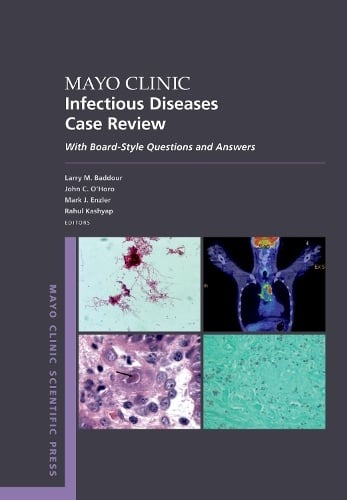
Mayo clinic infectious disease case review : With board-style questions and answers
Addresses many of the current-day illnesses seen by primary care clinicians and infectious diseases specialists. A case presentation format is used for all 54 chapters, and this framework serves as a wonderful educational tool that mirrors, in many respects, the objectives of a “case conference” format. The dozens of authors from different areas of our specialty have ensured that a robust clinical examination of specific infection syndromes has been included. In addition, the Question and Answer section solidifies the educational benefits for all levels and types of clinicians who seek an understanding of disease diagnosis, management, and prevention. A well-recognized characteristic of infectious diseases specialists is our focus on epidemiology, and this trait has served us well in developing successful clinical careers.

IAEA Atlas of Cardiac PET/CT : A Case-Study Approach
This book presents a wide portfolio of examples of positron emission tomography coupled with computer tomography (PET/CT) studies in various cardiac conditions in order to provide a rationale for the implementation of this technology in an array of clinical conditions. Cardiovascular diseases are a major contributor to premature morbidity and mortality worldwide. Low- and middle-income countries (LMICs) are particularly affected by cardiovascular diseases (CVDs), with more than 75% of all CVDs deaths occurring in these countries. For this reason, target 3.4 of the United Nations (UN) Sustainable Development Goals (SDGs) agenda aims at a 30% reduction in premature mortality due to non-communicable diseases (NCDs), which include CVDs, by 2030.

Global Health Collaboration : Challenges and Lessons
Details the innovative work of the Pan Institution Network for Global Health in creating collaborative research-based answers to large-scale health issues. Equitable partnerships among member universities representing North America, Africa, Asia, and Europe reverse standard cross-national dynamics to develop locally relevant responses to health challenges as well as their underlying disparities. Case studies focusing on multiple morbidities and effects of urbanization on health illustrate open dialogue in addressing HIV, maternal/child health, diabetes, and other major concerns. These instructive examples model collaborations between global North and South as meaningful steps toward the emerging global future of public health.

Frontiers in Anti-Infective Drug Discovery ; Vol.9
Covers a range of topics including rational drug design and drug discovery, medicinal chemistry, in-silico drug design, combinatorial chemistry, high-throughput screening, drug targets, recent important patents, and structure-activity relationships. Frontiers in Anti-Infective Drug Discovery is a valuable resource for pharmaceutical scientists and post-graduate students seeking updated and critically important information for developing clinical trials and devising research plans in this field. The ninth volume of this series features 5 reviews that cover some aspects of clinical and pre-clinical antimicrobial drug development, with 2 chapters focusing on drugs to treat leishmaniasis and dengue fever, respectively. - Use of preclinical and early clinical data for accelerating antimicrobial drug development - Post-translational modifications: host defence mechanism, pathogenic weapon, and emerged target of anti-infective drugs - Scope and limitations on the potent antimicrobial activities of hydrazone derivatives - Current scenario of anti-leishmanial drugs and treatment - Dengue hemorrhagic fever: the potential repurposing drugs

Drug interactions in infectious diseases : Mechanisms and models of drug interactions
Provides a comprehensive review of basic clinical pharmacology with a focus on metabolism and transporter-mediated drug interactions. The chapters address materials that cannot be retrieved easily in the medical literature, including materials focused on the complex interrelationship of acute infection, inflammation, and the risk of drug interactions in the Drug-Cytokine chapter. The Food-Drug and Herb-Drug interactions chapters remain definitive resources. A new chapter on in vitro modeling of drug interactions is included along with updates on design and data analysis of clinical drug interaction studies. Authoritative discussion of models for regulatory decision-making on drug-drug interactions provides the necessary framework to aid antimicrobial drug development. This concise review of the mechanisms and models of drug interactions provides important insights to health care practitioners as well as scientists in drug development

Drug discovery targeting drug-resistant bacteria
Drug Discovery Targeting Drug-Resistant Bacteria explores the status and possible future of developments in fighting drug-resistant bacteria. The book covers the majority of microbial diseases and the drugs targeting them. In addition, it discusses the potential targeting strategies and innovative approaches to address drug resistance. It brings together academic and industrial experts working on discovering and developing drugs targeting drug-resistant (DR) bacterial pathogens. New drugs active against drug-resistant pathogens are discussed, along with new strategies being used to discover molecules acting via new modes of action. In addition, alternative therapies such as peptides and phages are included.

Diagnosis of pathogenic microorganisms : Causing infectious diseases
Infectious diseases are caused by the pathogenic microbial organisms. These microbes can multiply and can cause an infection, once they enter the body. Infectious diseases are transmissible, and may cause mild to life-threatening illnesses. It can be airborne, waterborne, foodborne, and soilborne. It can be spread through direct contact (human to human, animal to human). It has also been one of the leading causes of human deaths. Therefore, there is a need to have rapid diagnostic methods to prevent and control these diseases. This book titled “Diagnosis of Pathogenic Microorganisms Causing Infectious Diseases” will help the scientific community to understand the transmission dynamics of some infectious diseases of public health importance.
Leveraging Data Science for Global Health
Explores ways to leverage information technology and machine learning to combat disease and promote health, especially in resource-constrained settings. It focuses on digital disease surveillance through the application of machine learning to non-traditional data sources.
