



الصفحة 1
الصفحة 1

Nonparametric Functional Data Analysis : Theory and Practice
Modern apparatuses allow us to collect samples of functional data, mainly curves but also images. On the other hand, nonparametric statistics produces useful tools for standard data exploration. This book links these two fields of modern statistics by explaining how functional data can be studied through parameter-free statistical ideas. This book starts from theoretical foundations including functional nonparametric modeling, description of the mathematical framework, construction of the statistical methods, and statements of their asymptotic behaviors. It proceeds to computational issues including R and S-PLUS routines. Several functional datasets in chemometrics, econometrics, and pattern recognition are used to emphasize the wide scope of nonparametric functional data analysis in applied sciences. The companion Web site includes R and S-PLUS routines, command lines for reproducing examples presented in the book, and the functional datasets. Rather than set application against theory, this book is really an interface of these two features of statistics. A special effort has been made in writing this book to accommodate several levels of reading.

Data and Text Processing for Health and Life Sciences
This book is a step-by-step introduction on how shell scripting can help solve many of the data processing tasks that Health and Life specialists face everyday with minimal software dependencies. The examples presented in the book show how simple command line tools can be used and combined to retrieve data and text from web resources, to filter and mine literature, and to explore the semantics encoded in biomedical ontologies. To store data this book relies on open standard text file formats, such as TSV, CSV, XML, and OWL, that can be open by any text editor or spreadsheet application.
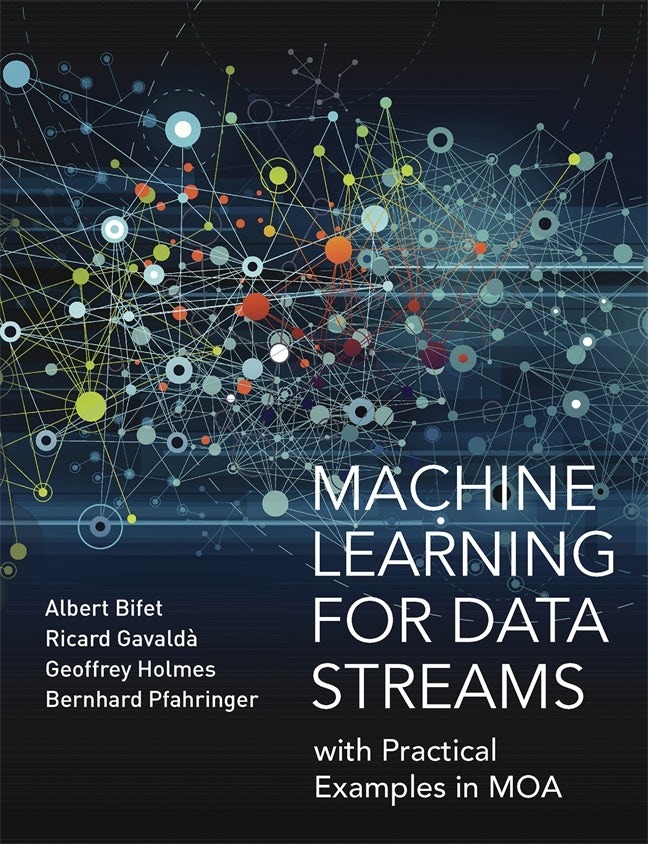
Machine learning for data streams : With practical examples in MOA
The book first offers a brief introduction to the topic, covering big data mining, basic methodologies for mining data streams, and a simple example of MOA. More detailed discussions follow, with chapters on sketching techniques, change, classification, ensemble methods, regression, clustering, and frequent pattern mining. Most of these chapters include exercises, an MOA-based lab session, or both. Finally, the book discusses the MOA software, covering the MOA graphical user interface, the command line, use of its API, and the development of new methods within MOA.
Beginning Ubuntu Server Administration : From novice to professional
You love it as the world's most popular desktop Linux distribution, and now Ubuntu is available at a server near you. Embracing the very same features desktop users have grown to love, system administrators are rapidly adopting Ubuntu due to their ability to configure, deploy, and manage network services more effectively than ever. Beginning Ubuntu Server Administration guides you through all of the key configuration and administration tasks you'll need to know. Whether you're interested in adopting Ubuntu within a Fortune 500 environment or just want to use Ubuntu to manage your home network, this book is your go–to guide to using the distribution securely for a wide variety of network services. Topics include file, print, web, and FTP management, command–line tips and tricks, automated installation, configuration and deployment processes, and kernel management.
