



الصفحة 1
الصفحة 1

Multiple Heterogeneous Unmanned Aerial Vehicles
Aerial robots can be considered as an evolution of the Unmanned Aerial Vehicles (UAVs). This book provides a quite complete overview of issues related to aerial robotics, addressing problems ranging from flight control to terrain perception and mission planning and execution. The major challenges and potentials of heterogeneous UAVs are comprehensively explored. It builds on the results of the European project COMETS, and highlights a number of key research topics in the area of UAV development, including communication, perception, teleoperation and decision making. The monograph emphasizes the current state of technology, the existing problems and potentialities of systems consisting of multiple UAVs which are heterogeneous in view of the different characteristics of the aerial vehicles, the different on-board payloads, and the different on-board information processing capabilities. The book also examines potential applications of UAVs and details a relevant application case: forest fire detection and monitoring.

ISO Science Legacy : A Compact Review of ISO Major Achievements
This book recounts results obtained via the Infrared Space Observatory (ISO) on comets, in the close environment of pre-main sequence stars, in the interstellar medium, and in the final stages of stellar life, using molecular hydrogen, ubiquitous crystalline silicates, water and ices.

Handbook of Solar-Terrestrial Environment
Recognized international leaders in their field contribute basic topics of solar physics, space plasmas and the Earth's magnetosphere. The book further covers applied topics like the aurora, magnetospheric storms, space weather, space climatology and planetary science.

Fare astronomia con piccoli telescopi = Are astronomy with small telescopes
Giant tools are not necessarily required to produce scientifically valid results in the field of astronomy. Even the amateur with a small telescope, with a diameter of only 8-9 cm, can contribute to the science of the sky by making useful observations of the Sun, the Moon, planets, comets, asteroids, double or variable stars, nebulae and star clusters. The manual of M.K. Gainer explains what the minimum equipment is (a small telescope, a computer, a simple digital camera), how to use it, and what are the appropriate techniques to be adopted in the observations. It also offers schemes for interpreting and reducing the collected data, as well as forms to be filled in and sent to international collection centers.

Comets and the Origin and Evolution of Life
Nine years after the publication of Comets and the Origin and Evolution of Life, one of the pioneering books in Astrobiology, this second edition revisits the role comets may have played in the origins and evolution of life. Recent analyses of Antarctic micrometeorites and ancient rocks in Australia and South Africa, the continuing progress in discovering complex organic macromolecules in comets, protostars and interstellar clouds, new insights into organic synthesis in comets, and numerical simulations of comet impacts on the Earth and other members of the solar system yield a spectacular wealth of new results.

Comets : Nature, Dynamics, Origin, and their Cosmogonical Relevance
The book covers the most recent ideas about the nature and dynamics of comets, including a thorough discussion on Oort cloud dynamics which has not received due attention in other books on the subject. It also discusses the most relevant aspects of the physics and chemistry of comet nuclei, highlighting their importance as relics of the protoplanetary disk and, perhaps, as carriers of water and organics that permitted the development of life on Earth. The book contains several tables with useful data, and an ample bibliography covering the most recent work as well as some historical key contributions to the subject. It may be suitable as a textbook for graduate students with some basic knowledge of celestial mechanics and astrophysics, as well as a consult book for comet researchers, or researchers from other related fields willing to start working on comets, or get an updated view of the subject.

Comet, Asteroid Impacts and Human Society : An Interdisciplinary Approach
Leading specialists in various disciplines were first invited to a multidisciplinary workshop funded by ICSU on the topic to gain a better appreciation and perspective on the subject of comet/asteroid impacts as viewed by different disciplines. This volume provides a necessary link between various disciplines and comet/asteroid impacts.
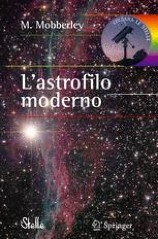
L'astrofilo moderno = The modern amateur astronomer
In less than two decades, amateur astronomy has changed its face. The reason, of course, is technological progress. Cheap but high-quality telescopes, computer-controlled "go-to" mounts, autoguiders, CCD cameras, video cameras and (as always) computers and the Internet are just some of the elements that revolutionized 21st century astronomy. Not only have they made amateur astronomy more "friendly" and fun, but they have also greatly expanded the potential of the amateur astronomer. Martin Mobberley first tackles the basic issues and then analyzes in depth what tools are available on the market. From here he starts to review the revolutionary possibilities that open up for amateur astronomers, from imaging, to spectroscopy, to photometry, to the surveillance of Near-Earth objects - comets and asteroids that can come dangerously close to the Earth.
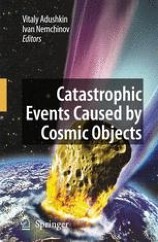
Catastrophic Events Caused by Cosmic Objects
Many times all of us could hear from mass media that an asteroid approached and swept past the Earth. Such an asteroid or comet will inevitably strike the planet some day. This volume considers hazards due to collisions with cosmic objects, particularly in light of recent investigations of impacts by the authors. Each chapter written by an expert contains an overview of an aspect and new findings in the field. The main hazardous effects – cratering, shock, aerial and seismic waves, fires, ejection of dust and soot, tsunami are described and numerically estimated. Numerical simulations of impacts and impact consequences have received much attention in the book. Fairly small impacting objects 50 -100 m in diameter pose a real threat to humanity and their influence on the atmosphere and ionosphere is emphasized.
A History of Physical Theories of Comets, From Aristotle to Whipple
The book describes the major physical theories of comets in the past two millennia. It demonstrates the evolution of ideas about the nature, position, motion and physical constitution of comets from Aristotle to Whipple. Unlike the available works on the history of comets, which either illustrate relatively short periods in the history of physical cometology or portray a landscape view without adequate details, the present study focuses on details of each theory. It also investigates the interaction between observational and mathematical astronomy, and the physical sciences in defining the properties of comets.
