



الصفحة 1
الصفحة 1

High-Latitude Bioerosion : The Kosterfjord Experiment
Bioerosion is the major force driving the degradation of marine skeletal carbonates and limestone coasts. A wide spectrum of mechanical and/or chemical boring, scraping or crushing organisms break down calcereous substrates, comprising various grazers, macroborers and especially microborers. Their traces on and within hard substrates are known from fossil carbonates as old as the Precambrian and serve as valuable palaeoenvironmental indicators. Bioerosion processes have been extensively studied in tropical seas, while corrsponding investigations from cold-temperate to polar settings remain sparse. For the first time, an experimental study yields insight into the pace of carbonate degradation and the chronology of boring community development along a bathymetric gradient in a high-latitude setting.

High resolution morphodynamics and sedimentary evolution of estuaries
This book focuses on the use of high-resolution geophysical techniques, field observations and modeling to investigate the morphodynamics of estuaries on both glaciated and non-glaciated coasts and on different time scales. Papers in this book offer a new approach to nearshore and estuary studies, with an emphasis on multidisciplinary techniques and data integration. Results of these studies have important implications for estuary resource management and shoreline stability. This book will be of interest to sedimentologists, coastal and Quaternary geologists, environmental scientists, and coastal managers.

Global Change and Integrated Coastal Management : The Asia-Pacific Region
Most of the world’s population lives close to the coast and is highly dependent on coastal resources, which are being exploited at unsustainable rates. These resources are being subject to further pressures associated with population increase and the globalization of coastal resource demand. This is particularly so for the Asia-Pacific region which contains almost two thirds of the world’s population and most of the world’s coastal megacities. The region has globally important atmospheric and oceanic phenomena, which affect world climate such as the Asian Monsoon and the El-Niño Southern Oscillation phenomena. The Asia-Pacific region also has highly significant marine diversity but over the last few decades, coastal resources such as mangroves, coral reefs and fisheries have experienced large-scale depletion.

Developing Tsunami-Resilient Communities : The National Tsunami Hazard Mitigation Program
Tsunamis remain an ever-present threat to lives and property along the coasts of most of the world’s oceans. Because of the geographical extent of U.S. coastlines, an earthquake in Alaska can generate a local tsunami for Alaskans and, hours later, a distant tsunami for communities in Hawaii and along the Pacific Coast . This volume chronicles the development and accomplishments of a joint State/Federal partnership that was forged to reduce tsunami hazards along U.S. coastlines – the National Tsunami Hazard Mitigation Program. By integrating hazard assessment, warning guidance, and mitigation activities, the program has created a roadmap and a set of tools to develop communities more resilient to local and distant tsunamis. Among the set of tools are tsunami forecasting, educational experiments, early alerting systems, and design guidance for tsunami-resilient communities. Part of this book has already been published in a recent journal issue.

Coastal architectures and politics of tourism : Leisurescapes in the global sunbelt
Offers a critical and complicated picture of how leisure tourism connected the world after the World War II, transforming coastal lands, traditional societies, and national economies in new ways. Analyzes selected case studies of architectures and landscapes around the world, contextualizing them within economic geographies of national development, the geopolitics of the Cold War, the legacies of colonialism, and the international dynamics of decolonization. Postwar leisure tourism evokes a rich array of architectural spaces and altered coastal landscapes, which is explored in this collection through discussions of tourism developments in the Mediterranean littoral, such as Greece, Turkey, and southern France, as well as compelling analyses of Soviet bloc seaside resorts along the Black Sea and Baltic coasts, and in beachscapes and tourism architectures of western and eastern hemispheres, from Southern California to Sri Lanka, South Korea, and Egypt.
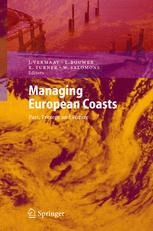
Managing European Coasts : Past, Present and Future
Many coastal areas and human activities are subject to increasing risks from natural and man-induced hazards such as flooding resulting from major changes in hydrology of river systems that has reached a global scale. Changes in the hydrological cycle coupled with changes in land and water management alter fluxes of materials transmitted from river catchments to the coastal zone, which have a major effect on coastal ecosystems. The increasing complexity of underlying processes and forcing functions that drive changes on coastal systems are witnessed at a multiplicity of temporal and spatial scales.
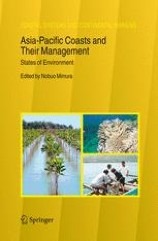
Asian-Pacific coasts and their management : States of environment
The Asia-Pacific region is home to the world’s largest region of coral reefs and mangroves. It accommodates two-thirds of the world’s human population and its economic activities have the highest growth rate in the world. Ongoing degradation of the environment, resulting from coastal development, deforestation, desertification and over-harvesting, are becoming a matter of great concern, as floods and droughts occur as a result of this degradation. Threats of global environmental change, such as climate change and sea-level rise, will exacerbate such problems. Therefore, appropriate policies and measures are needed for coastal management, to address both the local and global trends. This book gives an overview of the state-of-the-art understanding on the drivers, state, and responses to coastal environmental changes in the Asia-Pacific region. It provides excellent perspectives on current and anticipated environmental changes in the region’s coastal areas, to researchers, students, policy makers, coastal managers and other stakeholders.
