



الصفحة 1
الصفحة 1

Developing Organogel of CoEnzyme Q10
Coenzyme Q10 is a small lipophilic molecule composed of a benzoquinone ring and a hydrophobic isoprenoid tail and is present in all cell membranes. It is also an antioxidant. It plays a substantial role in energy production by acting as a mobile electron carrier in the electron transport chain. It has poor intestinal absorption and is prepared in topical forms. Organogel is a non-crystalline, non-glassy thermoreversible (thermoplastic) solid material and viscoelastic system can be regarded as a semi-solid preparation which has an immobilized external apolar phase, it is compatible with high molecular weight ingredients. The objective of present work is to prepare new dosage form with studying of different factors and conditions affecting preparation. Materials and methods: stearic acid and Flaxseed oil organogel was prepared by three methods and confirmed by quality assessment methods including: transparency, structure analysis, inverted tube test, kinetic of organogalation and stability test.

Co-enzyme Q10
Coenzyme Q10 is a vitamin like substance that has been found in both microorganisms and plants as well as in animals and humans. In this research we will talk about CoenzymeQ10, it’s biochemical functions and roles in health and diseases such as Parkinson, cardiovascular diseases, diabetes, male fertility, cancers , covid19 and immune functions. Some coQ10 determination methods in foods will be discussed. At the last can we use it as asupplement? Does it have an adverse effects and contraindications? and what are the factors that affect on it’s plasma concentrations ? .

CO-ENZYME Q10
Coenzyme Q10 (CoQ10) is a fat-soluble compound that is synthesized by the body and can be obtained from the diet. Co-Q10 plays a central role in mitochondrial oxidative phosphorylation and the production of adenosine triphosphate (ATP). It also functions as an antioxidant in cell membranes and lipoproteins. Endogenous synthesis and dietary intake provide sufficient C0- Q10 to prevent deficiency in healthy people, although coenzyme Q10 concentrations in tissues decline with age. Oral supplementation of coenzyme Q10 increases coenzyme Q10 concentrations in plasma and lipoproteins. Oral high-dose co- Q10 is usually effective to treat mitochondrial disorders that are caused by mutations in coenzyme Q10 biosynthetic genes.
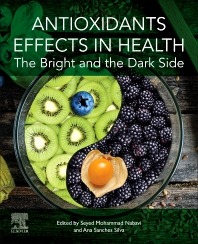
Antioxidants effects in health : The bright and the dark side ; 1st ed.
Examines the role that antioxidants play in a variety of health and disease situations. The book discusses antioxidants’ historical evolution, their oxidative stress, and contains a detailed approach of 1) endogenous antioxidants, including endogenous sources, mechanisms of action, beneficial and detrimental effects on health, in vitro evidence, animal studies and clinical studies; 2) synthetic antioxidants, including sources, chemistry, bioavailability, legal status, mechanisms of action, beneficial and detrimental effects on health, in vitro evidence, animal studies and clinical studies; and 3) natural antioxidants, including sources, chemistry, bioavailability, mechanisms of action, possible prooxidant activity; beneficial and detrimental effects on health, in vitro evidence, animal studies and clinical studies. Throughout the boo, the relationship of antioxidants with different beneficial and detrimental effects are examined, and the current controversies and future perspectives are addressed and explored. Antioxidants Effects in Health: The Bright and the Dark Side evaluates the current scientific evidence on antioxidant topics, focusing on endogenous antioxidants, naturally occurring antioxidants and synthetic antioxidants. It will be a helpful resource for pharmaceutical scientists, health professionals, those studying natural chemistry, phytochemistry, pharmacognosy, natural product synthesis, and experts in formulation of herbal and natural pharmaceuticals.
