



الصفحة 1
الصفحة 1
High Performance SQL Server " Consistent Response for Mission-Critical Applications
An excellent complement to query performance tuning books and provides the other half of what you need to know by focusing on configuring the instances on which mission-critical queries are executed. You will: Understand SQL Server's database engine and how it processes queries / Configure instances in support of high-throughput applications / Provide consistent response times to varying user numbers and query volumes / Design databases for high-throughput applications with focus on performance / Record performance baselines and monitor SQL Server instances against them / Troubleshot and fix performance problems

Guerrilla Capacity Planning : A Tactical Approach to Planning for Highly Scalable Applications and Services
Guerrilla Capacity Planning facilitates rapid forecasting of capacity requirements based on the opportunistic use of whatever performance data and tools are available in such a way that management insight is expanded but their schedules are not.

Groundwater Management in Asian Cities : Technology and Policy for Sustainability
The number of city dwellers who do not have access to piped water and rely on groundwater is also increasing. In many Asian cities, groundwater is not only the source of domestic water but also an important resource for industrial development, making better management of groundwater resources essential for sustainable development. Because groundwater is easier to access and costs less than water from piped systems, groundwater abstraction cannot be easily regulated. Policies for groundwater management adopted in Japan and other Asian countries are compared, and technologies for efficient use of groundwater are elucidated. Groundwater contamination is also a serious problem that exacerbates water scarcity in Asian cities. Case studies illustrate the cause and consequences of naturally occurring contaminants such as arsenic and fluoride, and groundwater contamination due to anthropogenic contaminants is described. Also discussed are technologies for treating contaminated groundwater to reduce the health risks of drinking contaminated groundwater.

Finding Lost Space : Theories of Urban Design
Offers a comprehensive and systematic examination of the crisis of the contemporary city and the means by which this crisis can be addressed. Finding Lost Space traces leading urban spatial design theories that have emerged over the past eighty years: the principles of Sitte and Howard; the impact of and reactions to the Functionalist movement; and designs developed by Team 10, Robert Venturi, the Krier brothers, and Fumihiko Maki, to name a few. In addition to discussions of historic precedents, contemporary approaches to urban spatial design are explored.

Essentials of Urban Design
Explains the fundamental concepts of urban design, providing the understanding and tools needed to achieve better design outcomes. It is equally useful for designing places and evaluating designs.

Essential Urban Design : A Handbook for Architects, Designers and Planners
Shaping our cities, streets and public spaces, urban design informs the places we live. It is a complex multi-disciplinary process, requiring the input of a wide variety of stakeholders and design and construction professionals. Each urban project invariably throws up a new set of problems and strategic decisions for the design team. This guide distils the essential information required for the expert direction of the day-to-day work of urban design, from strategic design to masterplanning through to character assessment and collaboration. Compact and accessible with over 250 hand-drawn figures and plans, it's the perfect everyday companion for junior practitioners and experienced heads alike across the built environment.

Emergent architectural territories in east asian cities
Presents current developments in city planning and architecture in East Asia. It describes the many neighborhoods in which the region’s large cities are modernizing or expanding with innovative structures and advanced construction projects. It combines a typology of public structures with an analysis of the compositional principles of urban environments. Thus, it finally connects new developments in city planning with new developments in architecture, and considers examples such as CCTV, Lujiazui, Kansai Airport, Xinyi, Taipei 101, Chek Lap Kok, Cheonggyecheon, Roppongi Hills, Da Shanzi, Shahe, Omotesando, and Marina Bay from a new perspective.And the new perspectives presented here are not just theoretical: some forty full-page bird’s eye views prepared especially for this volume show these future urban settings in highly detailed images of breathtaking beauty.

Drawing the Ground - Landscape Urbanism Today : The Work of Palmbout Urban Landscapes
Documents some fifteen projects organized into six thematic blocks, including such extensive projects as Amsterdam Ijburg, a design for an urban extension to Amsterdam with a total area of 450 hectares, 18,000 residences, 100,000 square meters of office space, 30,000 square meters of stores, and other facilities, and Maastricht Belvedere, a restructuring of 280 hectares of a former industrial site with 4,000 residences, 100,000 square meters of office space, parking lots, and a vehicle bridge.

Designing sustainable and resilient cities : Small interventions for stronger urban food-water-energy management
Explores the link between the food-water-energy nexus and sustainability, and the extraordinary value that small tweaks to this nexus can achieve for more resilient cities and communities. Using data from Urban Living Labs in six participating cities (Eindhoven, Gdansk, Miami, Southend-on-Sea, Taipei and Uppsala) to co-define context-specific challenges, the results from each city are collated into an Integrated Decision Support System to guide and improve robust decision making on future urban development. The book presents contributions from CRUNCH, a transdisciplinary team of scholars and practitioners whose expertise spans urban climate modelling; food, water and energy management; the design of resilient public space; collecting better urban data; and the development of smart city technology. Whilst previous works on the food-water-energy nexus have focused on large, transnational cases, this book explores local ways to use the food-water-energy nexus to improve urban resilience.
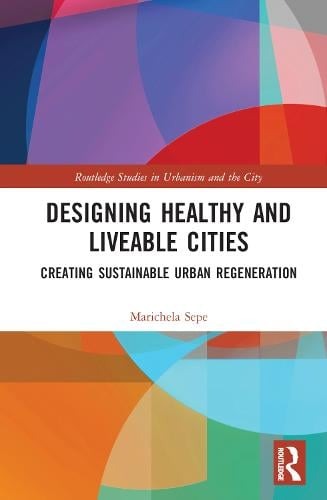
Designing healthy and liveable cities : Creating sustainable urban regeneration
Aim of this book is, after the definition of the field of investigation concerning sustainable regeneration trough topics such as resilience, adaptation, health and mixed connections, to illustrate the present-day approaches to the analysis and design of healthy places, and in particular the original Healthy Pl@ce Design method, flexible and repeatable in different contexts. The method aims at: identifying sustainable urban liveability and healthy and the factors which make places liveable and healthy from the user's point of view and identifying design interventions to enhance or create both urban liveability and health. Emblematic case studies carried out in Europe, USA and China - Bordeaux, Copenhagen, Hamburg, Madrid, Newcastle, Nice, Dublin, Vancouver and Wuhan - constitute the empirical part of the Book detailed with surveys, questionnaires, images and maps.
Design of Embedded Control Systems : Models for Capacity Planning in Advanced Manufacturing Systems
A set of original results in the ?eld of high-level design of logical control devices and systems is presented in this book

Design of advanced manufacturing systems : Models for capacity planning in advanced manufacturing systems
The aim of this book is to provide a framework and speci?c methods and tools for the selection and con?guration of capacity of Advanced Manufacturing Systems (AMS). In particular this book de?nes an - chitecture where the multidisciplinary aspects of the designofAMSare properly organized and addressed. The tool will support the decisi- maker in the de?nition of the con?guration of the system which is best suited for the particular competitive context where the ?rm operates or wants tooperate. Thisbookisofinterest for academic researchers in the ?eldofind- trial engineering and particularly indicated in the areas of operations and manufacturing strategy.

Cost Accounting for Shared IT Infrastructures
Distributed client/server architectures are the technological backbone of today’s data centres. A usage-based allocation of infrastructure costs to business processes or users is often not possible as the necessary resource consumption measurements incur too much overhead. Reinhard Brandl proposes a method to derive estimates for the expected resource consumption of customer-oriented services during standard load tests. This facilitates the determination of usage-based cost allocation keys significantly. He implements the concept in a software tool kit and evaluates it successfully in a set of experiments with multi-tier database applications. In particular, he uses the determined consumption estimates as input parameters for Queuing Network Models which lead to highly accurate performance predictions. Finally, he analyzes how the method can be integrated into existing IT processes at the BMW Group.

Coastal architectures and politics of tourism : Leisurescapes in the global sunbelt
Offers a critical and complicated picture of how leisure tourism connected the world after the World War II, transforming coastal lands, traditional societies, and national economies in new ways. Analyzes selected case studies of architectures and landscapes around the world, contextualizing them within economic geographies of national development, the geopolitics of the Cold War, the legacies of colonialism, and the international dynamics of decolonization. Postwar leisure tourism evokes a rich array of architectural spaces and altered coastal landscapes, which is explored in this collection through discussions of tourism developments in the Mediterranean littoral, such as Greece, Turkey, and southern France, as well as compelling analyses of Soviet bloc seaside resorts along the Black Sea and Baltic coasts, and in beachscapes and tourism architectures of western and eastern hemispheres, from Southern California to Sri Lanka, South Korea, and Egypt.

Landscape Performance Modeling Using Rhino and Grasshopper
A guidebook for landscape architects to learn the fundamental practices and use of the computational software Rhino 3D and the plugin Grasshopper for parametric modeling, landscape inventory, and performative analysis. This process visually connects intangible and abstract information with physical and spatial relationships to signify the impact ecological, climate, and cultural factors have on landscape performance and decision making.
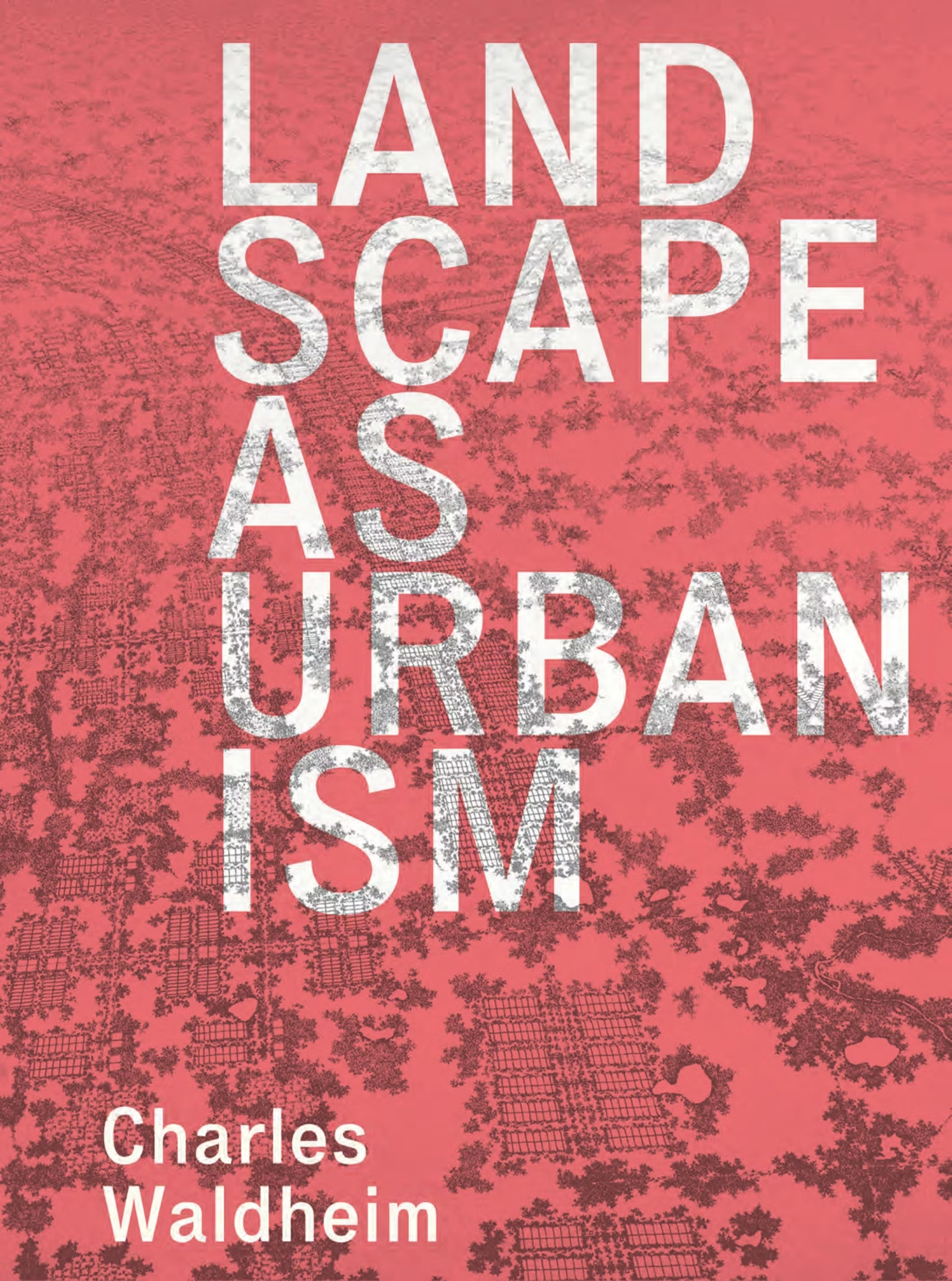
Landscape as Urbanism : A General Theory
Traces the roots of landscape as a form of urbanism from its origins in the Renaissance through the twentieth century. Growing out of progressive architectural culture and populist environmentalism, the concept was further informed by the nineteenth-century invention of landscape architecture as a "new art" charged with reconciling the design of the industrial city with its ecological and social conditions. In the late twentieth and early twenty-first centuries, as urban planning shifted from design to social science, and as urban design committed to neotraditional models of town planning, landscape urbanism emerged to fill a void at the heart of the contemporary urban project.
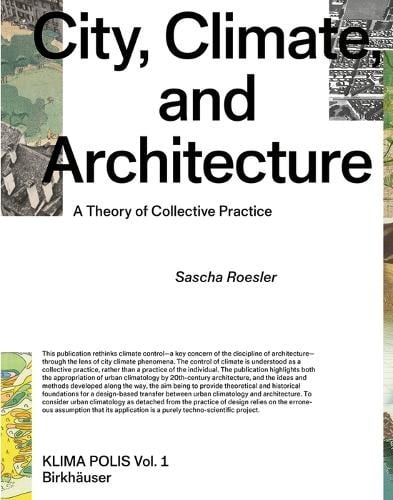
City, climate, and architecture : A theory of collective practice
Based on a history of climate control on urban scales, it promotes the integration of indoors and outdoors in order to reduce environmental and thermal loads in cities. Just as heating and cooling practices inside the buildings are affecting the (urban) climate outdoors, urban heat islands are influencing the energy requirements and thermal conditions inside the buildings. While the first part of the book focuses on the interwar period in Europe, the publication’s second part considers examples from all over the globe, tracing the growing significance of ecological thinking for the design of urban environments.
City Logistics 3 : Towards sustainable and liveable cities
Presents recent advances in modelling, planning and evaluating city logistics for sustainable and liveable cities based on the application of ICT (Information and Communication Technology) and ITS (Intelligent Transport Systems). It highlights modelling the behaviour of stakeholders who are involved in city logistics as well as planning and managing policy measures of city logistics including cooperative freight transport systems in public-private partnerships. Case studies of implementing and evaluating city logistics measures in terms of economic, social and environmental benefits from major cities around the world are also given.
City Logistics 2 : Modeling and Planning Initiatives
Presents recent advances in modelling, planning and evaluating city logistics for sustainable and liveable cities based on the application of ICT (Information and Communication Technology) and ITS (Intelligent Transport Systems). It highlights modelling the behaviour of stakeholders who are involved in city logistics as well as planning and managing policy measures of city logistics including cooperative freight transport systems in public-private partnerships. Case studies of implementing and evaluating city logistics measures in terms of economic, social and environmental benefits from major cities around the world are also given.
City Logistics 1 : New opportunities and challenges
Presents recent advances in modelling, planning and evaluating city logistics for sustainable and liveable cities based on the application of ICT (Information and Communication Technology) and ITS (Intelligent Transport Systems). It highlights modelling the behaviour of stakeholders who are involved in city logistics as well as planning and managing policy measures of city logistics including cooperative freight transport systems in public-private partnerships. Case studies of implementing and evaluating city logistics measures in terms of economic, social and environmental benefits from major cities around the world are also given.
