



الصفحة 1
الصفحة 1

Northern Lights on Civic and Citizenship Education : A Cross-national Comparison of Nordic Data from ICCS
This book presents an in depth analysis of data from ICCS. An international group of scholars critically address the state of civic and citizenship education in the four Nordic countries that participated in the IEA International Civic and Citizenship Education Study (ICCS) in 2009 and 2016. The findings are of particular relevance to educators at all levels, from school education through to teacher education.

Influences of the IEA Civic and Citizenship Education Studies : Practice, Policy, and Research Across Countries and Regions
This book identifies the multiple ways that IEA’s studies of civic and citizenship education have contributed to national and international educational discourse, research, policymaking, and practice. The IEA International Civic and Citizenship Education Study (ICCS), first conducted in 2009, was followed by a second cycle in 2016. The project was linked to the earlier IEA Civic Education Study (CIVED 1999, 2000). IEA’s ICCS remains the only large-scale international study dedicated to formal and informal civic and citizenship education in school. It continues to make substantial contributions to understanding the nature of the acquired civic knowledge, attitudes, and participatory skills. It also discusses in-depth how a wide range of countries prepare their young people for citizenship in changing political, social, and economic circumstances. The next cycle of ICCS is planned for 2022.
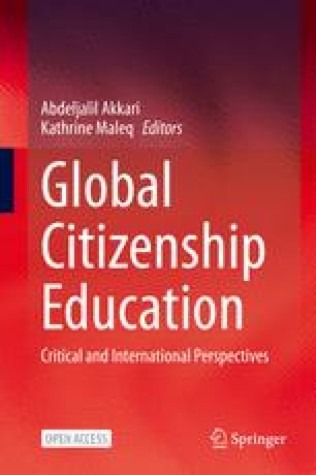
Global Citizenship Education : Critical and International Perspectives
This book takes a critical and international perspective to the mainstreaming of the Global Citizenship Concept and analyses the key issues regarding global citizenship education across the world. In that respect, it addresses a pressing need to provide further conceptual input and to open global citizenship agendas to diversity and indigeneity.
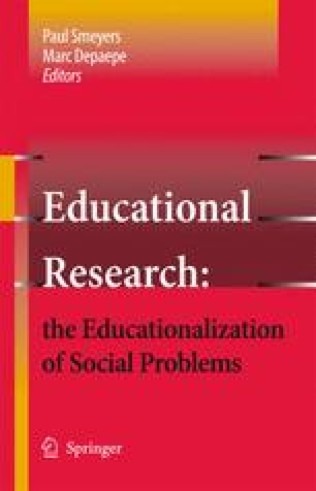
Educational research : The educationalization of social problems
In this book distinguished philosophers and historians of education focus on ‘educationalization’ to expand its meaning through an engagement with educational theory. Topics discussed are the family and the child, the ‘learning society’, citizenship education, widening participation in higher education, progressive education, and schooling movements such as No Child Left Behind. ‘Smeyers’ and Depaepe's book offers great insights into one of the most ambivalent phenomena of today's educational world and especially educational policy. The contributions assembled represent perspectives of some of the most respected scholars in the field.

Education for sustaining peace through historical memory
This is a necessary exercise in deconstruction and reconstruction that challenges conventional and critical approaches to peace education. Schultze-Kraft’s new book is an impressive piece of synthesis, a personal manifesto married to a rigorous interrogation of the theoretical literature. It pushes boundaries enhancing the sustaining peace agenda. As such it deserves the critical attention of policy makers at the highest level, as well as scholar-practitioners.
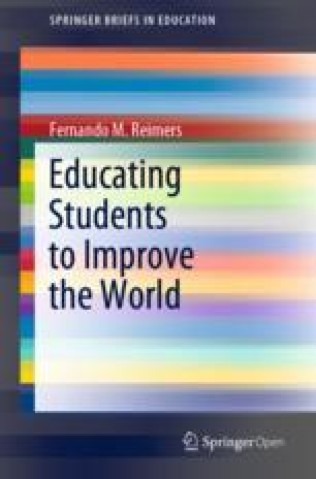
Educating Students to Improve the World
This book addresses how to help students find purpose in a rapidly changing world. In a probing and visionary analysis of the field of global education Fernando Reimers explains how to lead the transformation of schools and school systems in order to more effectively prepare students to address today’s’ most urgent challenges and to invent a better future.
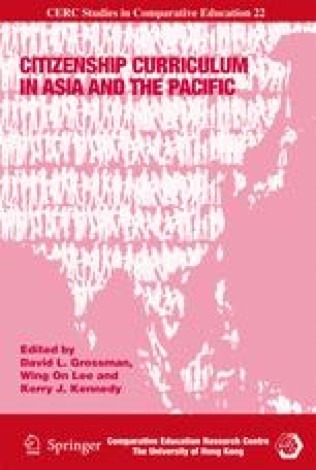
Citizenship Curriculum in Asia and the Pacific
Based on case studies of 11 societies in the world’s most dynamic region, this book signals a new direction of study at the intersection of citizenship education and the curriculum. This impressive collection of case studies of a diverse group of societies informs and enriches understanding of the complex relationship between citizenship education and the curriculum both regionally and globally.

Becoming citizens in a changing world : IEA international civic and citizenship education study 2016 International Report
Presents the results from the second cycle of the IEA International Civic and Citizenship Education Study (ICCS 2016). Using data from 24 countries in Asia, Europe and Latin America, the study investigates the ways in which young people are prepared to undertake their roles as citizens in a range of countries in the second decade of the 21st century. It also responds to the enduring and emerging challenges of educating young people in a world where contexts of democracy and civic participation continue to change. New developments of this kind include the increase in the use of social media by young people as a tool for civic engagement, growing concerns about global threats and sustainable development, as well as the role of schools in fostering peaceful ways of interaction between young people. Besides enabling the evaluation of a wide range of aspects of civic and citizenship education, including those related to recent developments in a number of countries, the inclusion of test and questionnaire material from the first cycle of the study in 2009 allows the results from ICCS 2016 to be used to examine changes in civic knowledge, attitudes and engagement over seven years.
