



الصفحة 1
الصفحة 1

Medicinal Chemistry and Pharmacological Potential of Fullerenes and Carbon Nanotubes
Medicinal Chemistry and Pharmacological Potential of Fullerenes and Carbon Nanotubes features important insights into the applications of fullerenes and carbon nanotubes. It discusses the fullerene and nanotubes derivatives which are effective against viruses, cells, and bacteria and those which are able to interact and inhibit certain enzymes. Also covered in this book are the formation of complex structures between biologically active molecules and carbon materials. Furthermore, the application of fullerenes in certain medical therapies is explored, including the very recent discovery of new bio-compatible media which could be used as carriers in the delivery of fullerenes in vivo. An additional topic of this text is the formation of hybrids between nanotubes and biological molecules and their use as chemical sensors.

Handbook of modern sensors. physics, designs, and applications
Presents a comprehensive and up-to-date account of the theory (physical principles), design, and practical implementations of various sensors for scientific, industrial, and consumer applications. This latest edition focuses on the sensing technologies driven by the expanding use of sensors in mobile devices. These new miniature sensors will be described, with an emphasis on smart sensors which have embedded processing systems. The chapter on chemical sensors has also been expanded to present the latest developments.
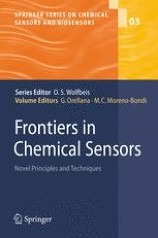
Frontiers in Chemical Sensors : Novel Principles and Techniques
With their similarity to the organs of the most advanced creatures that inhabit the Earth, sensors are regarded as being the “senses of electronics”: arti?cial eyes and ears that are capable of seeing and hearing beyond the range of - man perception; electronic noses and tongues that can recognise odours and ?avours without a lifetime training; touch that is able not only to feel the texture and temperature of the materials but even to discern their chemical compo- tion. Among the world of chemical sensors, optical devices (sometimes termed “optodes”, from the Greek “the optical way”) have reached a prominent place in those areas where the features of light and of the light-matter interaction show their advantage: contactless or long-distance interrogation, detection sensitivity, analyte selectivity, absence of electrical interference or risks, and lack of analyte consumption,
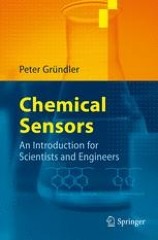
Chemical Sensors : An Introduction for Scientists and Engineers
Research in the area of chemical and biochemical sensors and the development of respective applications is still growing rapidly. In the last decade it has become evident that the successful development of chemical and biochemical sensors resistant to the harsh conditions in the various routine applications calls for a cooperation between chemists and engineers.Thus, this book aims at instructing researcher and practitioners in both disciplines in a strictly systematic, interdisciplinary and practice-oriented way about the basic technology of chemical and biochemical sensors. This concise volume bridges the gap between the different "ways of thinking" in chemistry, physics and engineering
