



الصفحة 1
الصفحة 1
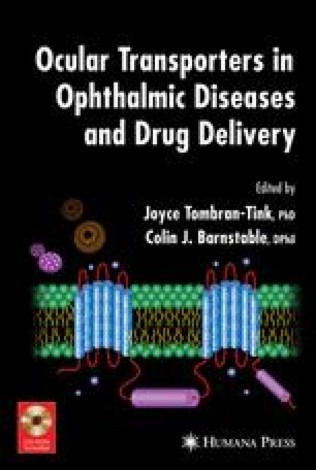
Ocular Transporters in Ophthalmic Diseases and Drug Delivery
This exceptionally important new work represents recent discoveries and advancements in the study of ocular transporters and their roles in ocular physiology, pathology, and drug delivery. Transporters are found on the membranes of cells and play a key role in transmitting signals between cells. In Ocular Transporters in Ophthalmic Diseases and Drug Delivery, a panel of distinguished authors discusses all the latest developments in the study of ocular transporters. Focusing on the molecular characteristics, localization, and substrate specificities in various compartments of the eye, this volume discusses how transporters regulate the clarity of the cornea and lens, the movements of fluids across the ciliary epithelium, and the transport of nutrients across the retinal pigment epithelium. It also provides an in-depth look at how mutations or dysfunction of specific transporters can contribute to various disorders in the eye, including blindness, and provides readers with potential targets and strategies to allow safe passage of therapeutic drugs into the eye.

Nuclear and Radiological Emergencies in Animal Production Systems, Preparedness, Response and Recovery
This volume explains how major nuclear and radiological emergencies (NREs) can have implications at local, national and international level. The response to NREs requires a competent decision-making structure, clear communication and effective information exchange. National veterinary services have the responsibility to plan, design and manage animal production system in their countries. These activities cover animal health, animal movement control, production control and improvement, and control of the products of animal origin before their placement on the market.

Novel Drug Delivery Systems for Chinese Medicines
Describes the essential and cutting-edge concepts based on the frontier of pharmaceutical research in TCM, underlying scientific principles, and current advancements of drug delivery systems for Chinese medicines, including sustained-release drug delivery systems, trans-nasal drug delivery systems, dermal and transdermal drug delivery systems, etc. Novel carriers and emerging technologies (such as 3D printing) are also covered. The book provides readers with an overall picture of drug delivery systems for Chinese medicines and also yields benefits for the pharmaceutical industry with regard to TCM-based drug development.

Novel Biotechnologies for Biocontrol Agent Enhancement and Management
This multidisciplinary group, having backgrounds in the diff- ent aspects of biotechnologies (transgenic enhancement, molecular biology, formulation, genetics, risk assessment, new technology, biochemistry, and physiology), presented highly advanced lectures during the 10-day-ASI, in order to allow students to improve their capability to enhance and manage - ological control agents. This approach will allow ASI attendees to bring new ideas, new approaches, or new methodologies coming from different ?elds of application to their own ?eld of expertise.

Non-metallic biomaterials for tooth repair and replacement
Focuses on the use of biomaterials for a range of applications in tooth repair and, in particular, dental restoration. Part one reviews the structure, modification and repair of dental tissues. The properties of enamel and dentin and their role in adhesive dental restoration are discussed, along with biomineralization and biomimicry of tooth enamel, and enamel matrix proteins (EMPs) for periodontal regeneration. Part two goes on to discuss the processing, bonding and wear properties of dental ceramics, glasses and sol-gel derived bioactive glass ceramics for tooth repair and replacement. Dental composites for tooth repair and replacement are then the focus of part three, including composite adhesive and antibacterial restorative materials for dental applications. T
Next generation probiotics from novel drugs to future therapeutics
Provides a comprehensive and cutting-edge exploration of probiotics as powerful therapeutic agents. With the rapid advancements in the field, this book offers a deep dive into how probiotics are evolving beyond traditional uses, addressing complex health conditions and diseases in modern medicine. By combining the latest scientific research with practical applications, this book equips researchers, clinicians, and healthcare professionals with the knowledge needed to incorporate probiotics into clinical practice and future therapeutic strategies.

News bot
The process of gathering and organizing news content has become a challenging task for emerging news sites, necessitating the employment of highly experienced personnel with specialized skills in the field. However, recent advancements in artificial intelligence technology have led to the development of news bots that can efficiently fetch, classify, and rephrase news content from various sources, enabling users to access the latest and well-formulated news without the need for RSS (Really Simple Syndication).

New insights in machine learning and deep neural networks
Gatheres ten exemplary papers, each delineating advancements within the spheres of machine learning and deep neural networks. Commencing with a thorough exploration by Figueira and Vaz, readers are introduced to the nuances of synthetic data generation and evaluation, followed closely by Silva and Pedroso's systematic approach to leveraging deep reinforcement learning within the intricate realm of delivery logistics. Kamran et al. contribute an astute methodology for camouflage object segmentation, whereas Pinheiro and collaborators offer a crafted semi-supervised strategy for predicting EGFR mutations via CT images. Subsequent contributions, such as Lee and Yoo's framework for portrait emotion recognition and Balakrishnan et al.'s analytical exploration of transformer models for Twitter disaster detection, further exemplify the depth of research contained herein.

New Directions and Applications in Control Theory
This volume contains a collection of papers in control theory and applications presented at a conference in honor of Clyde Martin on the occasion of his 60th birthday, held in Lubbock, Texas, November 14-15, 2003.

New advances in audio signal processing
In the era of digitalization, audio signal processing is gaining peculiar relevance as an automation and remote analysis means, also considering its enhancement by novel artificial intelligence (AI) techniques. This Reprint aims to offer an overview of the current developments in all fields that revolve around audio processing: from advancements in the acoustic domain to deep learning architectures for the audio-based analysis of real-world problems such as pitch detection or pathology identification.

Neurotransmitter Interactions and Cognitive Function
Cognitive function involves the participation of many different neurotransmitter systems in a variety of brain areas. The centerpiece of investigation regarding cognitive function has classically been the cholinergic system, but it has become increasingly clear that other transmitter systems interact with cholinergic systems to provide the neural basis for cognitive function. This book brings together cutting edge research to determine how the transmitter interactions form the mechanistic bases for attention, learning and memory. This research on transmitter interactions not only provides a more accurate, though complex, picture of how the brain works to provide cognitive function, it also provides important new levels of understanding about the mechanisms of cognitive dysfunction and novel avenues for therapeutic treatment. The researchers who contributed to this volume both reviewed the latest findings but also point to the directions of advancement of the field of neurotransmitter interactions and cognitive function.

Neural networks and deep learning
Covers both classical and modern models in deep learning. The primary focus is on the theory and algorithms of deep learning. The theory and algorithms of neural networks are particularly important for understanding important concepts, so that one can understand the important design concepts of neural architectures in different applications. Why do neural networks work? When do they work better than off-the-shelf machine-learning models? When is depth useful? Why is training neural networks so hard? What are the pitfalls? The book is also rich in discussing different applications in order to give the practitioner a flavor of how neural architectures are designed for different types of problems.
Neural Information Processing ; 14th International Conference, ICONIP 2007, Kitakyushu, Japan, November 13-16, 2007, Revised Selected Papers, Part II
The 228 revised full papers presented were carefully reviewed and selected from numerous ordinary paper submissions and 15 special organized sessions. The 116 papers of the first volume are organized in topical sections on computational neuroscience, learning and memory, neural network models ,supervised /unsupervised/reinforcement learning, statistical learning algorithms, optimization algorithms, novel algorithms, as well as motor control and vision. The second volume contains 112 contributions related to statistical and pattern recognition algorithms, neuromorphic hardware and implementations, robotics, data mining and knowledge discovery, real world applications, cognitive and hybrid intelligent systems, bioinformatics, neuroinformatics, brain-conputer interfaces, and novel approaches.
Neural Information Processing ; 14th International Conference, ICONIP 2007, Kitakyushu, Japan, November 13-16, 2007, Revised Selected Papers, Part I
The 228 revised full papers presented were carefully reviewed and selected from numerous ordinary paper submissions and 15 special organized sessions. The 116 papers of the first volume are organized in topical sections on computational neuroscience, learning and memory, neural network models, supervised/unsupervised/reinforcement learning, statistical learning algorithms, optimization algorithms, novel algorithms, as well as motor control and vision. The second volume contains 112 contributions related to statistical and pattern recognition algorithms, neuromorphic hardware and implementations, robotics, data mining and knowledge discovery, real world applications, cognitive and hybrid intelligent systems, bioinformatics, neuroinformatics, brain-conputer interfaces, and novel approaches.
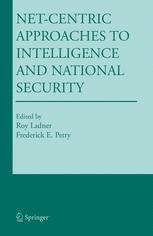
Net-Centric Approaches to Intelligence and National Security
Net-Centric Approaches to Intelligence and National Security considers the web architectures and recent developments that make net-centric approaches for intelligence and national security possible. The development of net-centric approaches for intelligence, national & homeland security applications has become a major concern in many areas such as defense intelligence and national and international law enforcement agencies, especially since the terrorist attacks of 9/11. Net-Centric Approaches to Intelligence and National Security presents developments in information integration and recent advances in web services including the concept of the semantic web. Discovery analysis and management of web-available data pose a number of interesting challenges for research in web-based management systems. Intelligent agents and data mining are among the techniques employed. A number of specific systems that are net-centric based in various areas of military applications, intelligence and law enforcements are presented utlilizing one or more of such techniques Net-Centric Approaches to Intelligence and National Security is designed for a professional audience of researchers and practitioners in industry. This volume is also suitable for graduate-level students in computer science.

Neglected tropical diseases and phytochemicals in drug discovery
Neglected Tropical Diseases and Phytochemicals in Drug Discovery delivers a comprehensive exploration of the drug discovery process as it pertains to neglected tropical diseases. The book covers recent advancements in drug discovery, as well as druggable targets and new challenges facing the industry. It offers readers expansive discussions of specific diseases, including protozoan, helminth, bacterial, viral, fungal, and ectoparasitic infections.

Nanotechnology in Intelligent Food Packaging
This book is a state-of-the-art exposition of nanotechnology and food packaging which is undergoing rapid advancement. This book is specially designed with an emphasis on the state-of-the-art in nanotechnology and food packaging. It offers fascinating techniques for producing smart and active food packaging and also discusses its toxicity and the role that nanosensors play in detecting different pathogens in food packaging. The concluding chapters also explain recent developments concerning the incorporation of health supplements in food packaging and their future role in producing intelligent food packaging.

Nanotechnology for Smart Concrete
Nanomaterials can markedly improve the mechanical properties of concrete, as well as reduce the porosity and enhance the durability of concrete. The application of nanotechnology in concrete is still in its infancy. However, an ever-growing demand for ultra-high-performance concrete and recurring environmental pollution caused by ordinary Portland cement has encouraged engineers to exploit nanotechnology in the construction industry. Nanotechnology for Smart Concrete discusses the advantages and applications of nanomaterials in the concrete industry, including high-strength performance, microstructural improvement, self-healing, energy storage, and coatings. The book: Analyses the linkage of concrete materials with nanomaterials and nanostructures / Discusses the applications of nanomaterials in the concrete industry, including energy storage in green buildings, anti-corrosive coatings, and inhibiting pathogens and viruses / Covers self-healing concrete / Explores safety considerations, sustainability, and environmental impact of nanoconcrete / Includes an appendix of solved questions

Nanophytomedicine : An emerging platform for drug delivery
Covers recent advances in experimental and theoretical studies on various properties of nanoparticles derived from plant sources. This book assesses the recent advancements and applications of plant-based nanoparticles and also highlights emerging concepts of biomimetics. Contains 24 chapters encompassing various therapeutic applications of phytochemicals derived from plants, ferns, seaweeds, and so on, mediated through nanotechnology and its allied approaches. A fervent attempt has been made to compile every significant advancement in the field of phytonanomedicine so as to accelerate its momentum in the pharmaceutical sector.

Multiscale Optimization Methods and Applications
One general strategy for dealing with a large or difficult problem is to partition it into smaller ones, which are hopefully much easier to solve, and then work backwards towards the solution of original problem, using a solution from a previous level as a starting guess at the next level.The topics of the chapters selected for this volume are focused on the development of new solution methodologies, including general multilevel solution techniques, for tackling difficult, large-scale optimization problems that arise in science and industry. Applications presented in the book include but are not limited to the circuit placement problem in VLSI design, a wireless sensor location problem, optimal dosages in the treatment of cancer by radiation therapy, and facility location.
