



الصفحة 1
الصفحة 1

MSCs and Innovative Biomaterials in Dentistry
Presents the modern concepts of mesenchymal stem cells (MSCs) and biomaterials as they pertain to the dental field. The book is organized around three main topics: MSCs biology, advanced biomaterials, and clinical applications. The chapters present basic information on stem cell biology and physiology, modern biomaterials that improve bone tissue regeneration, the biomatrices like platelet-rich fibrin (PRF) used to functionalize the biomaterials surface, the strategic and safe intraoral seats of harvesting, the new sources for MSCs, as well as the future perspectives and new challenges in these exciting fields.

Molecular Mechanisms of Synaptogenesis
Molecular Mechanisms of Synaptogenesis is a compilation of recent exciting findings that summarizes the ever-expanding knowledge of how neuronal contacts develop in the normal brain and how their functions are affected in mental disorders. In the last decade, advances in molecular and cellular biology, combined with the development of sophisticated fluorescence microscopy tools to visualize synapses in live neurons, have revealed many intriguing and unexpected findings regarding the dynamics of synapse formation. Studies by a number of researchers have identified several critical protein components of synapses and shown the time course of their arrival at the synapse. Several molecules serve to hold the synaptic contacts between nerve cells and regulate their function.

Modulation of host gene expression and innate immunity by viruses
This book is reference on a relatively young area of research in which virology, cellular biology and molecular pathogenesis govern the principles of coinvestigation. Infection of a naïve (non-immune) host with a virus elicits an immediate response which results in a cascade of changes in the host, including an interferon response (innate immunity). The outcome of this interaction is influenced by the genes of the virus as well as the genes of the host. Interestingly, different viruses do it in different ways. Not only is there a plethora of mechanisms used by the invading organisms, but the host has also evolved a great variety of redundant and robust countermeasures. This interplay of host and virus represents one of the most significant frontiers in biology today. A clearer understanding of the mechanisms involved will arm us with better strategies to deal with viruses, including emerging pathogens and potential bioterrorism agents. This book is sure to benefit students, scientists, and physicians working in the areas of virology, immunology, microbiology, and infectious diseases.

Experimental Glycoscience : Glycobiology
The aim of this book is to provide experimental protocols covering many aspects of glycobiology, glycotechnology, and chemistry: biochemistry, molecular and cellular biology, genetics, physiology, and medicine. The protocols are all self-contained descriptions of the equipment and reagents needed, followed by details of the experimental procedure.

Experimental Glycoscience : Glycobiology
The aim of this book is to provide experimental protocols covering many aspects of glycobiology, glycotechnology, and chemistry: biochemistry, molecular and cellular biology, genetics, physiology, and medicine. The protocols are all self-contained descriptions of the equipment and reagents needed, followed by details of the experimental procedure.
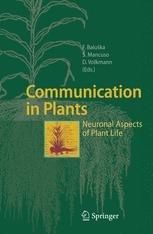
Communication in Plants : Neuronal Aspects of Plant Life
Plant neurobiology is a newly emerging field of plant sciences. It covers signalling and communication at all levels of biological organization – from molecules up to ecological communities. In this book, plants are presented as intelligent and social organisms with complex forms of communication and information processing. Authors from diverse backgrounds such as molecular and cellular biology, electrophysiology, as well as ecology treat the most important aspects of plant communication, including the plant immune system, abilities of plants to recognize self, signal transduction, receptors, plant neurotransmitters and plant neurophysiology. Further, plants are able to recognize the identity of herbivores and organize the defence responses accordingly. The similarities in animal and plant neuronal/immune systems are discussed too. All these hidden aspects of plant life and behaviour will stimulate further intense investigations in order to understand the communicative plants in their whole complexity.

Alzheimers Disease : Advances in genetics, molecular and cellular biology
Alzheimer’s Disease: Advances in Genetics, Cellular and Molecular Biology provides exciting, comprehensive and up-to-date summaries of the most important recent advances in the genetic, molecular, biochemical, and cell biological studies of AD. The studies and advances described in this volume will help to accelerate the process of rational drug discovery and soon serve to extend and enhance the mental health and lifespan of our burgeoning elderly population.
