



الصفحة 1
الصفحة 1
Oligomers- Polymer Composites -Molecular Imprinting
The series Advances in Polymer Science presents critical reviews of the present and future trends in polymer and biopolymer science including chemistry, physical chemistry, physics and material science.It is adressed to all scientists at universities and in industry who wish to keep abreast of advances in the topics covered.As a rule, contributions are specially commissioned. The editors and publishers will, however, always be pleased to receive suggestions and supplementary information.

N-Heterocyclic Carbenes in Transition Metal Catalysis
It was only in the early 1990s that carbenes with the carbene carbon being incorporated in a nitrogen containing heterocycle (N-heterocyclic carbenes or NHCs) were found to be stable enough to be isolated. Since the first report on the application of NHCs as ligands in transition metal catalysis in 1995, NHC have found numerous applications and have been established as a versatile and indispensable class of ligands. For many reactions like metathesis or cross-coupling reactions NHCs have often become the ligands of choice, allowing otherwise difficult transformations. In this book leading experts have surveyed major areas of application of NHC metal complexes in catalysis. The authors have placed a special focus on nickel- and palladium-catalyzed reactions, on applications in metathesis reactions, on oxidation reactions and on the use of chiral NHC-based catalysts. This compilation is rounded out by an introductory chapter and a chapter dealing with synthetic routes to NHC metal complexes.

New Aspects of Zirconium Containing Organic Compounds
Metal carbene complexes have made their way from organometallic curiosities to valuable reagents and catalysts. They offer novel synthetic opportunities in carbon-carbon bond formation based on either carbene-centered reactions or on metal-templated processes which makes them indispensable in modern synthetic methodology. The most prominent metal carbenes are now either commercially available or easy to synthesize and handle with modern laboratory techniques. This volume organized in eight chapters written by the leading scientists in the field illustrates the theoretical background, non-classical nucleophilic and cycloaddition patterns, chromium-templated benzannulation and photo-induced reactions, rhodium-catalyzed carbene transfer as well as the principles and applications of olefin metathesis which has coined the progress in synthetic methodology over the past decade. Designed for researchers in academia and industry as well as graduate students it presents the state-of-the-art potential of carbene complexes in modern organic synthesis.

Neodymium Based Ziegler Catalysts - Fundamental Chemistry
In this volume we try to review the available literature by two independentapproaches to Nd and Ln-catalyzed diene polymerizations. In the first part ofthe volume, which is entitled “Neodymium-Based Ziegler/Natta Catalysts andtheir Application in Diene Polymerization”, a polymer chemist’s view is givenwith strong emphasis on Nd-based catalyst systems. Also technological andindustrial aspects of Nd-catalyzed diene polymerizations are addressed. In thesecond part of the volume, which is entitled “Rare-Earth Metals and AluminumGetting Close in Ziegler-type Organometallics”, a more organometallic per-spective is given and Ln-based catalyst systems are addressed. By the synopsisof these different perspectives, the reader will comprehend the complexity ofLn-based Ziegler catalyst systems and their application to the polymerizationof dienes.
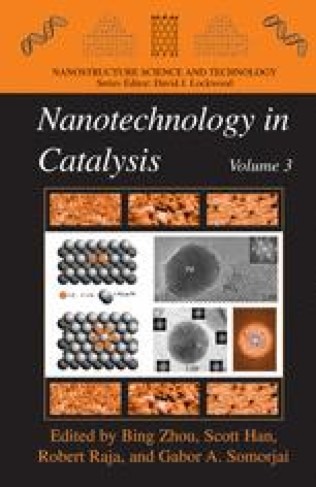
Nanotechnology in Catalysis 3
This book is the third volume of Nanotechnology in Catalysis. Although has been only 2 years since the Volumes 1 and 2 were published, many new contributions and breakthroughs have been made by researchers all over the world, showing the dynamic of nanotechnology in catalysis area. The topics in the book are the most up-to-date information on the forefront of nanotechnology development in catalysis field. They include the new concept and applications of nanotechnology for catalysis, the preparation and characterization of nanoparticle and nanostructure catalysts, and the examples of the superior activity and selectivity achieved by using such nanocatalysts. This book provides an in-depth understanding of how nanotechnology can affect the future generation of catalyst development.

Nanocatalysis
Nanocatalysis is one of the most exciting subfields to have emerged from nanoscience. Its central aim is the control of chemical reactions by changing the size, dimensionality, chemical composition and morphology of the reaction center and by changing the kinetics using nanopatterning of the reaction centers. This approach opens up new avenues for atom-by-atom design of nanocatalysts with distinct and tunable chemical activity, specificity, and selectivity. This book is intended to give a pedagogical and methodological overview of this exciting and growing field and to highlight specific examples of current research. In this way, it serves both as an instructive introduction for graduate students who plan to enter the field and as a reference work for scientists already active in this and related areas.

N4-Macrocyclic Metal Complexes
The study of nanoparticles is anchored in Colloid Science. Colloid Science as we consider it today was nucleated by Wolfgang Ostwald and initiated by his biological studies. The strong connection between biology and Colloid Science lost attractiveness in the last decades. The revival of this interdisciplinary science is now noted and we hope that a signal will start from the Potsdam conference. "This is an excellent and detailed book of 14 chapters that is timely in its reviews of the electrochemical and electrocatalytic properties of the porphyrinoids and is written by a range of experts in the different fields covered.
Modern Aspects of Electrochemistry ; Vol. 42
MODERN ASPECTS OF ELECTROCHEMISTRY No. 42 Edited by Constantinos Vayenas University of Patras, Greece Topics in Number 42 include: The electrochemistry and electrocatalysis of Ruthenium in regards to the development of electrodes for Polymer Electrolyte Membrane (PEM) fuel cells Breakthroughs in Solid Oxide Fuel Cell (SOFC) anodes and cathodes leading to improved electrocatalysis Electrocatalysis of the electrochemical reduction of CO2 on numerous metals The interfacial phenomena of electrodeposition and codeposition, and the need for new theoretical analyses of the electrode-electrolyte interface Advantages of scanning tunneling microscopy (STM) in understanding the basics of catalysis, electrocatalysis and electrodeposition The role of electrochemistry in emerging technologies including electrodeposition and electroforming at the micro and nano levels, semiconductor and information storage, including magnetic storage devices.

Modern Aspects of Electrochemistry ; Vol. 38
Solid State Electrochemistry encompassing modern equilibria concepts, thermodymanics and kinetics of charge carriers in solids.,Electron transfer processes, with special sections devoted to hydration of the proton and its heterogeneous transfer.Electrosorption at electrodes and its relevance to electrocatalysis and electrodeposition of metals,The behavior of Pt and other alloy electrocatalyst crystallites used as the electrode materials for phosphoric acid electrolyte fuel-cells.Applications of reflexology and electron microscopy to the materials science aspect of metal electrodes.Electroplating of metal matrix composites by codeposition of suspended particles, a process that has improved physical and electrochemical properties.

Metallocenes in Regio- and Stereoselective Synthesis
Metallocene is a well known sandwich complex with two cyclopentadienyl ligands such as ferrocene. Recently, such metallocene compounds have been found to be very characteristic and they have become very important, not only in the area of organic synthesis, but also in polymerization in industry. Metal complexes with one cyclopentadienyl ligand have also become popular as half sandwich complexes. The number of researchers in the field of metallocenes has increased rapidly. However, the origin of the characteristic reactivity of metallocenes is not fully understood. In this volume, the chemistry of metal complexes with at least one cyclopentadienyl ligand is comprehensively covered by leading experts. Reactions discussed here are (i) natural product synthesis, (ii) catalytic asymmetric synthesis, (iii) cyclization reactions, (iv)catalytic reactions, (iv) polymerization reactions and (v) carbon-carbon bond cleavage reactions. The reader will have access to useful information about the current state of metallocene chemistry.

Metal-Catalysed Reactions of Hydrocarbons
This unique book, drawing on the author’s lifetime experience, critically evaluates the extensive literature on the field of Metal-Catalysed Reactions of Hydrocarbons. Emphasis is placed on reaction mechanisms involving hydrogenation, hydrogenolysis, skeletal and positional isomerisation, and exchange reactions. The motivation for fundamental research in heterogeneous catalysis is to identify the physicochemical characteristics of active centres for the reaction being studied, to learn how these may be modified or manipulated to improve the desired behavior of the catalyst, and to recognize and control those aspects of the catalyst's structure that limit its overall performance. By restricting the subject of the book to hydrocarbons, Bond has progressively developed the subject matter to include areas of importance both to researchers and to those working in the industry.

Metal Catalyzed Reductive C-C Bond Formation : A Departure from Preformed Organometallic Reagents
The prototypical catalytic reductive C–C bond formations, the Fischer-Tropsch reaction [1] and alkene hydroformylation [2], were discovered in 1922 and 1938, respectively [3,4]. These processes, which involve reductive coupling to carbon monoxide, have long been applied to the industrial manufacture of commodity chemicals [5]. Notably, alkene hydroformylation, also known as the oxo-synthesis, has emerged as the largest volume application of homogeneous metal catalysis, accounting for the production of over 7 million metrictons of aldehyde annually. Despite the impact of these prototypical reductive C–C bond formations, this field of research lay fallow for several decades.

Metal Catalyzed Cascade Reactions
Transition metal-catalyzed cascade reactions are an elegant approach to complex molecular scaffolds. Besides their esthetics and increase in structural complexity, they have also become mechanistic challenges for the combination of organometallic elementary steps. As a consequence, cascade reactions have revolutionized synthetic strategies and conceptual thinking. The authors highlight cyclization via carbopalladation and acylpalladation and Heck-pericyclic sequences. They discuss p-allyl palladium-based cascade reactions, Michael-type additions as an entry to transition-metal-promoted cyclizative transformations, and sequential or consecutive palladium-catalyzed processes, and show Pauson-Khand cascades, metal-catalyzed cyclizations of acyclic precursors, as well as cascade and sequential ruthenium-catalyzed transformations. Therefore, the reader finds overview of an exciting and highly dynamic field of a new and innovative methodological concept

Metal Catalysed Reactions in Ionic Liquids
Metal Catalysed Reactions in Ionic Liquids is the first non-edited book on the subject of metal catalysed reactions in ionic liquids and covers the literature from its origins until early 2005.The book begins with a general introduction to the field of biphasic/multiphasic catalysis and describes the synthesis, functionalisation and fundamental properties of ionic liquids relevant to catalysis.This book is an invaluable resource for all those working in catalysis, green chemistry, and advanced synthetic methods,
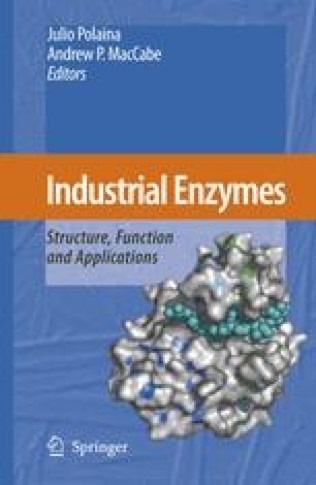
Industrial enzymes : Structure, function and applications
Man's use of enzymes dates back to the earliest times of civilization. Important human activities such as the production of certain types of foods and beverages, and the tanning of hides and skins to produce leather for garments, serendipitously took advantage of enzyme activities. Important advances in our understanding of the nature of enzymes and their action were made in the late 19th and early 20th centuries, seeding the explosive expansion from the 1950s and 60s onward to the present billion dollar enzyme industry. Recent developments in the fields of genetic engineering and protein chemistry are bringing ever more powerful means of analysis to bear on the study of enzyme structure and function that will undoubtedly lead to the rational modification of enzymes to match specific requirements as well as the design of new enzymes with novel properties.

Industrial enzyme applications
This reference is a "must-read": It explains how an effective and economically viable enzymatic process in industry is developed and presents numerous successful examples which underline the efficiency of biocatalysis.

In situ NMR Methods in Catalysis
In Situ NMR Methods in Catalysis is part of the Springer series Topics in Current Chemistry. The book contains five chapters and a helpful author and subject index. Chapter by chapter, the individual contributions are well written and structured . The book presents an excellent resource for the reader who is interested in a delivery of topics related to homogenous catalysis, some of which can be investigated by NMR.This will be a must-have work for scientists and practitioners in any field related to modern chemical research. It will also be highly useful for many workers in industry who are required to keep up-to-date with the latest news in chemistry and applied chemistry. So much is covered here in critical review, from the present position of developing research to future trends.

ICAME 2005 ; Proceedings of the 28th International Conference on the Applications of the Mössbauer Effect (ICAME 2005) held in Montpellier, France, 4–9 September 2005, Vol. I (Part I–II/V)
This book provides an up-to-date overview of the Mössbauer effect in physics, chemistry, electrochemistry, catalysis, biology, medicine, geology, mineralogy, archaeology and materials science.

Heterogeneous Enantioselective Hydrogenation : Theory and Practice
The book looks at the first relatively ineffective catalysts right through to modern highly effective enantioselective catalytic systems, comparable in their efficiency to chiral metal complexes and enzymatic systems. The book begins with a summary of the first work on heterogeneous metal catalysts, which showed only the principal possibilities of enantioselective reactions. The book then elaborates on metal catalysts which have enantioselectivities close to 100%. Finally, the book describes the practical utilization of chiral catalytic systems in processes of hydrogenation. The a - and b -hydroxy carboxylic acid esters produced are precursors for manufacturing many synthones used for medicines as well as for monomers used for biodegradable polyesters, both of which have important practical applications. The book summarizes more than 800 scientific papers in the field of enantioselective catalytic hydrogenation reactions, mainly those using heterogeneous metal catalysts. It provides detailed explanations of special techniques for the preparation of effective dissymmetric catalysts which provide highly efficient catalytic systems.

Heterocycles from Transition Metal Catalysis : Formation and Functionalization
The book provides a representative selection of transition metal catalysed reactions, transformations that are relevant in heterocyclic chemistry. In this way, the authors provide a useful resource for members of the academic community looking for a textbook as well as industrial chemists in search of a reference book. This book is an invaluable resource for synthetic chemists, medicinal chemists, and those more generally interested in applied catalysis.
