



الصفحة 1
الصفحة 1
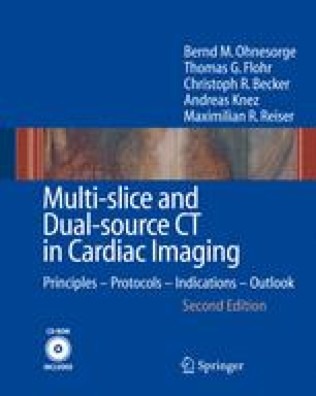
Multi-slice and Dual-source CT in Cardiac Imaging : Principles - Protocols - Indications - Outlook
Cardiac diseases, and in particular coronary artery disease, are the leading cause of death and morbidity in industrialized countries. The development of non-invasive imaging techniques for the heart and the coronary arteries has been considered a key element in improving patient care. A breakthrough in cardiac imaging using CT occurred in 1998, with the introduction of multi-slice computed tomography (CT). Since then, amazing advances in performance have taken place with scanners that acquire up to 64 slices per rotation. This book discusses the state-of-the-art developments in multi-slice CT for cardiac imaging as well as those that can be anticipated in the future

Mitochondria and the Heart
The function of the heart is highly dependent on oxidative energy that is generated in mitochondria. Defects in mitochondrial structure and function can be found in association with cardiovascular diseases. Mitochondria and the Heart discusses the role that mitochondria plays in cardiovascular disease, including biogenesis and function of cardiac mitochondria during normal growth, development and aging. In addition, nonbioenergetic, biogenesis and degradation pathways are explored. Understanding these pathways and the effects that mitochondrial defects have in cardiac pathology is extremely important in establishing the diagnosis and treatment of mitochondrial-based cardiac diseases.
Handbook of cardiac anatomy, physiology, and devices
Because of rapid growth in the medical device industry-which today enjoys revenues as large as those of the automobile industry-as well as in our understanding of cardiac disease processes, biomedical engineers must cope with a rising tide of highly complex information. In Handbook of Cardiac Anatomy, Physiology, and Devices, leading experts from the University of Minnesota's renowned Lillehei Heart Institute and scientists from Medtronic, Inc. have compiled a concise-yet detailed and comprehensive-reference source on the anatomic features, underlying physiologic mechanisms, and treatments for diseases of the heart. Here, active bioengineers working on cardiac devices will find the complete critical background they need to understand cardiac pacing, defibrillation, cardiac repair using stem cell therapy, robotics, less invasive cardiac surgery, biventricular pacing, cardiac bioenergetics, and more. Insightful chapters address animal models for cardiac research, cardiac mapping systems, heart valve disease, ventricular assist devices, and genomics-based tools and technology.

Diseases of the Chest, Breast, Heart and Vessels 2019-2022 : Diagnostic and Interventional Imaging
This book focuses on diagnostic and interventional imaging of the chest, breast, heart, and vessels. It consists of a remarkable collection of contributions authored by internationally respected experts, featuring the most recent diagnostic developments and technological advances with a highly didactical approach. The chapters are disease-oriented and cover all the relevant imaging modalities, including standard radiography, CT, nuclear medicine with PET, ultrasound and magnetic resonance imaging, as well as imaging-guided interventions.

Clinical psychology and heart disease
The publication offers a thorough and up-to-date review of scientific research supporting evidence of the relationship between cardiac disease and psychological condition, and offers practical suggestions for developing a clinical practice, and directions for future research in the new field of "cardiac psychology". Every chapter is authored by world-renowned researchers in the field.

Manual of cardiovascular medicine
Cardiovascular medicine has experienced an unforeseen and impressive development over the last fifty years, particularly recently, as new diagnostic innovative medications have been developed, as well as interventional and surgical procedures to treat patients with cardiac disease. Thus, the number of cardiovascular diagnoses, the number of diagnostic modalities, as well as the number of treatment options has expanded enormously and made cardiovascular medicine one of the biggest specialties in medicine. This cardiovascular manual focuses on diagnostic algorithms and therapeutic recommendations according to European Guidelines. It encompasses all aspects of cardiovascular medicine from hypertension to transplantation; from imaging to intervention; and from pharmacotherapy to surgical procedures.

Cardiac drug therapy
Cardiac Drug Therapy, 7th ed., addresses the pharmacology and therapeutic application of drugs used to treat heart diseases and hypertension. Additions and updates to the sixth edition include six new chapters on current controversies in cardiac drug therapy such as the beta blocker issue many cardiologists are presently grappling with. The book provides practical advice on how to manage cardiac diseases and addresses the choice of one particular cardiac agent vs. another. In addition to providing core knowledge in cardiovascular therapeutics, the text assists in resolving some of the issues surrounding cardiac drugs. Cardiac Drug Therapy provides practical information including properties, dosage, side effects, potential salutary benefits, and drawbacks on virtually all commercially available cardiac drugs.

Brain and Heart Dynamics
Despite the increasing awareness that neural mechanisms are the primary cause of cardiac disease and its progression, therapy continues to focus on end-organ protection and does not approach the neural core of the problem. Growing public health problems such as heart failure are still treated with autonomic drugs that are 30-40 years old and simply act on cardiac receptors. However, it has now been shown that the progression of ischemic heart disease to heart failure is mainly due to abnormal central responses to incipient cardiac disease, with neural activation the primary cause rather than the consequence of cardiac remodeling.

Body Sensor Networks
While the problems of long-term stability and biocompatibility are being addressed, several promising prototypes are starting to emerge for managing patients with acute diabetes, for treatment of epilepsy and other debilitating neurological disorders and for monitoring of patients with chronic cardiac diseases. Despite the technological developments in sensing and monitoring devices, issues related to system integration, sensor miniaturization, low-power sensor interface circuitry design, wireless telemetric links and signal processing still have to be investigated.
