



الصفحة 1
الصفحة 1

Evidence Use in Health Policy Making : An International Public Policy Perspective
Provides a set of conceptual, empirical, and comparative chapters that apply a public policy perspective to investigate the political and institutional factors driving the use of evidence to inform health policy in low, middle, and high income settings. The work presents key findings from the Getting Research Into Policy (GRIP-Health) project: a five year, six country, programme of work supported by the European Research Council. The chapters further our understanding of evidence utilisation in health policymaking through the application of theories and methods from the policy sciences. They present new insights into the roles and importance of factors such as issue contestation, institutional arrangements, logics of appropriateness, and donor influence to explore individual cases and comparative experiences in the use of evidence to inform health policy.
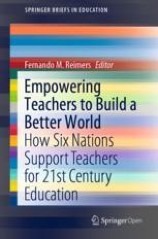
Empowering teachers to build a better world : How six nations support teachers for 21st Century education
This book presents a comparative study on how large-scale professional development programs for teachers are designed and implemented. Around the world, governments and educators are recognizing the need to educate students in a broad range of higher order cognitive skills and socio-emotional competencies

Logic for Programming, Aritficial Intelligence, and Reasoning ; 13th International Conference, LPAR 2006, Phnom Penh, Cambodia, November 13-17, 2006, Proceedings
This book constitutes the refereed proceedings of the 13th International Conference on Logic for Programming, Artificial Intelligence, and Reasoning, LPAR 2006, held in Phnom Penh, Cambodia in November 2006. The 38 revised full papers presented together with one invited talk were carefully reviewed and selected from 96 submissions.

Language Choice in a Nation Under Transition : English Language Spread in Cambodia
This book examines language choice in contemporary Cambodia, and uses the case study to explore and evaluate competing explanations for the spread of English globally. the multiple contexts in which Cambodians make individual and institutional language policy choices are considered. Chapters 2 and 3 examine the economic and political contexts for language choice, as Cambodia has transitioned from a planned economy and communism to a market economy and democracy. Chapters 4, 5, and 6 examine the assistance context for language choice; the bilateral, multilateral, and nongovernmental development agencies that have recently begun to work in Cambodia demand certain language skills of Cambodian employees and government counterparts, and support the learning of these languages in both nonformal and formal education.
