



الصفحة 1
الصفحة 1

On the move to meaningful internet systems : OTM 2008 ; OTM 2008 Confederated International Conferences, CoopIS, DOA, GADA, IS, and ODBASE 2008, Monterrey, Mexico, November 9-14, 2008, Proceedings, Part I
This two-volume set LNCS 5331/5332 constitutes the refereed proceedings of the five confederated international conferences on Cooperative Information Systems (CoopIS 2008), Distributed Objects and Applications (DOA 2008), Grid computing, high performAnce and Distributed Applications (GADA 2008), Information Security (IS 2008), and Ontologies, Databases and Applications of Semantics (ODBASE 2008), held as OTM 2008 in Monterrey, Mexico, in November 2008.
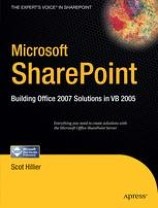
Microsoft SharePoint : Building Office 2007 Solutions in VB 2005
Microsoft SharePoint: Building Office 2007 Solutions in VB 2005 is the third edition of Scot Hillier's market-leading SharePoint book. The new version includes extensive updates from the previous editions, with a complete focus on SharePoint 2007 and its integration with the 2007 Microsoft Office System. This edition also features new approaches for using SharePoint to improve business efficiency, plus new workflow solutions for SharePoint and BizTalk, as well as a brand new chapter on building a SharePoint solution from start to finish.

Microsoft SharePoint : Building Office 2007 Solutions in C# 2005
Microsoft SharePoint: Building Office 2007 Solutions in C# 2005 is the third edition of Scot Hilliers market-leading SharePoint book. This book features extensive updates to the previous edition, with a complete focus on SharePoint 2007 and its integration with the 2007 Microsoft Office System. It also features new approaches for using SharePoint to improve business efficiency as well as new workflow solutions for SharePoint and BizTalk, plus a new chapter on building a SharePoint solution from start to finish.
Intelligent information processingg II ; IFIP TC12/WG12.3 International Conference on Intelligent Information Processing (IIP2004) October 21-23, 2004, Beijing, China
This book is based on IIP2004, which provides a forum for engineers and scientists in academia, university and industry to present their latest research findings in any aspect of intelligent information processing. Papers on intelligence science, intelligent agents, machine learning, and autonomic computing, as well as papers that highlight bioinformatics, e-commerce, and business intelligence were presented. IIP2004 meets the needs of a large and diverse community.

Handbook on Decision Support Systems 2 : Variations
As the most comprehensive reference work dealing with decision support systems (DSS), this book is essential for the library of every DSS practitioner, researcher, and educator. Written by an international array of DSS luminaries, its more than 70 chapters approach decision support systems from a wide variety of perspectives ranging from classic foundations to cutting-edge thought, informative to provocative, theoretical to practical, historical to futuristic, human to technological, and operational to strategic. The chapters are conveniently organized into 10 major sections: foundations of decision support systems, DSS fundamentals, multiparticipant DSSs, intelligent DSSs, effects of decision support, time & space issues, scopes of decision support, developing & managing decision support systems, cases &applications, and decision support horizons. Novices and experts alike will refer to the authoritative and stimulating content again and again for years to come.

Foundations of SQL Server 2005 Business Intelligence
This book explains how best to use Analysis Services, SQL Server Integration Services, SQL Server Reporting Services, and SQL Server Data Mining. It also describes best practices for implementing end-to-end BI solutions in small, medium, and large business environments. And it provides important information about integrating BI with various client tools.

Enterprise Management with SAP SEM™
In order to make strategy happen there is a need for powerful management information systems. SAP focuses on the application of modern business administration concepts, e.g. Value Based Management, the Balanced Scorecard, the Management Cockpit or flexible planning methods. The book describes the methodology and implementation of a powerful tool for enterprise management. Practical examples show how SAP Strategic Enterprise Management/Business Analytics (SAP SEM/BA) can help to improve cross functional planning, reporting and analyzing. SAP SEM/BA is a leading edge IT-solution for top management and related departments in large enterprises and groups. It demonstrates the state of the art of modern management information and decision support systems.

Designing and evaluating e-management decision tools : The integration of decision and negotiation models into internet-multimedia technologies
Presents the most relevant concepts for designing intelligent decision tools in an Internet-based multimedia environment and assessing the tools using concepts of statistical design of experiments. The book covers : Decision modeling paradigms , Visual interactive decision modeling , Online preference elicitation , collaborative decision making , negotiation and conflict resolution , marketing decision optimization , and guidelines for designing and evaluating decision support tools. This book is designed for the following uses: 1) for researchers and engineers, who are seeking recent advances and who are developing e-management systems; 2) for practitioners and managers, who seek insights about ICT potential and using ICT for business intelligence management; and 3) for students, who seek theoretical and practical concepts of building and evaluating prototype decision tools.

Demand Planning : Processi, metodologie e modelli matematici per la gestione della domanda commerciale = Demand Planning : Processes, methodologies and mathematical models for managing commercial demand
Il libro Demand Planning analizza metodi quantitativi, modelli matematici e processi aziendali per la gestione e la pianificazione della domanda commerciale delle aziende, relativa ai prodotti ed ai servizi realizzati.

Data Analysis, Machine Learning and Applications ; Proceedings of the 31st Annual Conference of the Gesellschaft für Klassifikation e.V., Albert-Ludwigs-Universität Freiburg, March 7–9, 2007
This volume contains the revised versions of selected papers in the field of data analysis, machine learning and applications presented during the 31st Annual Conference of the German Classification Society (Gesellschaft für Klassifikation - GfKl).

Corporate Performance Management : ARIS in Practice
Corporate Performance Management (CPM) is a basic approach which examines the relationship between corporate performance and process optimization. How to successfully introduce CPM in practice is demonstrated through project reports from E.ON, British Telecom, Credit Suisse and Vodafone among others. The methods and tools presented here guarantee a continuous and automated monitoring of the corporate performance and enable Business Process Excellence to be permanently established in the company by company-internal and company-external benchmarking. The articles in this book focus on the use of the ARIS Controlling Platform developed by IDS Scheer.

Computational Science – ICCS 2007; 7th International Conference, Beijing China, May 27-30, 2007, Proceedings, Part I
This book contiants sections on efficient data management, parallel monte carlo algorithms, simulation of multiphysics multiscale systems, dynamic data driven application systems, computer graphics and geometric modeling, computer algebra systems, computational chemistry, computational approaches and techniques in bioinformatics, computational finance and business intelligence, geocomputation, high-level parallel programming, networks theory and applications, collective intelligence for semantic and knowledge grid, collaborative and cooperative environments, tools for program development and analysis in CS, intelligent agents in computing systems, CS in software engineering, computational linguistics in HCI, internet computing in science and engineering, workflow systems in e-science, graph theoretic algorithms and applications in cs, teaching CS, high performance data mining, mining text, semi-structured, Web, or multimedia data,
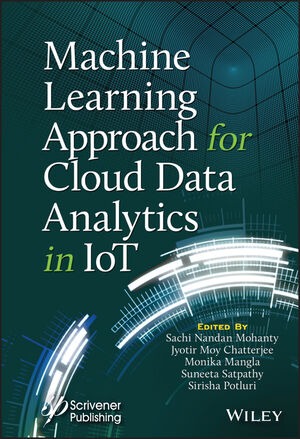
Machine learning approach for cloud data analytics in IoT
Covers the multidimensional perspective of machine learning through the perspective of cloud computing and Internet of Things ranging from fundamentals to advanced applications. Elucidates some of the best practices and their respective outcomes in cloud and fog computing environments. It focuses on all the various research issues related to big data storage and analysis, large-scale data processing, knowledge discovery and knowledge management, computational intelligence, data security and privacy, data representation and visualization, and data analytics. The featured technologies presented in the book optimizes various industry processes using business intelligence in engineering and technology. Light is also shed on cloud-based embedded software development practices to integrate complex machines so as to increase productivity and reduce operational costs. The various practices of data science and analytics which are used in all sectors to understand big data and analyze massive data patterns are also detailed in the book.
Business Intelligence for the Real-Time Enterprises ; 1st International Workshop, BIRTE 2006, Seoul, Korea, September 11, 2006, Revised Selected Papers
The book includes different aspects in the lifecycle of business intelligence on very large enterprise-wide operational real-time data sets. In today’s competitive and highly dynamic environment, analyzing data to und- stand how the business is performing, to predict outcomes and trends, and to improve the effectiveness of business processes underlying business operations has become critical. The traditional approach to reporting is not longer adequate; users now - mand easy-to-use intelligent platforms and applications capable of analyzing real-time business data to provide insight and actionable information at the right time. The end goal is to improve the enterprise performance by better and timelier decision making, enabled by the availability of up-to-date, high-quality information.
Building a Data Warehouse : With Examples in SQL Server
The book is organized as follows. In the beginning of this book (chapters 1 through 6), you learn how to build a data warehouse, for example, defining the architecture, understanding the methodology, gathering the requirements, designing the data models, and creating the databases. Then in chapters 7 through 10, you learn how to populate the data warehouse, for example, extracting from source systems, loading the data stores, maintaining data quality, and utilizing the metadata. After you populate the data warehouse, in chapters 11 through 15, you explore how to present data to users using reports and multidimensional databases and how to use the data in the data warehouse for business intelligence, customer relationship management, and other purposes. Chapters 16 and 17 wrap up the book: After you have built your data warehouse, before it can be released to production, you need to test it thoroughly. After your application is in production, you need to understand how to administer data warehouse operation.
Advanced Web and Network Technologies, and Applications ; APWeb 2008 International Workshops : BIDM, IWHDM, and DeWeb Shenyang, China, April 26-28, 2008. Revised Selected Papers
Constitutes the thoroughly refereed joint post-workshop proceedings of three international workshops held in conjunction with the 10th Asia-Pacific Web Conference, APWeb 2008, in Shenyang, China, in April 2008.
Adaptive Business Intelligence
In the modern information era, managers must recognize the competitive opportunities represented by decision-support tools. Adaptive business intelligence systems combine prediction and optimization techniques to assist decision makers in complex, rapidly changing environments. These systems address the fundamental questions: What is likely to happen in the future? And what is the best decision right now? Adaptive Business Intelligence includes elements of data mining, predictive modeling, forecasting, optimization, and adaptability.
