



الصفحة 1
الصفحة 1

Innovative Tools and methods using BIM for an efficient renovation in buildings
This book describes a BIM-based toolkit that has been developed according to the latest research activities on building information modelling and semantic interoperability to optimize the building process. It highlights the impacts of using such new tools to fast renovation activities starting from the decision-making and design stages to the construction site management with the possibility to monitor occupants' and owners’ feedback during the realization process. In this process, a framework has been developed and implemented to allow stakeholders involved in a renovation project to efficiently compile, maintain, and add data about (i) building elements, (ii) building services systems, (iii) tenants, operators, and owners of the building, and (iv) current and predicted performance of the building from the various data sources available. The framework applies and specializes the existing practices in the Semantic Web, Linked Data, and ontology domain to the management of renovation projects. It has been designed to be open so that any system which implements the required functions and uses the specified conventions will be able to achieve semantic interoperability with other framework-compliant systems in the renovation domain. Finally, this book represents the validation process of the toolkit that has been held in three demo sites: a social housing building in Italy and two private residential buildings in Poland and Finland. The outcome shows that the toolkit facilitates the renovation process with relevant reductions of time, costs, and energy consumption and that the inhabitants can take advantage of the increase in building performances, quality, and comfort.

Digital transformation of the design, construction and management processes of the built environment
This book focuses on the development of methods, interoperable and integrated ICT tools, and survey techniques for optimal management of the building process.

Developing BIM talent : A guide to the BIM body of knowledge with Metrics, KSAs, and learning outcomes
A systematic Building Information Modeling (BIM) framework features cutting-edge use cases and competencies for students and professionals pursuing BIM careers. Offers: A solid foundation and guidelines for educators and practitioners for starting or enhancing a BIM curriculum or training program Templates, expert interviews, and case studies that provide in-depth knowledge and lessons learned that can facilitate process changes and strategic action plans Strategies for standardizing emerging BIM job tasks, descriptions, and methods for benchmarking performance

Data-driven BIM for Energy Efficient Building Design
Conceptualises the scale and spectrum of Building Information Modelling (BIM) and Artificial Intelligence (AI) approaches in energy efficient building design and to develop its functional solutions with a focus on four crucial aspects of building envelop, building layout, occupant behaviour and heating, ventilation and air-conditioning (HVAC) systems. Drawn from theoretical development on the sustainability, informatics and optimisation paradigms in built environment, the energy efficient building design will be marked through the power of data and BIM-intelligent agents during the design phase.
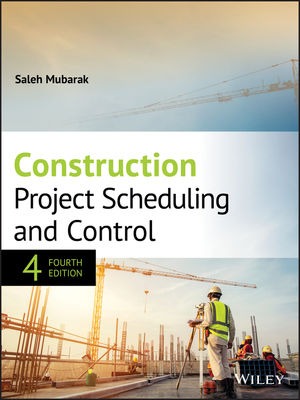
Construction Project Scheduling and Control
Introduces students to entirely new definitions and theories of the Critical Path Method (CPM), the leading scheduling method, as well as the most up-to-date information on Building Information Modeling (BIM). The new edition will include updated worked problems and scheduling software exercises, as well as revised teaching materials such as lecture slides and an instructor's manua

Computer-Aided Architectural Design Futures (CAADFutures) 2007 ; Proceedings of the 12th International CAADFutures Conference
This volume is the proceedings of the 12th International Conference of CAAD Futures, which took place in Sydney, Australia. The internationally refereed papers in this book present the state of the art in computer-aided architectural design research. The papers in this year's conference theme, Integrating Technologies for Computer-Aided Design, provide the technological foundation for new ways of thinking about using computers in designing and the use of computers in design itself as well as in the education of designers.
Buildings for Education: A Multidisciplinary Overview of The Design of School Buildings
This book presents theoretical and practical research relating to the vast, publicly financed program for the construction of new schools and the reorganization of existing educational buildings in Italy.
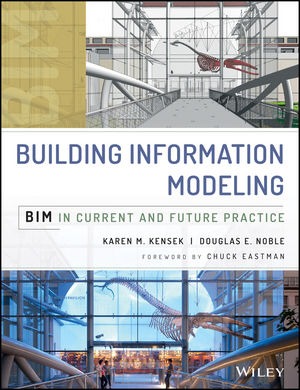
Building information modeling : BIM in current and future practice
"Thought leaders from universities and professional practice composed essays exploring BIM's potential to improve the products and processes of architectural design including the structure and content of the tools themselves. These authors provide insights for assessing the current practice and research directions of BIM and speculate about its future. Design Thinking and BIM / BIM Analytics / Comprehensive BIM / Reasoning with BIM / Professional BIM / BIM Speculations"
Building construction and technology
Highlights various aspects of building construction industry based on data from field studies. It discusses the challenges, methodologies, technological applications in building construction, technology, and management. The book presents new approaches to effective building construction and an understanding of the impact of applications of latest technologies.

Building a collaborative project management system: (Click)
Speaking on construction projects, we can imagine the huge amount of work, effort and time spent to complete any project. Because of the need for tools that facilitate the process of managing and tracking work and managing huge data and information and making it common to all the stockholder involved in the project, this system has been found to meet those needs of engineers, where it can manage employees, materials ,workers and the huge amount of data and enables it to track the progress of work .This system provides the possibility of communication between managers and this The system is considered a tool of the BIM system, which stands for Building Information Modeling.
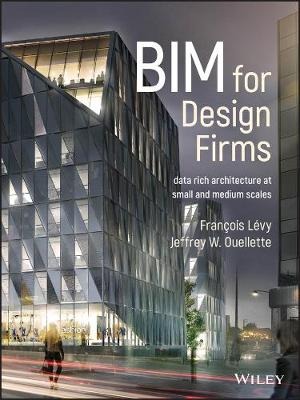
BIM for design firms : Data rich architecture at small and medium scales
Expands on Building Information Modeling, showing its applicability to a range of design-oriented projects. It emphasizes the full impact that a data modeling tool has on design processes, systems, and the high level of collaboration required across the design team. It also explains the quantitative analysis opportunities that BIM affords for sustainable design and for balancing competing design agendas, while highlighting the benefits BIM offers to designing in 3D for construction. The book concludes with a deep look at the possible future of BIM and digitally-enhanced design.

Architectural Graphic Standards
Completely new material on resiliency in buildings A versatile treatment written for the design studio setting and aligned with the most current curricular trends, including new and updated coverage on topics related to sustainability, digital fabrication, and building information modeling (BIM) A proven pedagogy that saves students time and ensures young professionals avoid the most common pitfalls
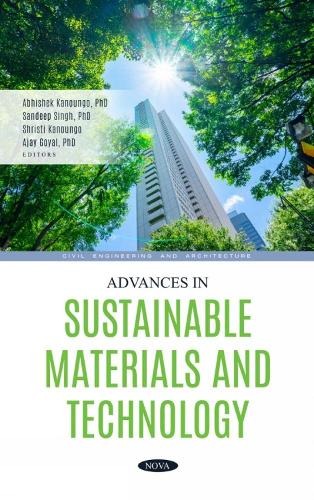
Advances in sustainable materials and technology
Discusses numerous relevant areas and innovative technologies, such as key construction materials and production, materials with lower energy impact, production processes encouraging less use of ever-depleting natural raw materials, minimization of the generation of greenhouse gases, development of new, environmentally friendly materials and agents, characterization of the properties of construction materials, and methodologies applied in the building of structures.
Advances in Building Information Modeling ; 1st Eurasian BIM Forum, EBF 2019, Istanbul, Turkey, May 31, 2019, Revised Selected Papers
Constitutes the refereed proceedings of the First Eurasian BIM Forum, EBF 2019, held in Istanbul, Turkey, in May 2019. The 16 full papers were carefully reviewed and selected from 44 submissions. The papers cover such topics as BIM adoption and implementation; BIM for project management; BIM for sustainability and performative design; BIM and facility management and infrastructural issues.
