



الصفحة 1
الصفحة 1

Diagrid structures : systems, connections, details
Diagrids are load-bearing structures made of steel diagonal grids. They were first used in the great buildings of the turn of the millennium, such as the Swiss Re Tower in London ("The Gherkin") and the Hearst Magazine Tower in New York City. Dagrids owe their ensuing popularity not only to their stunning aesthetic value, but also to their very tangible benefits: lateral loading capacity, a massive saving of material, a significant gain in open, usable floor area, and increased flexibility. At its opening in 2014, the Leadenhall Building in London will be the first skyscraper without a bearing inner core-thanks to a diagrid structure.

Designers' guide to EN 1993-1-1 Eurocode 3 : Design of Steel Structures: General Rules and Rules for Buildings
After some 25 years in preparation, the key parts of EN 1993 Eurocode 3: Design of steel structures have now been finalised.? Designers Guide to EN 1993-1-1 covers many forms of steel construction and provides the most comprehensive and up-to-date set of design guidance currently available.

Design of steel-concrete composite structures using high-strength materials
Design of Steel-Concrete Composite Structures Using High Strength Materials provides guidance on the design of composite steel-concrete structures using combined high-strength concretes and steels. The book includes a database of over 2,500 test results on composite columns to evaluate design methods, and presents calculations to determine critical parameters affecting the strength and ductility of high-strength composite columns. Finally, the book proposes design methods for axial-moment interaction curves in composite columns. This allows a unified approach to the design of columns with normal- and high-strength steel concrete materials.

Design of Hybrid Structures : Where Steel Profiles Meet Concrete
Focuses on design approaches for concrete structures reinforced in an unconventional way by steel profiles. It explains force transfer mechanisms of steel profiles and oncrete interfaces, and an analysis of the characteristics of hybrid structures, including slendercomponents. Several types of hybrid designs are addressed: walls and columns with several embedded steel profiles, connections strengthened by steel profiles between steel and composite or reinforced concrete components, including the specific case of shear keys connecting deep beams or flat slabs to columns. The transition zones in partly reinforced concrete and partly composite columns are also covered.

Cold-Formed Steel Design ; 5th ed.
Provides the latest AISI specifications for cold-formed steel design. Updated to the 2016 North American (AISI S100) design specification and 2015 North American (AISI S240) design standard. Offers thorough coverage of ASD, LRFD, LSD, and DSM design methods. Integrates DSM in the main body of design provisions. Features a new section on Power-Actuated Fastener (PAF) Connections. Provides new examples and explanations of design provisions
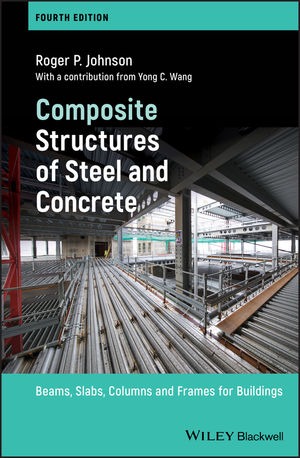
Composite structures of steel and concrete : Beams, slabs, columns and frames for buildings
Provides an introduction to the theory and design of composite structures of steel and concrete. Material applicable to both buildings and bridges is included, with more detailed information relating to structures for buildings. Throughout, the design methods are illustrated by calculations in accordance with the Eurocode for composite structures, EN 1994, Part 1-1, 'General rules and rules for buildings' and Part 1-2, 'Structural fire design', and their cross-references to ENs 1990 to 1993.
