



الصفحة 1
الصفحة 1
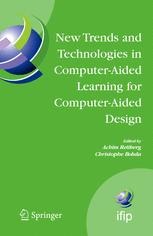
New Trends and Technologies in Computer-Aided Learning for Computer-Aided Design ; IFIP International Working Conference: EduTech 2005, Perth, Australia, October 20-21, 2005
Computation and communication technologies underpin work and development in many different areas. Among them, Computer-Aided Design of electronic systems and E-Learning technologies are two areas which are different but share many concerns. The design of CAD and E-Learning systems already touches on a number of parallels, such as system interoperability, user interfaces, standardization, EML-based formats, reusability aspects (of content or designs), and intellectual property rights. Furthermore, the teaching of Design Automation tools and methods is particularly amenable to a distant or blended learning setting, and implies the interconnection of typical CAD tools, such as simulators or synthesis tools, with e-learning tools. There are many other aspects in which synergy can be found when using E-Learning technology for teaching and learning technology. This workshop, sponsored by IFIP WG 10.5 Design and Engineering of Electronic Systems in cooperation with IFIP WG 3.6 Distance Education, will explore the interrelationship between these two subjects, where Computer-Aided Design meets Computer-Aided Learning. New Trends and Technologies in Computer-Aided Learning for Computer-Aided Design documents recent approaches and results presented at the EduTech 2005 Workshop, which was held in October 2005 in Perth, Australia and sponsored by the International Federation for Information Processing (IFIP). The topics chosen for this working conference are very timely: learning environments, tools and applications for education, education technologies and trends, and teaching in the hardware design area.

Measuring Precipitation from Space : EURAINSAT and the Future
More than 20 years after the last book on the subject the worldwide precipitation community has produced a comprehensive overview of its activities, achievements, ongoing research and future plans. Measuring Precipitation from Space presents state-of-the-art rainfall estimation algorithms, validation strategies, precipitation modelling, and assimilation in numerical weather prediction models. Clouds and precipitation observations and modelling are addressed for the improvement of the rainfall product quality. Special attention is given to the applications to monitoring and forecasting weather events and to climate monitoring in a frame of growing public interest.

Introduction to blender 3.0 : Learn organic and architectural modeling, lighting, materials, painting, rendering, and compositing with blender
Explains modeling, materials, lighting, painting, and more with Blender and other external tools. You will configure a 3D architectural environment and set up the workflow of an art and design project within Blender. You will use Blender's main tools—mesh modeling and sculpting—to create virtual objects and environments. And, you will explore building materials and light scenes, followed by drawing and virtual painting. Chapters cover rendering scenes and transforming them into 2D images or videos. You will learn to use Blender 3.0 for video editing as a compositor and video sequence editor (VSE or sequencer) with a wide range of effects available through the nodal system. You Will Learn : Create objects and architectural buildings with different techniques of 3D modeling / Master creating an environment for your objects and how to light them / Determine how to create node materials and assign them to your Blender objects / Pick up UV unwrapping and texture painting / Get closer to painting and drawing in Blender / Render your scenes and create stunning videos

Innovative approaches for learning and knowledge sharing ; 1st European Conference on Technology Enhanced Learning, EC-TEL 2006, Crete, Greece, October 1-4, 2006, Proceedings
This book constitutes the refereed proceedings of the First European Conference on Technology Enhanced Learning, EiTEL 2006, held in Crete, Greece in October 2006. The 32 revised full papers, 13 revised short papers and 31 poster papers presented together with 2 keynote talks were carefully reviewed and selected from 192 submissions. The conference provides a unique forum for all research related to technology-enhanced learning, as well as its interactions with knowledge management, business processes and work environments. Topics addressed are collaborative learning, personalized learning, multimedia content, semantic web, metadata and learning, workplace learning, learning repositories and infrastructures for learning, as well as experience reports, assesment, and case studies.

Infrared Ellipsometry on Semiconductor Layer Struc : Phonons, Plasmons, and Polaritons
The study of semiconductor-layer structures using infrared ellipsometry is a rapidly growing field within optical spectroscopy. This book offers basic insights into the concepts of phonons, plasmons and polaritons, and the infrared dielectric function of semiconductors in layered structures. It describes how strain, composition, and the state of the atomic order within complex layer structures of multinary alloys can be determined from an infrared ellipsometry examination. Special emphasis is given to free-charge-carrier properties, and magneto-optical effects. A broad range of experimental examples are described, including multinary alloys of zincblende and wurtzite structure semiconductor materials, and future applications such as organic layer structures and highly correlated electron systems are proposed.

Hybrid Learning and Education ; 1st International Conference, ICHL 2008 Hong Kong, China, August 13-15, 2008 Proceedings
This book constitutes the refereed proceedings of the First International Conference on Hybrid Learning, ICHL 2008, held in Hong Kong, China, in August 2008.The 38 revised full papers presented together with 3 keynote lectures were carefully reviewed and selected from 142 submissions. The papers are organized in topical sections on hybrid education, model and pedagogies for hybrid learning, trends, pervasive learning, mobile and ubiquitous learning, hybrid learning experiences, hybrid learning systems, technologies, as well as contextual attitude and cultural effects.

Handbook on Information Technologies for Education and Training
The handbook's goal is to enable the reader to gain a deep understanding of past, current and future research and applications in the field of educational technology. The reader will gain an in-depth understanding of complex theories, strategies, concepts, and methods relating to the design, development, implementation, and evaluation of educational technologies. Because it combines both the present experience in the field and the vision of its emerging directions, the handbook will be a comprehensive guide for researchers and practitioners working with educational technologies. All the chapters of the second edition are newly written, the handbook therefore presents the latest developments in the field.
Evaluation of text summaries based on linear optimization of content metrics
Covers both theoretical contributions and practical applications in security system design by applying the Internet of Things (IoT) and CI. It further explains the application of IoT in the design of modern security systems and how IoT blended with computational intel- ligence can make any security system improved and realizable. Key features: Focuses on the computational intelligence techniques of security system design Covers applications and algorithms of discussed computational intelligence techniques Includes convergence-based and enterprise integrated security systems with their applications Explains emerging laws, policies, and tools affecting the landscape of cyber security Discusses application of sensors toward the design of security systems This book will be useful for graduate students and researchers in electrical, computer engineering, security system design and engineering

Education for the 21st Century - Impact of ICT and Digital Resources ; IFIP 19th World Computer Congress, TC-3 Education, August 21-24, 2006, Santiago, Chile
The IFIP series publishes state-of-the-art results in the sciences and technologies of information and communication. The scope of the series includes: foundations of computer science; software theory and practice; education; computer applications in technology; communication systems; systems modeling and optimization; information systems; computers and society; computer systems technology; security and protection in information processing systems; artificial intelligence; and human-computer interaction. Proceedings and post-proceedings of referred international conferences in computer science and interdisciplinary fields are featured.
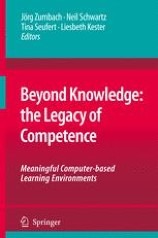
Beyond knowledge : The legacy of competence : Meaningful computer-based learning environments
The edited and peer reviewed volume presents selected papers of the conference "Beyond knowlegde: the legacy of competence" It reflects the current state-of-the-art work of scholars worldwide within the area of learning and instruction with computers. Mainly, areas of computer-based learning environments supporting competence-focused knowledge acquisition but also foundational scientific work are addressed. More specific, contents cover cognitive processes in hypermedia and multimedia learning, social issues in computer-supported collaborative learning, motivation and emotion in Blended Learning and e-Learning.

Alvar Aalto Houses
Finnish architect and designer Alvar Aalto (1898-1976) designed nearly one hundred single-family houses. Aalto, who is also known for his furniture and glassware, worked in a unique style that blended modernism and traditional vernacular architecture. Authors Jari and Sirkkaliisa Jetsonen (Finnish Summer Houses) present twenty-six of Aalto's innovative residences—from small summer homes and postwar standardized housing to large housing complexes for industrial commissions—built between the 1920s to the 1960s.
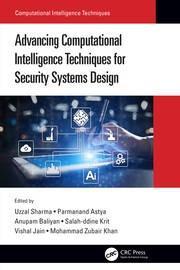
Advancing Computational Intelligence Techniques for Security Systems Design
Security systems have become an integral part of the building and large complex setups, and intervention of the computational intelligence (CI) paradigm plays an important role in security system architecture. This book covers both theoretical contributions and practical applications in security system design by applying the Internet of Things (IoT) and CI. It further explains the application of IoT in the design of modern security systems and how IoT blended with computational intel- ligence can make any security system improved and realizable. Focuses on the computational intelligence techniques of security system design / Covers applications and algorithms of discussed computational intelligence techniques / Includes convergence-based and enterprise integrated security systems with their applications / Explains emerging laws, policies, and tools affecting the landscape of cyber security / Discusses application of sensors toward the design of security systems
Advances in web based learning - ICWL 2007 ; 6th International conference Edinburgh, UK, August 15-17, 2007 Revised Papers
This book contributes the thoroughly refereed post-conference proceedings of the 6th International Conference on Web-Based Learning, ICWL 2007, held in Edinburgh, UK, in August 2007.
Advances in Blended Learning ; 2nd Workshop on Blended Learning, WBL 2008, Jinhua, China, Augustl 20-22, 2008. Revised Selected Papers
This book constitutes the thoroughly refereed post-workshop proceedings of the Second Workshop on Blended Learning, WBL 2008, held in Jinhua, China, in August 2008, as a satellite event of ICWL 2008, the 7th International Conference on Web-based Learning.
