



الصفحة 1
الصفحة 1

Vegetables II : Fabaceae, Liliaceae, Solanaceae, and Umbelliferae
The production and consumption of vegetables has expanded dramatically in the last years, with a global growth in the production of more than 50% in the last decade and it is expected that in the coming years, vegetable crops production will continue its expansion. The vegetables seed market is very dynamic and competitive, and predominant varieties are quickly replaced by new varieties. Therefore, updated information on the state of the art of the genetic improvement of specific crops is of interest to vegetable crops breeders, researchers and scholars. During the last years an immense quantity of new knowledge on the genetic diversity of vegetables and the utilization of genetic resources, breeding methods and techniques, and on the development and utilization of modern biotechnologies in vegetables crop breeding has accumulated, and there is a need of a major reference work that synthesizes this information.

Vegetables I : Asteraceae, Brassicaceae, Chenopodicaceae, and Cucurbitaceae
The production and consumption of vegetables has expanded dramatically in the last years, with a global growth in the production of more than 50% in the last decade and it is expected that in the coming years, vegetable crops production will continue its expansion. The vegetables seed market is very dynamic and competitive, and predominant varieties are quickly replaced by new varieties. Therefore, updated information on the state of the art of the genetic improvement of specific crops is of interest to vegetable crops breeders, researchers and scholars. During the last years an immense quantity of new knowledge on the genetic diversity of vegetables and the utilization of genetic resources, breeding methods and techniques, and on the development and utilization of modern biotechnologies in vegetables crop breeding has accumulated, and there is a need of a major reference work that synthesizes this information.

Somatic Embryogenesis
This volume expands our view of a subject that is important for plant biotechnology, genetics, cell biology, development, and agricultural applications. All chapters present the latest research progress, including functional genomic, genetic, and proteomic approaches. A special focus is placed on the effects of stress, environment, and plant growth regulators on embryogenesis. The role of genes such as Leafy Cotyledons and Baby Boom in defining and maintaining cell competence is discussed.

Rice Improvement : Physiological, Molecular Breeding and Genetic Perspectives
This book emphasizes on the areas of rice science that attempt to overcome the foremost limitations in rice production. Our intention is to highlight research advances in the fields of physiology, molecular breeding and genetics, with a special focus on increasing productivity, improving biotic and abiotic stress tolerance and nutritional quality of rice.

Protein Folding Kinetics : Biophysical Methods
The book gives a deep insight into the principles and concepts of the kinetic and structural resolution of fast chemical and biophysical reactions of proteins with emphasis on protein-folding reactions. The study of fast protein-folding reactions and the understanding of the folding paradox have significantly advanced due to the recent development of new biophysical methods which allow not only kinetic resolution in the sub-millisecond time scale but also structural resolution with unprecedented precision.

Plant Metabolomics
This volume comprehensively covers plant metabolomics for the first time. The chapters offer cutting-edge information on analytical technology, bioinformatics and applications. They were all written by leading researchers who have been directly involved in plant metabolomics research throughout the world. Up-to-date information and future developments are described, thereby producing a volume which is a landmark of plant metabolomics research and a beneficial guideline to graduate students and researchers in academia, industry, and technology transfer organizations in all plant science fields.

Novel Biotechnologies for Biocontrol Agent Enhancement and Management
This multidisciplinary group, having backgrounds in the diff- ent aspects of biotechnologies (transgenic enhancement, molecular biology, formulation, genetics, risk assessment, new technology, biochemistry, and physiology), presented highly advanced lectures during the 10-day-ASI, in order to allow students to improve their capability to enhance and manage - ological control agents. This approach will allow ASI attendees to bring new ideas, new approaches, or new methodologies coming from different ?elds of application to their own ?eld of expertise.

Molecular Marker Systems in Plant Breeding and Crop Improvement
Successful release of new and better crop varieties increasingly requires genomics and molecular biology. This volume presents basic information on plant molecular marker techniques from marker location up to gene cloning. The text includes a description of technical approaches in genome analysis such as comparison of marker systems, positional cloning, and array techniques in 19 crop plants. A special section focuses on converting this knowledge into general and specific breeding strategies, particularly in relation to biotic stress. Theory and practice of marker assisted selection for QTL, gene pyramiding and the future of MAS are summarized and discussed for maize, wheat, and soybean. Furthermore, approaches in silviculture on the examples of Fagus, Populus, Eucalyptus, Picea and Abies are presented. The volume ends with a comprehensive review of the patents relevant for using molecular markers and marker assisted selection.
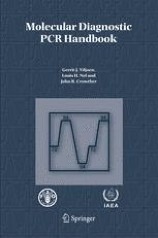
Molecular Diagnostic PCR Handbook
PREFACE The Joint FAO/IAEA Division of Nuclear Techniques in Food and Agriculture is involved in agricultural research and development and assists Member States of FAO and IAEA in improving strategies to ensure food security through the use of nuclear techniques and related biotechnologies, where such techniques have a valuable and often unique role. In particular, molecular diagnostic methods have rapidly evolved in the past twenty years, since the advent of the Polymerase Chain Reaction (PCR). They are used in a wide range of agricultural areas such as, improving soil and water management; producing better crop varieties; diagnosing plant and animal diseases; controlling insect pests and improving food quality and safety. The uses of nucleic acid-directed methods have increased significantly in the past five years and have made important contributions to disease control country programmes for improving national and international trade. These developments include the more routine use of PCR as a diagnostic tool in veterinary diagnostic laboratories. However, there are many problems associated with the transfer and particularly, the application of this technology. These include lack of consideration of: the establishment of quality-assured procedures, the required set-up of the laboratory and the proper training of staff. This can lead to a situation where results are not assured. This book gives a comprehensive account of the practical aspects of PCR and strong consideration is given to ensure its optimal use in a laboratory environment. This includes the setting-up of a PCR laboratory; Good Laboratory Practice and standardised of PCR protocols.

Intelligent drugs : How AI is transforming healthcare
The progress of biotechnologies and artificial intelligence allowed the development of vaccines in less than a year, thus saving millions of human lives and preserving the global economy. The emergence of intelligent drugs is highlighted, with the promise of ultra-targeted, more effective, and safer treatments against a wide range of diseases. Personalized medicine then becomes realistic, with computer-designed drugs, perfectly adapted to each individual, tested on virtual patients before their real use. In the near future, thanks to AI, new drugs will improve physical performance, stimulate cognitive abilities, prevent diseases, and slow down aging.
Biotechnology of medicinal plants with antiallergy properties : Research trends and prospects
Covers critically investigated information on medicinal plants prioritized for their anti-allergy properties. It offers insights into strategies related to the distribution, mechanism of action, and assessment of antiallergic medicinal plants, and also delves into crucial aspects of modern biotechnological tools, addressing their implementation challenges, presenting innovative approaches through case studies, and exploring opportunities for nanotechnologies. These elaborated discussions aim to raise awareness and bridge the gap between human health and the biodiversity of antiallergic medicinal plants.
Biotechnologies for plant mutation breeding : Protocols
This book offers 19 detailed protocols on the use of induced mutations in crop breeding and functional genomics studies, which cover topics including chemical and physical mutagenesis, phenotypic screening methods, traditional TILLING and TILLING by sequencing, doubled haploidy, targeted genome editing, and low-cost methods for the molecular characterization of mutant plants that are suitable for laboratories in developing countries. The collection of protocols equips users with the techniques they need in order to start a program on mutation breeding or functional genomics using both forward and reverse-genetic approaches. Methods are provided for seed and vegetatively propagated crops (e.g. banana, barley, cassava, jatropha, rice) and can be adapted for use in other species.
Bioethics in a Small World
Bioethics has addressed many of the issues that arise in the context of globalisation. This book presents the results of a conference the Europaische Akademie held in 2003 which developed its thesis in open discussions of foundational and applied problems of bioethics from an interdisciplinary and international perspective.
