



الصفحة 1
الصفحة 1

Mycorrhizae : Sustainable Agriculture and Forestry
This book discusses and goes into detail on a number of topics: the molecular basis of nutrient exchange between arbuscular mycorrhizal (AM) fungi and host plants; the role of AM fungi in disease protection, alleviation of soil stresses and increasing grain production; interactions of AM fungi and beneficial saprophytic mycoflora in terms of plant growth promotion; the role of AM fungi in the restoration of native ecosystems; indirect contributions of AM fungi and soil aggregation to plant growth and mycorrhizosphere effect of multitrophic interaction; the mechanisms by which mycorrhizas change a disturbed ecosystem into productive land; the importance of reinstallation of mycorrhizal systems in the rhizosphere is emphasized and their impact on landscape regeneration, and in bioremediation of contaminated soils; Ectomycorrhizae (ECM) and their importance in forest ecosystems and associations of ECM in tropical rain forests function to maintain tropical monodominance; in vitro mycorrhization of micro-propagated plants, and visualizing and quantifying endorhizal fungi; the use of mycorrhizae, mainly AM and ECM, for sustainable agriculture and forestry.
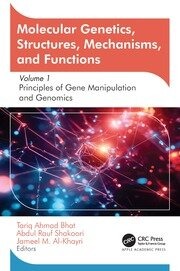
Molecular genetics, structures, mechanisms, and functions : Principles of gene manipulation and genomics ; Vol.1
Provides an overview of the future of genetic engineering and delves into the role of biotechnology and its applications in genetic engineering. It discusses the tools of recombinant technology, which have brought about revolution in our understanding of various complex biological phenomena. Chapters cover mutagenesis, construction, and sequencing of DNA libraries along with applications of genetic engineering for improving health, preventing genetic diseases, enhancing food resources, managing environmental bioremediation, and more. Topics include genetic engineering tools for restriction enzymes and vectors, gene and cell division, mutation detection and screening in plants, population genetics, sexuality in bacteria, and more. Several chapters focus on the tools of recombinant technology, such as restriction enzymes, vectors, etc., that have paved the way for creating organisms of choice and opened new horizons in the field of medicine, agriculture, and industry for human welfare.

Microorganisms in the deterioration and preservation of cultural heritage
This book offers a comprehensive overview of the role and potential of microorganisms in the degradation and preservation of cultural materials (e.g. stone, metals, graphic documents, textiles, paintings, glass, etc.).
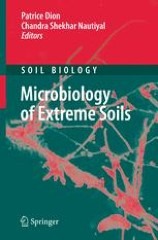
Microbiology of Extreme Soils
This volume provides an excellent introduction to the study of extreme soil micro-biology, and a variety of the challenging and fascinating environments that Earth-bound microbes face. Some are natural, and some are the result of human activity, and all of them have lessons to teach us about life’s adaptations within the “extreme” hori-zons of terrestrial soils. What’s more, each of these chapters (including the chapter on the soils of Mars by Ronald L. Crawford and David A. Newcombe) can give us insights into strategies that may make life possible beyond the safe confines of our present-day biosphere, to other worlds in this solar system and beyond

Microbial Phosphate Solubilization
Last decade has seen a significantly increased knowledge about phosphate solubilizing microorganisms. Sixty specialists from thirteen countries met in Salamanca to discuss the problems of the high P-unavailability as a soil nutrient for crops, and the hazards of an increasing phosphate input to aquatic habitats from industrial and mining activities, sewage disposal, detergents, and other sources. Updated solutions to enhance P-uptake by plants, bioremediation potential in the rehabilitation of ecosystems, taxonomic characterization interactions with mycorrizae, the physiological and molecular basis of PSM, and possibilities of genetic modifications of rhizospheric microorganisms were among the contributions presented. Challenges in commercializing a phosphate solubilizing microorganism were also outlined by a relevant biotech company.
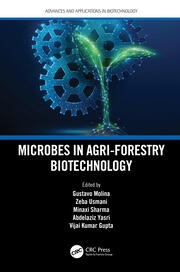
Microbes in agri-forestry biotechnology
Explores recent advances on the use of microbes for agri-forestry biotechnological applications. It provides technical concepts and discussions on the use of microorganisms for processes such as bioprocessing, bioremediation, soil enhancement, aquaponics advances, and plant-host symbiosis. The book provides an overview of the microbial approach to the tools and processes used in agriculture and forestry that make or modify products, improve plants for specific uses, and make use of livestock in agricultural systems. The authors discuss the main process conditions that enhance agri-forestry applications with the use of microbes and introduce the use of genetically modified (GM) microbes in agrobiotechnology. Finally, the authors explore the main technological advances in the production of secondary metabolites with potential applications in agri-forestry.
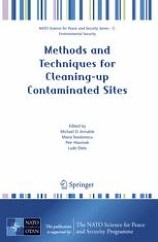
Methods and Techniques for Cleaning-up Contaminated Sites
This publication is meant to foster links between groups facing challenges cleaning up contaminated sites through presentations that explore the problems currently being addressed and solutions that are emerging in the field.

Environmental Bioremediation Technologies
Environmental contamination from both natural and anthropogenic sources is, today, a major environmental concern due to pervasiveness and persistence of many toxicants. It is considered as an inevitable evil of our progress and modernization. To decontaminate the soils, sediments and waters, polluted by anthropogenic activities, the scientists and technologists have evolved different technologies over the years. Although we have to pay high cost for physical and chemical environmental technologies, but they are not eco-friendly and safe. Hence, it was deeply realized to develop viable technologies employing microbes and plants to remediate not only metallic residues and radionuclides, but also the xenobiotic compounds like PCBs, PAHs, PCPs, petroleum sludge and the military wastes. No doubt, the scientists have also got some success in this endeavour and as the result, many companies are in place today to promote the sale of plant or microbe-based technologies to deal with specific environmental contamination challenges. Besides, these technologies are se- driven and do not disturb the sites in cleaning process.

Contaminated Soils, Sediments and Water : Science in the Real World
Contaminated Soils Volume 9 contains 38 technical papers, covering a wide range of environmental issues. Volume discussion includes: Part I Bioremediation; Part II Chemical Oxidation; Part III Heavy Metals; Part IV MTBE; Part V Phytoremediation; Part VI Radiation; Part VII Regulatory and Legal issues; Part VIII Remediation; Part IX Risk Based Cleanup; and Part X Site Assessment. Contributing authors to this volume are from government agencies, academic institutions, the consulting community and industrial companies. This important volume documents the state of environmental science and provides perspective on where we as an industry have come from. Increased scientific, engineering and consulting alliances and collaboration should drive our efforts going forward.
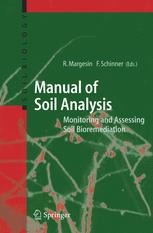
Manual for Soil Analysis - Monitoring and Assessing Soil Bioremediation
Reliable methods for monitoring and assessing soil quality are a prerequisite for successful soil bioremediation projects. The fifth volume of Soil Biology presents detailed descriptions of selected methods for evaluating, monitoring and assessing bioremediation treatments of soils contaminated with organic pollutants or heavy metals.
Cadmium toxicity : challenges and solutions
Offers a comprehensive collection of review and case chapters that cover cadmium toxicity and remediation. It covers sources of cadmium contamination, its impact on human health, and prospective remediation strategies, taking a multi-disciplinary approach a focus on application of recent advanced biological technology. The chapters here bring together a diverse group of environmental science, sustainability and health researchers to address the challenges caused by cadmium contamination, explaining the routes of exposure to environmental cadmium, how cadmium is transported in ecosystems, and the health risks linked to cadmium exposure in food and the environment.
Bioremediation of Soils Contaminated with Aromatic Compounds
Environmental biotechnology, which was in its infancy in the early 80's, has evolved thanks to the revolution brought about by molecular biology. Multiple successes in the biological cleanup of civil and industrial wastewater and of hydrocarbon soil pollution, demonstrate the vast power of clean technologies. In addition, the buildup of information on the activities of microorganisms as catalysts in all sorts of natural, industrial and animal environments has flourished. There is a continuing realization of the critical role of microbial processes in biological, industrial and geological systems. Since environmental biotechnology has matured, it is ready to tackle bigger challenges: the scaling up of many bioremediation systems still in progress, the search for novel biocatalysts for industrial applications, the continuing effort against common human life-threatening processes such as antibiotic resistance, the accumulation of hormone-mimicking substances (endocrine disrupters), the deposition of air-borne pesticides in the environment and, the degradation of recalcitrant contaminants. These endeavors will help prevent the contamination of food chains, protect human life and allow for human activity and economic development that do not compromise environmental sustainabijity.
Advanced science and technology for biological decontamination of sites affected by chemical and radiological nuclear agents
This book about Proceedings of the NATO Advanced Study Institute on Advanced Science and Technology for Biological Decontamination of Sites Affected by Chemical and Radiological Nuclear Agents, held in Zhitomir, Ukraine, 17-28 August 2005
