



الصفحة 1
الصفحة 1

Microbiomes and emerging applications
Covers a range of important topics and recent advances in metagenomics, microbiomes and their emerging applications, including microbiota transplantation and its health implications. It also discusses microbiome composition and development in humans. The contributors of this volume provide detailed information on prebiotics and probiotics for enhanced human health. They also introduce microbiomes as the next frontiers in medicine, agriculture, industry and environment. A chapter is presented that discusses probiotic research studies in Nigeria and Canada that led to the discovery of Lactobacillus pentosus KCA1. The book contains timely knowledge and will be useful reference material for scientists and researchers working in the fields of food and agricultural biotechnology, biopharmaceuticals and medical biotechnology, fermentation technology, environmental biotechnology, microbiomes and microbial biotechnology and health care.

Medical biotechnology, biopharmaceutics, forensic : science and bioinformatics
Covers a range of topics on exploiting Nigeria’s mega biodiversity for food security and health; DNA forensic science and its applications; medical biotechnology and biopharmaceutics; medicinal and underutilized plants; impact and mitigation of antibiotic resistance; bioinformatics applications; medical insect biotechnology; etc. The book will be useful reference material for the scientists and researchers working in the fields of nutraceuticals, molecular diagnostics and DNA forensics, biopharmaceuticals and medical biotechnology, nanotechnology, antimicrobials from indigenous plant species, bioinformatics, etc.

Immunogenicity of Biopharmaceuticals
This book is intended to give a broad overview of the current state-of-the-art regarding the immune response to biopharmaceuticals. The chapters range from an overview of the immune system and factors that may trigger the immune system, via detection of antibodies and clinical implications, to various case examples and the regulatory view on immunogenicity.

Heterologous protein production in CHO cells : Methods and protocols
Explores the use of Chinese hamster ovary (CHO) cells in the production of therapeutic protein products. Beyond updates on earlier methodologies, the book also delves into the genetic manipulation of CHO cells for recombinant protein production, analysis of CHO cells using proteomic and metabolomic approaches, as well as methods for the characterization of recombinant protein products, such as glycosylation and host cell protein analysis.

Handbook of Bioentrepreneurship
Providing an important and timely overview of research in the field of entrepreneurship in biotechnology, The Handbook of Bioentrepreneurship examines one of the most promising industries of the 21st century. While genetically engineered foods and biopharmaceuticals have made biotechnology part of our everyday lives, launching a bioventure is among the most complex and risky entrepreneurial undertakings, given long development cycles, high levels of technological and market uncertainty, and extraordinary capital requirements. Featuring unparalleled, in-depth analysis from experts around the world, the Handbook sheds light on emerging business models and strategies, geographical and regional networks, cooperation between firms and universities, legal frameworks, and policy issues that influence the context in which biotech ventures are established and the conditions under which they may flourish. biotechnology.

Essentials of pharmaceutical analysis
Provides detailed information on the background, basic principles, and components of techniques used for the analysis of pharmaceuticals and biopharmaceuticals. Focusing on those analytical techniques that are most frequently used for pharmaceuticals, it classifies them into three major sections and 19 chapters, each of which discusses a respective technique in detail. Chiefly intended for graduate students in the pharmaceutical sciences, the book will familiarize them with the components, working principles and practical applications of these indispensable analytical techniques.

Drug Metabolism, Pharmacokinetics and Bioanalysis
Drug metabolism/pharmacokinetics and drug interaction studies have been extensively carried out in order to secure the druggability and safety of new chemical entities throughout the development of new drugs. Recently, drug metabolism and transport by phase II drug metabolizing enzymes and drug transporters, respectively, as well as phase I drug metabolizing enzymes, have been studied. A combination of biochemical advances in the function and regulation of drug metabolizing enzymes and automated analytical technologies are revolutionizing drug metabolism research. There are also potential drug-drug interactions with co-administered drugs due to inhibition and/or induction of drug metabolic enzymes and drug transporters.

Data science, AI, and machine learning in drug development
The confluence of big data, AI, and machine learning has led to a paradigm shift in how innovative medicines are developed and healthcare delivered. To fully capitalize on these technological advances, it is essential to systematically harness data from diverse sources and leverage digital technologies and advanced analytics to enable data-driven decisions. Data science stands at a unique moment of opportunity to lead such a transformative change. Intended to be a single source of information, Data Science, AI, and Machine Learning in Drug Research and Development covers a wide range of topics on the changing landscape of drug R&D, emerging applications of big data, AI and machine learning in drug development, and the build of robust data science organizations to drive biopharmaceutical digital transformations

Concepts in pharmaceutical biotechnology and drug development
Provides comprehensive coverage of the development of new pharmaceuticals and the enhancement of existing ones. It offers a comprehensive understanding of pharmaceutical biotechnology, including its underlying principles and practical applications from an industrial standpoint. While introducing the roles and applications of biotechnology in drug design and development, the book describes how developments in other fields, like genomics, proteomics, and high-throughput screening, have facilitated the discovery of novel therapeutic targets and drug development methods. It included concepts that are essential to biotechnology and apply to protein therapies. And provides a thorough overview of the ways in which biotechnology influences drug development, production, and regulation, and is a valuable resource for those seeking to enhance their understanding in this area.

Co- and post-translational modifications of therapeutic antibodies and proteins
A Comprehensive Guide to Crucial Attributes of Therapeutic Proteins in Biological Pharmaceuticals With this book, Dr. Raju offers a valuable resource for professionals involved in research and development of biopharmaceutical and biosimilar drugs. This is a highly relevant work, as medical practitioners have increasingly turned to biopharmaceutical medicines in their search for safe and reliable treatments for
Manufacturing of Pharmaceutical Proteins: From Technology to Economy
Manufacturing of Pharmaceutical Proteins: From Technology to Economy, renowned chemical engineer Dr. Stefan Behme delivers a comprehensive text covering all aspects of biopharmaceutical manufacturing, including legal and regulatory considerations, production facility design, quality assurance, supply chain management, emerging market regulations, and cost control.
Biotechnology of medicinal plants with antiallergy properties : Research trends and prospects
Covers critically investigated information on medicinal plants prioritized for their anti-allergy properties. It offers insights into strategies related to the distribution, mechanism of action, and assessment of antiallergic medicinal plants, and also delves into crucial aspects of modern biotechnological tools, addressing their implementation challenges, presenting innovative approaches through case studies, and exploring opportunities for nanotechnologies. These elaborated discussions aim to raise awareness and bridge the gap between human health and the biodiversity of antiallergic medicinal plants.
Biosimilars : Regulatory, clinical, and biopharmaceutical development
Provides a comprehensive overview of the biosimilar regulatory framework, the development process and clinical aspects for development of biosimilars. The development path of a biosimilar is just as unique as a development path of a new drug, tailored by the mechanism of action, the quality of the molecule, published information on the reference product, the current competitive environment, the target market and regulatory guidance, and most importantly, the emerging totality of evidence for the proposed biosimilar during development.
Bioprocessing Technology for Production of Biopharmaceuticals and Bioproducts
Written for industrial and academic researchers and development scientists in the life sciences industry, Bioprocessing Technology for Production of Biopharmaceuticals and Bioproducts is a guide to the tools, approaches, and useful developments in bioprocessing. This important guide: •Summarizes state-of-the-art bioprocessing methods and reviews applications in life science industries •Includes illustrative case studies that review six milestone bio-products •Discuses a wide selection of host strain types and disruptive bioprocess technologies
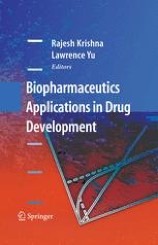
Biopharmaceutics applications in drug development
This book introduces fundamental concepts, methods, and advances in the areas of dissolution, absorption, and permeability and their key applications in dosage form performance. Case studies are used to discuss the applications of biopharmaceutic strategies in the development of successful drugs, with a specific focus on the applications of biopharmaceutic strategies in the development of successful drugs. The book presents an integrated view in linking pharmaceutic to the biological consequences of drug products and leverages those for decision making in drug development.
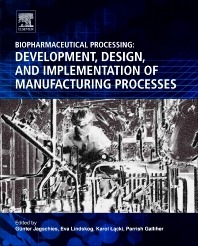
Biopharmaceutical processing : Development, design, and Implementation of manufacturing processes
Biopharmaceutical Processing: Development, Design, and Implementation of Manufacturing Processes covers bioprocessing from cell line development to bulk drug substances. The methods and strategies described are essential learning for every scientist, engineer or manager in the biopharmaceutical and vaccines industry. The integrity of the bioprocess ultimately determines the quality of the product in the biotherapeutics arena, and this book covers every stage including all technologies related to downstream purification and upstream processing fields. Economic considerations are included throughout, with recommendations for lowering costs and improving efficiencies.
Biopharmaceutical manufacturing progress, trends and challenges
Source of the latest innovative research and technical development in biomanufacturing systems. It is organised into 2 parts: 1) Manufacturing of recombinant therapeutic proteins (e.g. therapeutic antibodies, biosimilars/biogenerics) and 2) Manufacturing aspects of cell and gene therapy. Each with selected chapters on the following topics for both up- and downstream, such as: Advanced process strategies, especially continuous manufacturing, Advanced culture techniques, especially single-use systems, Process transfer, scale-up/scale-down models, Processing advances/Manufacturing productivity/efficiency, Model-assisted process understanding and development/Digital Twins, Process controls and analytics, Quality control, Quality by design, Facility design and full-scale commercial systems, manufacturing technology innovation.
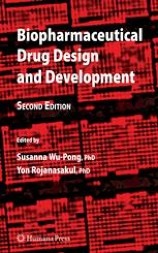
Biopharmaceutical drug design and development
Biopharmaceutical Drug Design and Development, Second Edition, updates the widely successful first edition, published in 1999. This new, expanded edition investigates the dozens of new biopharmaceutical drugs that have become available since the publication of the first edition. Among the drugs discussed are ones in the categories of monoclonal antibodies for in-vivo use, cytokines, growth factors, enzymes, immunomodulators, thrombolytics, and immonotherapies including vaccines. Additionally, the volume examines new and emerging technologies, such as bioinformatics, DNA microarrays, transgenics, therapeutic gene delivery, stem cells, nucleic acid-based therapeutics, and macromolecular drug delivery. Authors also study pharmacogenetics in the clinic and changes in biologic drug approval at the FDA. Biopharmaceutical Drug Design and Development, Second Edition, is a worthy sequel in the discussion on the dynamic, exciting field of biotechnology.
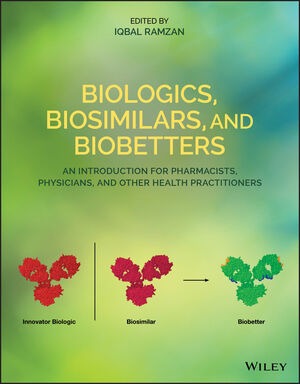
Biologics, biosimilars, and biobetters : An introduction for pharmacists, physicians and other health practitioners
Explains what pharmacists need to discuss the equivalence, efficacy, safety, and risks of biosimilars with physicians, health practitioners, and patients about Guides regulators on pragmatic approaches to dealing with these drugs in the context of rapidly evolving scientific and clinical evidence Balances scientific information on complex drugs with practical information, such as a checklist for pharmacists
Bioanalytical aspects in biological therapeutics
The book discusses the challenges and considerations for bioanalytical support, covering a wide range of central topics in the field, including overview and basic immunology for testing of biological therapeutics, pharmacokinetic aspects, clinical immunogenicity prediction and testing, biomarker testing, biotransformation assessment for biologics, statistical aspects of bioanalytical testing, regulatory expectations, and more
