



الصفحة 1
الصفحة 1

Non-metallic biomaterials for tooth repair and replacement
Focuses on the use of biomaterials for a range of applications in tooth repair and, in particular, dental restoration. Part one reviews the structure, modification and repair of dental tissues. The properties of enamel and dentin and their role in adhesive dental restoration are discussed, along with biomineralization and biomimicry of tooth enamel, and enamel matrix proteins (EMPs) for periodontal regeneration. Part two goes on to discuss the processing, bonding and wear properties of dental ceramics, glasses and sol-gel derived bioactive glass ceramics for tooth repair and replacement. Dental composites for tooth repair and replacement are then the focus of part three, including composite adhesive and antibacterial restorative materials for dental applications. T
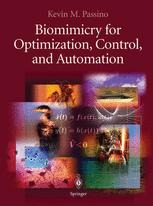
Biomimicry for Optimization, Control, and Automation
In this book, we focus onhowtousebiomimicryof the functionaloperationofthe “hardwareandso- ware” of biological systems for the development of optimization algorithms and feedbackcontrolsystemsthatextendourcapabilitiestoimplementsophisticated levels of automation. The primary focus is not on the modeling, emulation, or analysis of some biological system. The focus is on using “bio-inspiration” to inject new ideas, techniques, and perspective into the engineering of complex automation systems. There are many biological processes that, at some level of abstraction, can berepresentedasoptimizationprocesses,manyofwhichhaveasa basicpurpose automatic control, decision making, or automation.
Biomimetics for architecture & design : Nature - analogies - technology
Provides the readers with a timely guide to the application of biomimetic principles in architecture and engineering design. As a result of a combined effort by two internationally recognized authorities, the biologist Werner Nachtigall and the architect Göran Pohl, the book describes the principles which can be used to compare nature and technology, and at the same time it presents detailed explanations and examples showing how biology can be used as a source of inspiration and “translated” in building and architectural solutions (biomimicry). Even though nature cannot be directly copied, the living world can provide architects and engineers with a wealth of analogues and inspirations for their own creative designs. But how can analysis of natural entities give rise to advanced and sustainable design? By reporting on the latest bionic design methods and using extensive artwork, the book guides readers through the field of nature-inspired architecture, offering an extraordinary resource for professional architects, engineers, designers and urban planners, as well as for university teachers, researchers and students.
