



الصفحة 1
الصفحة 1
Multiscale Biomechanics and Tribology of Inorganic and Organic Systems : In memory of Professor Sergey Psakhie
This book gathers authoritative contributions concerning multiscale problems in biomechanics, geomechanics, materials science and tribology. It is written in memory of Sergey Grigorievich Psakhie to feature various aspects of his multifaceted research interests, ranging from theoretical physics, computer modeling of materials and material characterization at the atomic scale, to applications in space industry, medicine and geotectonics, and including organizational, psychological and philosophical aspects of scientific research and teaching as well

Intelligent Systems for Sustainable Person-Centered Healthcare
This book establishes a dialog among the medical and intelligent system domains for igniting transition toward a sustainable and cost-effective healthcare. The Person-Centered Care (PCC) positions a person in the center of a healthcare system, instead of defining a patient as a set of diagnoses and treatment episodes. The book discusses intelligent systems and their applications for healthcare data analysis, decision making and process design tasks. The measurement systems and efficiency evaluation models analyze ability of intelligent healthcare system to monitor person health and improving quality of life.

Innovations in healthcare and outcome measurement : New approaches for a healthy lifestyle
Aims to bring up-to-date new ideas, opinions, development, and critical issues in healthcare and personalized medicine. We are interested in relevant articles covering a broad range of topics, such as: Advances in medical devices, Digitalization and data-driven technologies, AI and algorithm-based drug development (molecule building, enhancement, clinical trials), Diagnostic imaging, Personalized medicine, Nutrition, Oral health care, Healthcare management in certain diseases and population groups, Regulatory developments, Data management, Digital healthcare.

Information Technologies in Biomedicine
As the medical information systems have been integrated in order to address the core of medicine, including patient care in ambulatory and in-patient setting, computer assisted diagnosis and treatment, telemedicine, and home care we are witnessing radical changes in the Information Technologies. This will continue in the years to come. This book presents a comprehensive study in this field and contains carefully selected articles contributed by experts of information technologies.

Image-Guided Interventions : Technology and Applications
Responding to the growing demand for minimally invasive procedures, Image-Guided Interventions: Technology and Applications provides a cohesive overview of the current technological advances in image-guided surgery, and their applications in the clinical environment.

Fondamenti di ingegneria clinica ; Vol.2 : Ecotomografia = Fundamentals of clinical engineering ; Vol.2 : Ultrasound
With the second volume of Clinical Engineering, the Author intends to provide an updated scientific-didactic overview of the physical principles of ultrasound, of the technology and of the implementation aspects of the ecotomograph.

Emerging Topics in Heat and Mass Transfer in Porous Media : From Bioengineering and Microelectronics to Nanotechnology
This book provides a unique collection of articles reviewing the state-of-the-art in the field of heat and mass transfer in porous media with particular emphasis to emerging technologies, from bioengineering and bio-tissues and microelectronics to nanotechnology.

Dental pulp derived mesenchymal stromal cells
Presents an evaluation of stem cells from human dental pulp as a reliable stem cell source for cell-based therapy to stimulate tissue regeneration. In this thoroughly updated and expanded second edition, the author covers mesenchymal stem cell (MSC) biology, various sources of MSCs, and the therapeutic potential of MSCs. Tooth regeneration, dental pulp-derived MSC, and the therapeutic potential of dental pulp derived stem cells is also covered.

Dental gold alloys and gold nanoparticles for biomedical applications
Focuses on recent advances in dental gold alloys and gold nanoparticles (GNPs) for biomedical applications. Dental gold alloys combine several highly desirable mechanical properties, such as high strength, ductility, and elasticity, with an extremely robust chemical stability in the mouth.

Cosmetic and reconstructive facial plastic surgery : A review of medical and biomedical engineering and science concepts
Provides an extensive overview of the most recent technological advancements in facial plastic and reconstructive surgeries and head and neck surgery through a thorough review of the literature in biomedical engineering, technology, and medicine. Coverage includes the most recent engineering and computing techniques, such as robotics, biomechanics, artificial intelligence (AI), deep learning (DL), machine learning (ML), and optimization, as well as the medical and surgical aspects of medical and scientific methods, surgical and non-surgical procedure types, complications, patient care, and psychological factors.
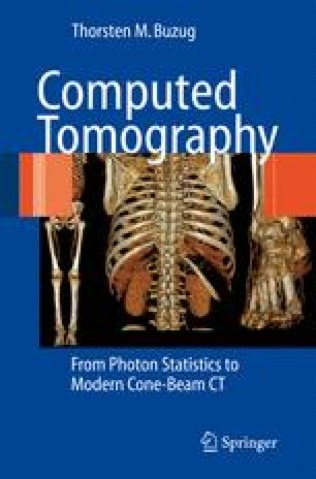
Computed Tomography : From Photon Statistics to Modern Cone-Beam CT
Tis book provides an overview of X-ray technology, the historic developmental milestones of modern CT systems, and gives a comprehensive insight into the main reconstruction methods used in computed tomography.

Computational Physiology : Simula Summer School 2021 − Student Reports
Compiles student reports from the 2021 Simula Summer School in Computational Physiology. Interested readers will find herein a number of modern approaches to modeling excitable tissue. This should provide a framework for tools available to model subcellular and tissue-level physiology across scales and scientific questions.

Collagen: Structure and Mechanics
Collagen: Structure and Mechanics provides a cohesive introduction to collagen-rich tissues, such as tendon, bone, cornea or arterials walls. Written in a clear and didactic manner, this volume reviews current knowledge on hierarchical structure, mechanical properties, deformation and strengthening mechanisms, and discusses many applications in biomaterials and tissue engineering.
Cognitive Supervision for Robot-Assisted Minimally Invasive Laser Surgery
This thesis lays the groundwork for the automatic supervision of the laser incision process, which aims to complement surgeons’ perception of the state of tissues and enhance their control over laser incisions. The research problem is formulated as the estimation of variables that are representative of the state of tissues during laser cutting. Prior research in this area leveraged numerical computation methods that bear a high computational cost and are not straightforward to use in a surgical setting. This book proposes a novel solution to this problem, using models inspired by the ability of experienced surgeons to perform precise and clean laser cutting. It shows that these new models, which were extracted from experimental data using statistical learning techniques, are straightforward to use in a surgical setup, allowing greater precision in laser-based surgical procedures.
Cell Motility
Cell motility is a fascinating example of cell behavior which is fundamentally important to a number of biological and pathological processes. It is based on a complex self-organized mechano-chemical machine consisting of cytoskeletal filaments and molecular motors. In general, the cytoskeleton is responsible for the movement of the entire cell and for movements within the cell. The main challenge in the field of cell motility is to develop a complete physical description on how and why cells move. For this purpose new ways of modeling the properties of biological cells have to be found. This long term goal can only be achieved if new experimental techniques are developed to extract physical information from these living systems and if theoretical models are found which bridge the gap between molecular and mesoscopic length scales. Cell Motility gives an authoritative overview of the fundamental biological facts, theoretical models, and current experimental developments in this fascinating area.
Career development in bioengineering and biotechnology : Roads well laid and paths less traveled
Career Development in Bioengineering and Biotechnology is an indispensable guide to some of the most exciting career and professional growth opportunities in science, engineering, and beyond, and a "must read" for anyone interested in a career related to this burgeoning field.
Brain-computer interfaces : An international sssessment of research and development trends
This WTEC study gathered information on worldwide status and trends in BCI research to disseminate to government decisionmakers and the research community. The study reviewed and assessed the state of the art in sensor technology, the biotic-abiotic interface and biocompatibility, data analysis and modeling, hardware implementation, systems engineering, functional electrical stimulation, noninvasive communication systems, and cognitive and emotional neuroprostheses in academic research and industry.

Brain and Human Body Modeling 2020 : Computational Human Models Presented at EMBC 2019 and the BRAIN Initiative® 2019 Meeting
This book describes modern applications of computational human modeling in an effort to advance neurology, cancer treatment, and radio-frequency studies including regulatory, safety, and wireless communication fields.
Brain and Human Body Modeling : Computational Human Modeling at EMBC 2018
This book describes modern applications of computational human modeling with specific emphasis in the areas of neurology and neuroelectromagnetics, depression and cancer treatments, radio-frequency studies and wireless communications. Special consideration is also given to the use of human modeling to the computational assessment of relevant regulatory and safety requirements. Readers working on applications that may expose human subjects to electromagnetic radiation will benefit from this book’s coverage of the latest developments in computational modelling and human phantom development to assess a given technology’s safety and efficacy in a timely manner.
Biomedical Visualisation ; Vol.9
This edited book explores the use of technology to enable us to visualise the life sciences in a more meaningful and engaging way. It will enable those interested in visualisation techniques to gain a better understanding of the applications that can be used in visualisation, imaging and analysis, education, engagement and training. The reader will also be able to learn about the use of visualisation techniques and technologies for the historical and forensic settings.In this volume, there are chapters which examine forensic and historical visualisation techniques and digital reconstruction, ultrasound, virtual learning resources and patient utilised software and hardware. The use of HoloLens as a disruptive technology is discussed as well as historical items as a feature in a modern medical curriculum. It concludes with a fascinating chapter on pulse extraction from facial videos.
