



الصفحة 1
الصفحة 1
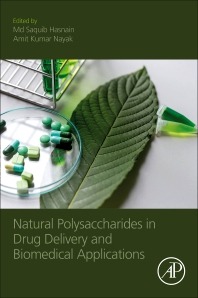
Natural Polysaccharides in Drug Delivery and Biomedical Applications
Provides a fundamental overview of natural polysaccharides, their sources, extraction methodologies, and characterizations. It covers specific natural polysaccharides and their effective application in drug delivery and biomedical use. Additionally, chapters in the book discuss key topics including the sources and extraction methodologies of natural polysaccharides, their role in tissue engineering applications, polysaccharide-based nanoparticles in biomedical applications, and their role in the delivery of anticancer drugs. Written by industry leaders and edited by experts, this book emphasizes recent advances made in the field.Natural Polysaccharides in Drug Delivery and Biomedical Applications provides academics, researchers, and pharmaceutical health care professionals with a comprehensive book on polysaccharides in pharmaceutical delivery process.
Nanomaterials and Nanosystems for Biomedical Applications
The book includes expert reviews on the advances and current problems associated with the implants and nanodevices along with their applications in medicine, pharmaceutics, cancer therapy, gene transfer and drug delivery. The editor, M. R. Mozafari (PhD), has been working in the field of nanobiotechnology for the past 14 years and has produced more than 60 publications.

Nanofillers : Fabrication, characterization and applications of organic nanofillers
Explores the modifying effects of various nanofillers on mechanical and physical properties of polymer nanocomposites. Looking at the four basic aspects of processing, characterization, properties, and applications, it analyzes how their features can allow for innovative multifunction within industry. Covering design, production, and manufacture, this book focuses on meeting end-use requirements and the fabrication of materials. The importance of mindful design and the use of an appropriate synthesis method is the primary lens through which theory and practice are discussed. This volume looks at the various synthesis methods available for organic nanofillers and what characterizes them. Properties including mechanical, thermal, electrical, and tribological are thoroughly examined, along with the various computational techniques used to determine them. With important sustainable properties, nanofillers are essential to meeting the increasing demand for biodegradable and environmentally friendly materials. This book details the role nanofillers have to play in sustainability, alongside economic factors such as efficient manufacturing processes.

Modified Fibers with Medical and Specialty Applications
This book will be an invaluable resource for researchers and others interested in future developments in fiber technology. Several innovative applications for natural and synthetic fibers are described in considerable detail with emphasis on the experimental data that supports these new applications. From bandages to magnetic materials and from antibacterial clothing to implants, creative modifications to fibers are described that could one day become commonplace. Never before has this much new information about fiber modification been packaged into one book volume. In this book the world’s leading experts describe their most recent research in their areas of expertise.

Modeling of Biological Materials
This interdisciplinary collection of surveys highlights the central role played by the mathematical modeling of mechanical properties having an effect on the biology, chemistry, and physics of living matter. One of the main goals of the book is to present—in a single, self-contained resource—topics that are widely scattered across the literature in a variety of journals having mutually nonintersecting communities of readers, such as applied mathematicians, engineers, biologists, and physicians. Readers coming from diverse backgrounds are provided with basic modeling ideas and tools to address important problems in the medical and health sciences. Presented are appropriate models as well as their implementation through numerical and computer simulations, which may lead to potential technological innovations useful in medicine.
Medicinal Chemistry and Pharmacological Potential of Fullerenes and Carbon Nanotubes
Medicinal Chemistry and Pharmacological Potential of Fullerenes and Carbon Nanotubes features important insights into the applications of fullerenes and carbon nanotubes. It discusses the fullerene and nanotubes derivatives which are effective against viruses, cells, and bacteria and those which are able to interact and inhibit certain enzymes. Also covered in this book are the formation of complex structures between biologically active molecules and carbon materials. Furthermore, the application of fullerenes in certain medical therapies is explored, including the very recent discovery of new bio-compatible media which could be used as carriers in the delivery of fullerenes in vivo. An additional topic of this text is the formation of hybrids between nanotubes and biological molecules and their use as chemical sensors.

Medical Applications of Colloids
This volume collects chapters dealing with significant topics in colloids and surfaces relevant to medical applications. The book will be of interest to scientists and practitioners in areas as diverse as medical diagnostics, drug formulations, X-ray photoelectron spectroscopy of biomaterials, and particle transport in human airways.
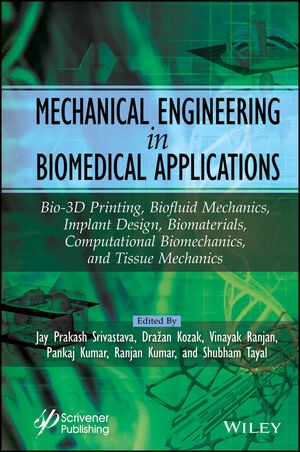
Mechanical engineering in biomedical application: bio-3D printing, biofluid mechanics, implant design, biomaterials, computational biomechanics, tissue mechanics
Explores the latest research and developments related to the interdisciplinary field of biomedical and mechanical engineering offering insights and perspectives on the research, key technologies, and mechanical engineering techniques used in biomedical applications.
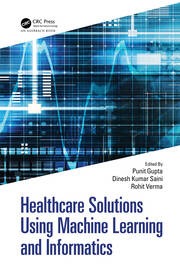
Healthcare solutions using machine learning and informatics
Covers novel and innovative solutions for the healthcare that apply machine learning and biomedical informatics technology. The healthcare sector is one of the most critical in society. This book presents a series of artificial intelligence, machine learning, intelligent IoT-based solutions for medical image analysis, medical big data processing, disease predictions. Machine learning and artificial intelligence use cases in healthcare presented in the book give researchers, practitioners, and students a wide range of practical examples of cross-domain convergence. The wide variety of topics covered include: Artificial Intelligence in healthcare Machine learning solutions for such disease as diabetes, arthritis, cardiovascular disease, and COVID-19 Big data analytics solutions for healthcare data processing Reliable biomedical applications using AI models Intelligent IoT in healthcare. The book explains fundamental concepts as well as the advanced use cases illustrating how to apply emerging technologies such as machine learning, AI models, data informatics into practice to tackle challenges in the field of healthcare with real-world scenarios. Chapters contributed by noted academicians and professionals examine various solutions, frameworks, applications, case studies, and best practices in the healthcare domain

Handbook of biomedical image analysis ; Vol.2 : Segmentation models ; Part B
Handbook of Biomedical Image Analysis: Segmentation Models (Volume II) is dedicated to the segmentation of complex shapes from the field of imaging sciences using different mathematicaltechniques. This volume is aimed at researchers and educators in imaging sciences, radiological imaging, clinical and diagnostic imaging, physicists covering different medical imaging modalities, as well as researchers in biomedical engineering, applied mathematics, algorithmic development, computer vision, signal processing, computer graphics and multimedia in general, both in academia and industry.

Handbook of biomedical image analysis : Vol.3: Registration models
Handbook of Biomedical Image Analysis: Registration Models (Volume III) is dedicated to the algorithms for registration of medical images and volumes. This volume is aimed at researchers and educators in imaging sciences, radiological imaging, clinical and diagnostic imaging, biomedical engineering, physicists covering different medical imaging modalities and researchers in applied mathematics, algorithmic development, computer vision, signal processing, computer graphics and multimedia in general, both in academia and industry.
Functional Biomaterials : Drug Delivery and Biomedical Applications
Explores in depth a wide range of functional biomaterials-based systems for drug, gene delivery, and biomedical aspects. The chapters cover newer technologies such as polymeric micelle, pH-responsive biomaterials, stimuli-responsive hydrogels, silk fibroin, inorganic biomaterials, synthetic biomaterials, 3D printed biomaterials, metallic biomaterials, ceramic and hybrid biomaterials. It also describes the theranostic approaches for cancer therapy, the biomaterials-based nanofibers scaffolds in tissue engineering, as well as the strategies applications of metallic biomaterials for the medical and dental prosthetic field.

Frontiers in Materials Research
This book covers recent progress in advanced materials research as reviewed by forefront researchers in contributions which would also be suitable for researchers and postgraduates in a related field. It starts with comprehensive reviews of exotic materials for electronic devices, such as wide gap semiconductors and organic materials. They are followed by recent topics on eco- and bio-friendly materials, which attract more and more attention in the materials research community. Atomic scale characterization and control of nanostructured materials are discussed in later chapters that review the general possibilities for precise control of structures and properties in the developments of advanced materials.

Essentials of industrial pharmacy
Presents various pharmaceutical processes and equipment that are frequently used for production of pharmaceutical dosage forms, along with quality control tests of these dosage forms. Pictorial/graphical illustrations provide easier understanding of complex pharmaceutical concepts, manufacturing processes of pharmaceutical dosage forms. Since it is imperative for pharmacy students to have a clear understanding of the basic concepts used in development of drugs into suitable and stable dosage forms.

Emerging Technologies in Knowledge Discovery and Data Mining ; PAKDD 2007 International Workshops, Nanjing, China, May 22-25, 2007, Revised Selected Papers
The objective of this volume is to offer the excellent presentations to the public, and to promote the study exchange among researchers worldwide.The first part of this volume contains industrial track. This track was organized to attract papers on new technology trends and real-world solutions in different industry sectors. The succeeding chapters include Data Mining for Biomedical Applications aimed at attracting top researchers, practitioners and students from around the world to discuss data mining applications in the field of bioinformatics
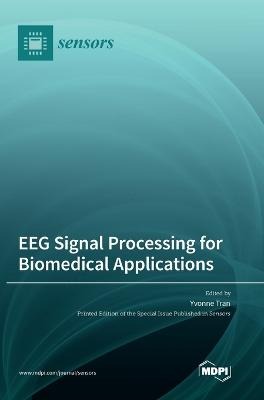
EEG signal processing for biomedical applications
Focuses on electroencephalography (EEG) signal processing in biomedical engineering applications. EEG signals are used widely in clinical and research settings to provide cognitive and emotional state information. In addition to capturing complex neural patterns at high speeds, EEG signals are a reliable and non-invasive way of measuring the electrical activity in the brain. By examining various novel analysis and signal processing methods, this collection of papers provides a better understanding of cognitive states and brain activity.

Dental gold alloys and gold nanoparticles for biomedical applications
Focuses on recent advances in dental gold alloys and gold nanoparticles (GNPs) for biomedical applications. Dental gold alloys combine several highly desirable mechanical properties, such as high strength, ductility, and elasticity, with an extremely robust chemical stability in the mouth.
Data Mining for Biomedical Applications ; PAKDD 2006 Workshop, BioDM 2006, Singapore, April 9, 2006, Proceedings
This book constitutes the refereed proceedings of the International Workshop on Data Mining for Biomedical Applications, BioDM 2006, held in Singapore in conjunction with the 10th Pacific-Asia Conference on Knowledge Discovery and Data Mining (PAKDD 2006). The 14 revised full papers presented together with 1 keynote talks were carefully reviewed and selected from 35 submissions. The papers are organized in topical sections on protein-protein interactions, database and search, bio data clustering, and in-silico diagnosis.

Computational Discovery of Scientific Knowledge : Introduction, Techniques, and Applications in Environmental and Life Sciences
Advances in technology have enabled the collection of data from scientific observations, simulations, and experiments at an ever-increasing pace. For the scientist and engineer to benefit from these enhanced data collecting capabilities, it is becoming clear that semi-automated data analysis techniques must be applied to find the useful information in the data. Computational scientific discovery methods can be used to this end: they focus on applying computational methods to automate scientific activities, such as finding laws from observational data. In contrast to mining scientific data, which focuses on building highly predictive models, computational scientific discovery puts a strong emphasis on discovering knowledge represented in formalisms used by scientists and engineers, such as numeric equations and reaction pathways. This state-of-the-art survey provides an introduction to computational approaches to the discovery of scientific knowledge and gives an overview of recent advances in this area, including techniques and applications in environmental and life sciences.

Mathematical Modeling of Biological Systems ; Vol. I : Cellular Biophysics, Regulatory Networks, Development, Biomedicine, and Data Analysis
This two-volume, interdisciplinary work is a unified presentation of a broad range of state-of-the-art topics in the rapidly growing field of mathematical modeling in the biological sciences. Highlighted throughout both works are mathematical and computational approaches to examine central problems in the life sciences, ranging from the organizational principles of individual cells to the dynamics of large populations.
