



الصفحة 1
الصفحة 1

Oncogenes Meet Metabolism : From Deregulated Genes to a Broader Understanding of Tumour Physiology
In 1920s, Otto Warburg described the phenomenon of ‘aerobic glycolysis’, the ability of tumour cells to convert glucose to lactate in the presence of normal oxygen conditions. Warburg’s hypothesis of an altered metabolism in cancer cells found no immediate acceptance, though it was latter confirmed for most human tumours. With the advent of molecular biology the focus in tumour research has shifted towards the search for oncogenes. However, the interest in cancer molecular profiling eventually led to a renaissance of the Warburg effect trying to combine genetic alterations with effects on metabolism with the help of modern analytic technologies to rapidly analyze broad varieties of metabolites in various tissues and bodyfluids (metabonomics).

New developments in nanosensors for pharmaceutical analysis ; 1st ed.
Presents an overview of developments in nanosensor usage in pharmaceutical analysis, thereby helping pharmaceutical companies attain reliable, precise, and accurate analysis of pharmaceuticals. This book presents very simple, precise, sensitive, selective, fast, and relatively inexpensive methods for pre-treatment, prior to analysis. These methods may be considered for further application in clinical studies and assays. The book includes the manufacturing of sensors for pharmaceutical analysis at nano- or smaller scales, and gives simple and relatable designs for the fabrication of sensors.

Neurobiology : Methods and protocols
Serves as a guide for students in the field of neurobiology, and be a bridge between basic science researchers, doctors, and surgeons in clinical practice. Written in the highly successful Methods in Molecular Biology series format, chapters include introductions to their respective topics, lists of the necessary materials and reagents, step-by-step, readily reproducible laboratory protocols, and tips on troubleshooting and avoiding known pitfalls.

Natural products and human diseases : Pharmacology, molecular targets, and therapeutic benefits
Provides insight into the clinical and translational application of natural products in human diseases Details the impact of natural products on a molecular basis Describes the identification of biomarkers, therapeutic effects of phytochemicals, and and new targets

Nanomedicine : Innovations, applications, and breakthroughs in the quest for health and medicine's future
Revolutionizing healthcare, by providing innovative solutions to some of the most challenging issues in medicine. This book provides an in-depth overview of nanoscale materials and devices that are advancing diagnostics, therapeutics, and personalized care in medical field. It focuses on nanomedicine’s impact on vaccine efficacy as well as innovative diagnosis and therapy for various type of cancer while addressing concerns about safety and toxicity. It examines how nanotechnology is enhancing drug delivery by precisely targeting medicines to specific cells or tissues, thereby increasing treatment efficacy with reduced side effects. Explores how nanoparticles are advancing medical imaging for earlier and more accurate disease detection, and how nanosensors allow real-time biomarker monitoring for faster and more reliable diagnoses. Additionally, it explores nanomedicine's role in managing cardiovascular diseases, improving bone health through nano-extracellular vesicles, and regenerative medicine, including ongoing clinical trials and ethical considerations.

Nanobiosensors : From design to applications
Nanobiosensors - From Design to Applications covers several aspects of biosensors beginning from the basic concepts to advanced level research. It will help to bridge the gap between various aspects of biosensors development technology and applications. It covers biosensors related material in broad spectrum such as basic concepts, biosensors & their classification, biomarkers & their role in biosensors, nanostructures-based biosensors, applications of biosensors in human diseases, drug detection, toxins, and smart phone based biosensors.
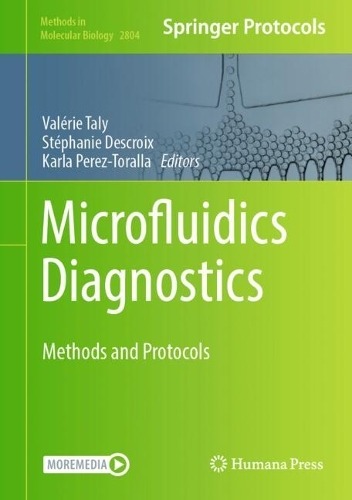
Microfluidics diagnostics : Methods and protocols
Explores a wide range of microfluidic-based approaches that exploit the unique features of microfluidic devices, which hold significant potential in the field of diagnosis. Beginning with a section on microchips for sample preparation, including cell-free DNA, exosomes, and cells, the book continues by covering protein marker analysis and detection, single-cell analysis, analysis of bacteria and viruses, as well as human cell-based culture and analysis. Written for the highly successful Methods in Molecular Biology series, chapters include introductions to their respective topics, lists of the necessary materials and reagents, step-by-step and readily reproducible laboratory protocols, and tips on troubleshooting and avoiding known pitfalls.

Metastasis of Breast Cancer
The book has covered a broad range of topics in the metastasis of breast cancer, from genetics, biology to clinical management. Main topics include genetic control, biology, growth factors, cell adhesion, cell motility and invasion, natures of bone metastasis, sentinel node therapies, hormonal links, new biomarkers and detection of micrometastasis, and diagnosis The book also covers the current treatment options including surgical management, chemotherapy and hormonal therapies.

Metabolome Analyses : Strategies for Systems Biology
Metabolome Analyses is intended as a follow-up to Metabolic Profiling: Its Role in Biomarker Discovery and Gene Function Analysis (Kluwer, 2003). That text offered guidelines to currently available technology, bioinformatics and databases. Evidence was presented showing metabolic profiling as a valuable addition to genomics and proteomics strategies devoted to drug discovery and development. This book focuses on how metabolic profiling is being more comprehensively integrated with the other "omics" technologies. It provides more practical applications of such "panomics" or "Systems Biology" approaches. The expanding use of mass spectrometry as a measurement technology in metabolic profiling is addressed through demonstrated applications. The integration of metabolic profiling and proteomics is probably most developed for plant-based studies, which was not addressed in Volume 1. Other areas related to metabolic profiling continue to show significant development. These include database strategies and an increased acceptance by the pharmaceutical industry of metabolic profiling. Also covered is the use of in silico metabolic networks. Again the focus is primarily on the pharmaceutical industry but the importance of metabolic profiling to studies on human nutrition (a burgeoning area) is discussed.

Integrated diagnostics and theranostics of thyroid diseases
Provides basic concepts on Integrated Diagnostics and Theranostics with special emphasis on different human thyroid diseases. Thyroid diseases are increasingly detected (incidentally in many cases) but are clinically negligible in a significant proportion of patients. Accordingly, it is urgent to move from the simple disease detection to a reliable disease characterization in order to concentrate efforts on patients in need of tailored disease management.
Immunotherapy in 2020 : Visions and trends for targeting inflammatory disease
Features contributions from participants of the ESRF symposium on Immunotherapy in 2020-Visions and Trends for Targeting Inflammatory Diseases held in Potsdam near Berlin, Germany, in October 2006. The symposium presentations covered the main mechanisms of immunoregulation.

Imaging in Drug Discovery and Early Clinical Trials
Efficient tools for the selection and validation of drug targets both at the preclinical and clinical level are required. Non-invasive imaging and in particular molecular imaging methods are becoming essential technologies to support drug discovery and dvelopment. Imaging provides structural, functional, metabolic and molecular readouts that are being applied to characterize a disease phenotype (diagnosis), to elucidate molecular mechanisms involved, to evaluate drug efficacy and safety, and to identify potential biomarkers of the drug's mechanism-of-action, efficacy and safety. Non-invasive imaging techniques constitute a bridge between preclinical and clinical drug evaluation. In this monograph the contribution of imaging modalities to the various stages of drug discovery and development, from early target validation to their use in clinical development programs, is described. Chapters are devoted to the description of the drug discovery process as such, to the various imaging modalities being used both preclinically and clinically, to applications of imaging during the optimization of a lead compound (addressing issues such as bioavailability and efficacy) and during the drug safety evaluation.

Gut orchestra : Micro-symphony turned onco-cacophony
The role of microbiota in colorectal cancer has been studied since alterations in its composition were observed. Ever since, there are more and more pieces of evidence that microbiota could be implicated in colorectal cancer progression. Thus, the components of the microbiota could be biomarkers for the diagnosis and prognosis of colorectal cancer. It is truly important to address how the microbiota interacts with the host and how the host shapes the microbiota, in order to understand the biological pathways and mechanisms involved in their relationship and the consequences of their interactions in colorectal cancer.

Geology and Habitability of Terrestrial Planets
This book has resulted from a workshop at the International Space Science Institute (ISSI) in Bern, Switzerland (5-9 September 2005) that brought together planetary geologists, geophysicists, atmospheric scientists, and biologists to discuss the multi-faceted problem of how the habitability of a planet co-evolves with the geology of the surface and interior, the atmosphere, and the magnetosphere.

Foodborne bacterial pathogens : Methods and protocols
This updated volume presents a compilation of various representative techniques and approaches currently used to study bacterial foodborne pathogens. Chapters guide the reader through bacterial pathogen detection and quantification in food, molecular, phenotypic, metabolic characterization of food pathogens, and ecology of foodborne bacterial pathogens. Written in the highly successful Methods in Molecular Biology series format, chapters include introductions to their respective topics, lists of the necessary materials and reagents, step-by-step, readily reproducible laboratory protocols, and key tips on troubleshooting and avoiding known pitfalls.

Environmental Health in Central and Eastern Europe
Complex chemical mixtures impact our health every day. In the United States, and also in Central and Eastern Europe, there are a number of locations where complex chemical mixtures have been released to environmental media. Although exposure to mixtures is common, minimal information exists to quantify these exposures, or to determine their impact on human or ecological receptors. These proceedings present some of the most current research conducted to quantify complex mixtures in the environment and investigate their potential impact on human health. Many of the manuscripts reported in these proceedings represent the most up-to-date measurements of population exposures in Central and Eastern Europe. These studies are of value to health and environmental professionals around the world as they develop strategies for assessing exposures, remediating contaminated environments, and improving public health.

Drug safety evaluation : Methods and protocols
Focuses on the most recent advances in the field of drug safety evaluation. Divided into seven parts, chapters detail specific aspects related to the experimental design of preclinical studies conducted to support the safety of pediatric and combination drugs, necropsy and histopathology evaluation, mass spectrometry imaging, genetic toxicology protocols including the Pig-a mutation assay, safety pharmacology methods such as automatization of patch-clamp procedures, target safety assessment for investigative toxicology, screening assays for developmental toxicology, and methods to characterize novel translational safety biomarkers like microRNAs. Written in the highly successful Methods in Molecular Biology series format, chapters include introductions to their respective topics, lists of the necessary materials and reagents, step-by-step, readily reproducible laboratory protocols, and tips on troubleshooting to avoid known pitfalls.

Diabetic Kidney Disease
Presents the latest information on the clinical-pathological features of diabetic kidney disease. The data included is based on a cohort study of biopsy-proven diabetic nephropathy patients and nephrosclerosis patients, who were observed over a long term, and on the long-term registry for diabetic nephropathy (diabetic kidney disease) in Japan. It provides a clinical-pathological axis in clinical settings, including differential pathological/clinical diagnoses of CKD in diabetic patients (e.g. the presence of “classic” diabetic nephropathy and/or nephrosclerosis and/or other primary kidney diseases). The abundant biopsy specimens with long-term medical records provide a detailed pathological and clinical description. The book also includes urine-sample data for developing and validating possible candidates for novel biomarkers for diabetic kidney disease. Many countries, including Japan, have ageing populations, in which nephrosclerosis contributes to the progression of kidney lesions in patients with diabetic kidney disease. As such, a comparison of a diabetic nephropathy cohort with nephrosclerosis is indispensable to offer better treatments.

Critical Issues in Head and Neck Oncology : Key Concepts from the Seventh THNO Meeting
This book discusses the most current issues in head and neck cancer with a focus on current trends such as biomarkers, precision medicine and immunotherapy. New approaches in the diagnosis such as liquid biopsies and imaging biomarkers to predict radiotherapy toxicity as well as approaches in the surgical management of head and neck cancers are discussed. The book discusses medical and surgical approaches in both primary, recurrent and metastatic disease and also covers approaches for rare head neck cancers

Marine Organic Matter : Biomarkers, Isotopes and DNA
The oceans contain a great biodiversity of marine organisms. They include a rich variety of unusual genes and biochemistries and hence a diverse array of organic compounds ranging from colourful carotenoids and chlorophylls to lipids with structures ranging from the simple to the complex. This volume brings together ten chapters on the occurrence and identification of the lipid biomarkers and of pigments in marine waters. It describes how they can be used in conjunction with stable isotopes and molecular biology to ascertain the sources and fate of organic matter (both natural and pollutant) in the sea and underlying sediments. The authors are each experts in their field and the chapters provide both an overview of the state-of-the-art and knowledge gaps together with abundant detail to satisfy the needs of specialists and non-specialists alike.
