



الصفحة 1
الصفحة 1

Ocean-atmosphere interactions of gases and particles
The oceans and atmosphere interact through various processes, including the transfer of momentum, heat, gases and particles. In this book leading international experts come together to provide a state-of-the-art account of these exchanges and their role in the Earth-system, with particular focus on gases and particles. Chapters in the book cover: i) the ocean-atmosphere exchange of short-lived trace gases; ii) mechanisms and models of interfacial exchange (including transfer velocity parameterisations); iii) ocean-atmosphere exchange of the greenhouse gases carbon dioxide, methane and nitrous oxide; iv) ocean atmosphere exchange of particles and v) current and future data collection and synthesis efforts.

Modern Biogeochemistry : Environmental Risk Assessment
At present, quantitative ecological risk assessment is widely used in different contexts, however very often without an understanding of the natural mechanisms that drive the processes of environmental and human risk. Its application is often accompanied by high uncertainty about risk values. On the other hand, the sustainability of modern technoecosystems is known because of their natural biogeochemical cycling that has been transformed to various extents by anthropogenic studies. Accordingly our understanding of the principal mechanisms that drive the biogeochemical food webs allows us to present a quantitative ecological risk assessment and to propose technological solutions for management of various ERA enterprises. It also enables us to devise a powerful mechanism for ecological insurance, to assign responsibilities and protect rights while managing the control of damage from natural and anthropogenic accidents and catastrophes.

Forest and Rangeland Soils of the United States Under Changing Conditions : A Comprehensive Science Synthesis
This book synthesizes leading-edge science and management information about forest and rangeland soils of the United States. It offers ways to better understand changing conditions and their impacts on soils, and explores directions that positively affect the future of forest and rangeland soil health.

Eutrophication of Shallow Lakes with Special Reference to Lake Taihu, China
Eutrophication and algal blooms are worldwide environmental issues in lakes. The eutrophication process and formation mechanisms of algal blooms are particularly complicated in shallow lakes due to the strong lake–land, air–water and water–sediment interactions. This volume features papers presented at the International Symposium on the Eutrophication Process and Control in Large Shallow Lakes – with Special Reference to Lake Taihu, a Shallow Subtropical Chinese Lake, held in Nanjing, China, 22–26 April, 2005. The topics include: physical processes and their effects on shallow lake ecosystems; biogeochemistry of sediments and nutrient cycling in shallow lakes; algal blooms and ecosystem response in shallow lakes; eutrophication control and restoration in shallow lakes; and resource exploitation, environmental protection and sustainable management in shallow lakes.

Estuaries
Aspects of the biogeochemistry of estuaries from a variety of environments, from the tropics to the Arctic, are discussed. In most cases the courses of these rivers have been altered by dams or diversions; the results of these changes on the nature of the estuary are also discussed, where such data is available. In the case of the Tasmanian rivers, the estuary of the Huon, a largely untouched river, is contrasted with that of the Derwent, a river heavily influenced by industry. The future state of all of these estuaries may be a sensitive indicator of shifts in global weather patterns.

Ecology, Planning, and Management of Urban Forests : International Perspective
Ecology, Planning, and Management of Urban Forests contains studies and perspectives on urban forests from a broad array of basic and applied scientific disciplines including ecosystem ecology, biogeochemistry, landscape ecology, plant community ecology, geography, and social science. The book contains contributions from experts in Asia, Europe, and North America, allowing the reader to evaluate methods and management that are appropriate for particular geographic, environmental, and socio-political contexts. Urban forests are also approached on regional and landscape scales to encompass more natural environments in and around cities, rather than within arbitrary municipal boundaries. The studies provided are intended to motivate scientists, planners, and managers to work together and to adopt a broader landscape ecology approach to urban forestry, and in so doing, better address the pressing needs for improving the quality of life in urban environments.

Ecology of Tidal Freshwater Swamps of the Southeastern United States
This book draws together the latest findings from investigators focusing on the hydrological processes, community organization, and stress physiology of freshwater, tidally influenced land-margin forests of the southeastern United States. It describes the land use history that led to the restricted distribution of these wetlands, and provides descriptions of the hydrology, soils, biogeochemistry, and physiological ecology of these systems, highlighting the similarities shared among tidal freshwater forested wetlands.
Marine carbon biogeochemistry : A primer for earth system scientists
This book discusses biogeochemical processes relevant to carbon and aims to provide with insight into the functioning of marine ecosystems. A carbon centric approach has been adopted, but other elements are included where relevant or needed. The book focuses on concepts and quantitative understanding of primary production, organic matter mineralization and sediment biogeochemistry. The impact of biogeochemical processes on inorganic carbon dynamics and organic matter transformation are also discussed.
Chemolithoautotrophic Bacteria : Biochemistry and Environmental Biology
Covers in detail advances in the biochemistry and physiology of several chemolithoautotrophic bacteria as well as their relationship to certain environments. Included are recent findings regarding the oxidation mechanisms of ammonia, nitrite, sulfur compounds, and ferrous iron by special bacteria. The characteristics of many cytochromes are described to further advance the understanding of bacterial oxidation systems of inorganic compounds. Applications of bacteria, such as in sewage treatment and in biohydometallurgy, among others, are detailed, and bacteria considered closest to the origins of life are discussed in the final chapter.
Carbon in the Geobiosphere : Earth's outer shell
Carbon and carbon dioxide always played an important role in the geobiosphere that is part of the Earth’s outer shell and surface environment. The book’s eleven chapters cover the fundamentals of the biogeochemical behavior of carbon near the Earth’s surface, in the atmosphere, minerals, waters, air-sea exchange, and inorganic and biological processes fractionating the carbon isotopes, and its role in the evolution of inorganic and biogenic sediments, ocean water, the coupling to nutrient nitrogen and phosphorus cycles, and the future of the carbon cycle in the Anthropocene. This book is mainly a reference text for Earth and environmental scientists; it presents an overview of the origins and behavior of the carbon cycle and atmospheric carbon dioxide, and the human effects on them. The book can also be used for a one-semester course at an intermediate to advanced level addressing the behavior of the carbon and related cycles.
Carbon and Its Domestication
Carbon is chemically versatile and is thus the body and soul of biological, geological, ecological and economic systems. Its appropriation by humans through diversion of its biogeochemical cycle has been a mainstay of development. This domestication is characterized by a number of thresholds: control of fire, development of agriculture, expansion of Europe, fossil-fuel use and biotechnology. All have exacted an environmental toll, not least being climatic change and biodiversity loss. Carbon management now and in the future is a ‘hot’ political issue.
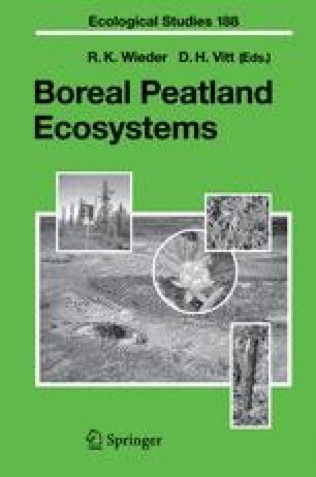
Boreal Peatland Ecosystems
This volume adopts an ecosystems approach to understanding the world's boreal peatlands. It focuses on biogeochemical patterns and processes, production, decomposition, and peat accumulation, and provides additional information on animal and fungal diversity. A recurring theme is the legacy of boreal peatlands as impressive accumulators of carbon as peat over millennia. This carbon legacy is under threat from a wide diversity of disturbances, including wildfire, ongoing climate change, the changing chemistry of atmospheric deposition, and continuing resource exploitation. The volume is of inte.
Biogeochemistry of Trace Elements in Arid Environments
Global warming has worsened the water resource crisis in many arid zones worldwide, from Africa to Asia, affecting millions of people and putting them at risk of hunger. Effective management of arid zone resources, including understanding the risks of toxic trace and heavy elements to humans, coupled with the need to produce more food to feed the world’s growing population, has thus become increasingly important. This very timely book, the only one of its kind on the market, fills the gap of our knowledge of trace elements in these regions. This book begins by introducing the nature and properties of arid zone soil, followed by an updated overview and comprehensive coverage of the major aspects of the trace elements and heavy metals of most concern in the world’s arid and semi-arid soils. These aspects include: - content and distribution - solution chemistry - solid-phase chemistry - selective sequential dissolution techniques - transfer fluxes - bioavailability - pollution and remediation In order to illustrate the themes, a comprehensive and focused case study on transfer fluxes of trace elements in Israeli arid soils is presented. Finally it closes with the global perspectives on anthropogenic interferences in the natural trace elements’ distribution.
Adaptation to Life at High Salt Concentrations in Archaea, Bacteria, and Eukarya
This book complements “Halophilic Microorganisms”, edited by A. Ventosa and published by Springer-Verlag (2004), “Halophilic Microorganism and their Environments” by A. Oren (2002), published by Kluwer Academic Publishers as volume 5 of “Cellular Origins, Life in Extreme Habitats and Astrobiology” (COLE), and “Microbiology and Biogeochemistry of Hypersaline Environments” edited by A. Oren, and published by CRC Press, Boca Raton (1999).
