



الصفحة 1
الصفحة 1

Nitrogen Cycling in the Americas : Natural and Anthropogenic Influences and Controls
The rate of creation of reactive nitrogen (NR) on the earth has dramatically increased in the last half century mainly due to the production of N-fertilizer through the Haber-Bosch process, fossil fuel combustion, and the cultivation of plants that fix N from the atmosphere. The anthropogenic production of NR has been especially high in developed countries of the temperate zone, such as the USA and Canada, where severe eutrophication of estuaries and coastal zones, acidification of lakes and streams, loss of biodiversity, and reduced forest productivity have become common environmental problems associated with increasing nitrogen loads to ecosystems. This book presents a series of studies from across the Americas whose aim is to highlight key natural processes that control nitrogen cycling as well as discuss the main anthropogenic influences on the nitrogen cycle in both the tropical and temperate regions of the Americas.

Natural Disasters as Interactive Components of Global-Ecodynamics
This book opens a new approach to the study of global environmental changes having unfavourable character for mankind and other living systems. The main advantage of the book consists in the accumulation of knowledge from different sciences to parametrize the global ecodynamic process. Natural catastrophes are considered as an interactive element of global natural dynamics which are described by means of simulation models of global nature/society. The realization of this approach allows the integration within a complex structure of all international and national means of environmental monitoring and provides a tool for objective evaluation of the environmental quality. The main purpose of this book is to develop a universal information technology to estimate the state of environmental subsystems functioning under various climatic and anthropogenic conditions.
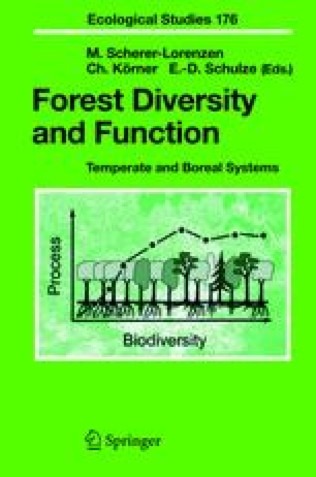
Forest Diversity and Function : Temperate and Boreal Systems
One of the central research themes in ecology is evaluating the extent to which biological richness is necessary to sustain the Earth's system and the functioning of individual ecosystems. In this volume, for the first time, the relationship between biodiversity and ecosystem processes in forests is thoroughly explored. The text examines the multiple effects of tree diversity on productivity and growth, biogeochemical cycles, animals, pests, and disturbances.

European Large Lakes Ecosystem changes and their ecological and socioeconomic impacts
Large lakes offer socio-economic benefits and can be used in many ways, and are often areas in which economic, cultural and political interests overlap. In this book the problems regarding the present status of European large lakes and the directions of change are discussed. Threats caused by direct human impact and by climate change, protection needs and restoration measures are considered.
Biogeochemical cycles in globalization and sustainable development
This valuable study of environmental subsystems functioning under various climatic and anthropogenic conditions provides a unique insight into the social context of global changes in biogeochemical cycles and demonstrates current understanding of globalization and sustainable development.
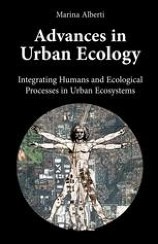
Advances in Urban Ecology : Integrating Humans and Ecological Processes in Urban Ecosystems
The future of Earth’s ecosystems is increasingly influenced by the pace and patterns of urbanization. One of the greatest challenges for natural and social scientists is to understand how urbanizing regions evolve through the complex interactions between humans and ecological processes. Questions and methods of inquiry specific to our traditional disciplinary domains yield partial views that reflect different epistemologies and understandings of the world. In order to achieve the level of synthesis required to see the urban ecosystem as a whole we must change the way we pose questions and search for answers. Cities are the result of human and ecological processes occurring simultaneously in time and in space and the legacy of the simultaneous processes of the past. Urban ecology is the study of the co-evolution of human-ecological systems. Scholars of both urban systems and ecology must challenge the assumptions and world views within their disciplines and work towards a hybrid theory that builds on multiple world views.
