



الصفحة 1
الصفحة 1

Institutions, Sustainability, and Natural Resources : Institutions for Sustainable Forest Management
A new economic theory, rather than a new public policy based on old theory, is needed to guide humanity toward sustainability. Institutions are a critical dimension of sustainability and sustainable forest management, and economic analysis of institutional dimension requires an inclusionist rather than an exclusionist approach. This book provides a systematic critique of neoclassical economic approaches and their limitations with respect to sustainability. Leading institutional economists discuss theoretical perspectives about appropriate institutions for sustainable forest management, markets for environmental services, deforestation and specialization, and some country experiences about Kyoto Protocol, international trade, biodiversity conservation, and sustainable forest management in general. The book includes the ideas from old as well as new institutional economics and discusses the main features of Post-Newtonian economics.This book follows a companion book, Economics, Sustainability, and Natural Resources: Economics of Sustainable Forest Management, volume 1 of the series.

Human Exploitation and Biodiversity Conservation
The sustainable use of biodiversity is one of the three key objectives of the 1992 "Convention on Biological Diversity". To achieve this, sound conservation practice has to be recognized as beneficial and implemented by all who access, or use it – from subsistence farmers to skiers and pharmaceutical bioprospectors. At the same time, indigenous peoples necessarily utilize enormous numbers of plants, fungi, and fish, particularly for foods and medicines. This book gathers together a wide range of contributions addressing diverse aspects of front-line human involvement in biodiversity exploitation and conservation. Its scope is broad, the organisms explored ranging from birds, invertebrates and mammals – both terrestrial and aquatic – to crops and medicinal plants. Meanwhile, the issues addressed include land use changes, the importance of gardens, hedges and green lanes, housing developments, hunting, invasive species, local community involvement, sacred groves, socioeconomic factors and trade.

Green infrastructure and climate change adaptation : Function, Implementation and Governance
This book introduces the function, implementation and governance of green infrastructure in Japan and other countries where lands are geologically fragile and climatologically susceptible to climate change. It proposes green infrastructure as an adaptation strategy for climate change and biodiversity conservation.
Green Consensus and High Quality Development : CCICED Annual Policy Report 2020
This book is based on the research outputs of China Council for International Cooperation on Environment and Development (CCICED) in 2020. It covers major topics of Chinese and international attention regarding green development, such as climate, biodiversity, ocean, BRI, urbanization, sustainable production and consumption, technology, finance, value chain, and so on. It also looks at the progress of China’s environmental and development policies,and the impacts from CCICED.

From Assessing to Conserving Biodiversity : Conceptual and Practical Challenges
This book despite increasing communication, accelerating policy and management responses, and notwithstanding improving ecosystem assessment and endangered species knowledge, conserving biodiversity continues to be more a concern than an accomplished task. Why is it so? The overexploitation of natural resources by our species is a frequently recognised factor, while the short-term economic interests of governments and stakeholders typically clash with the burdens that implementing conservation actions imply. But this is not the whole story. This book develops a different perspective on the problem by exploring the conceptual challenges and practical defiance posed by conserving biodiversity, namely: on the one hand, the difficulties in defining what biodiversity is and characterizing that “thing” to which the word ‘biodiversity’ refers to; on the other hand, the reasons why assessing biodiversity and putting in place effective conservation actions is arduous.

Fostering transformative change for sustainability in the context of socio-ecological production landscapes and seascapes (SEPLS)
This book is a compilation of case studies that provide useful knowledge and lessons that derive from on-the-ground activities and contribute to policy recommendations, focusing on the relevance of social-ecological production landscapes and seascapes (SEPLS) to “transformative change.” The concept of “transformative change” has been gaining more attention to deal with today’s environmental and development problems, whereas both policy and scientific communities have been increasingly calling for transformative change toward sustainable society. The Intergovernmental Science-Policy Platform on Biodiversity and Ecosystem Services (IPBES) has planned to start the so-called “assessment on transformative change” if approved by the IPBES plenary to be held in 2021

Forest Policies and Social Change in England
The book stresses how values and perceptions shape policies, and conversely how policies can modify perceptions, and also how policies can fail if they do not take perceptions into account. She concludes that many of the issues facing English forestry in the 21st century – from leisure, health and amenity provision, through education and rural as well as urban regeneration, to biodiversity conservation – go well beyond both national borders and the scope of forestry. This novel synthesis provides a valuable resource for advanced students and researchers from all areas of natural resource studies, including those interested in social history, socio-economics, cultural geography and environmental psychology, as well as those studying landscape ecology, environmental history, policy analysis and natural resource management.

Extreme Conflict and Tropical Forests
At a time when the international community is devoting significant attention to the issue of governance as a key factor in global environmental decline, this book provides a timely insight into the relationships between extreme conflict, the international trade in forest products, and the social, economic and environmental condition of tropical forests and their human communities. Drawing on the expertise of both natural and social scientists, Extreme Conflict and Tropical Forests explores the underlying causes and the social and environmental consequences of conflict in tropical forest areas. Case studies from Africa, Asia and Latin America present a range of issues – from illicit crops and ‘conflict timber’ production, to the potential of peace parks for improving human security, social quality and biodiversity conservation.

Extinction governance, finance and accounting : Implementing a species protection action plan for the financial markets
The book presents plans, metrics, frameworks, mechanisms and financial innovations that can be, and are being, implemented through the financial markets in order to save and protect species, enhance biodiversity and, at the same time, preserve the financial markets and the business world.

Enabling Sustainable Energy Transitions : Practices of legitimation and accountable governance
This book reframes sustainable energy transitions as being a matter of resolving accountability crises. It demonstrates how the empirical study of several practices of legitimation can analytically deconstruct energy transitions, and presents a typology of these practices to help determine whether energy transitions contribute to sustainability.
Ecology and Conservation of Neotropical Montane Oak Forests
Covers the range of natural and managed oak forests in the highlands of tropical America. Providing an understanding of ecological patterns and processes that determine the structure and functioning of these forests, this volume aims to serve as a basis for sustainable forest management and biodiversity conservation.
Marine, Freshwater, and Wetlands Biodiversity
Marine, coastal and wetland habitats are threatened, not only through exploitation, but also by the prospect of climate change – as ocean currents change course, sea levels rise, and rainfall patterns change. Even the once-common cod is now under threat from the combined effects of over-fishing and a dramatic change-induced decrease in the plankton that cod larvae feed on. Meanwhile, coral reefs remain especially vulnerable to rapid sea-level changes exacerbated by the effects of tourism and disease. This book gathers together a wide range of papers reporting on key research into the biodiversity conservation of these critical and increasingly threatened habitats. Collectively these papers provide a snap-shot of the types of problems they are experiencing, and offer a wealth of topical examples which render this volume especially valuable to teachers of courses in marine, freshwater and wetlands ecology, biological conservation and ecological restoration.
Marine environment protection and biodiversity conservation : The application and future development of the IMOs particularly sensitive sea area concept
Despite the potential benefits that PSSA designation can deliver, recent practice both within the IMO and by individual member States, has considerably undermined confidence in this emerging concept. The focus of this book is on the events within the IMO that have led to this lack of confidence arising. In doing so, this book presents an examination of coastal State practice with the PSSA concept.
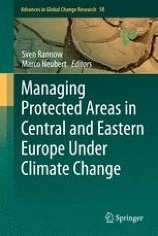
Managing Protected Areas in Central and Eastern Europe Under Climate Change
Addresses the need for sharing knowledge and experience in the field of biodiversity conservation and climate change. There is an urgent need to build capacity in protected areas to monitor, assess, manage and report the effects of climate change and their interaction with other pressures. The contributors identify barriers to the adaptation of conservation management, such as the mismatch between planning reality and the decision context at site level. Short and vivid descriptions of case studies, drawn from investigation areas all over Central and Eastern Europe, illustrate both the local impacts of climate change and their consequences for future management.
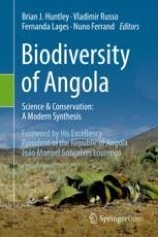
Biodiversity of angola : Science & conservation : A modern synthesis
The book identifies Angola as one of the most biologically diverse countries in Africa, but notes that its fauna, flora, habitats and the processes that drive the dynamics of its ecosystems.
Biodiversity Conservation and Phylogenetic Systematics : Preserving our evolutionary heritage in an extinction crisis
This book brings an updated state of the art of phylogenetic diversity in conservation biology. Nineteen chapters written by scientists from research institutions of fourteen countries demonstrate that approaches for preserving the evolutionary heritage are now very tuned into human impacts and sustainability issues. The questions, methods and applications around which it is organized show the importance of phylogenetic diversity in avoiding biodiversity losses in the present extinction crisis. They touch important points such as the way we value phylogenetic diversity, the importance of thinking at a much wider sample of the Tree of Life, the choice of adequate measures. In methods section, new solutions, such as dealing with abundances, sampling effort, or with information coming from conflicting phylogenetic trees are provided. Application section includes study cases of different groups of organi
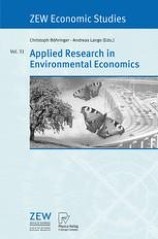
Applied Research in Environmental Economics
Sustainable development, climate policy, and biodiversity conservation are examples of issues on the current political agenda in many countries. These themes are also subject to economic research, and economic insights are increasingly finding their way into the design of environmental policy. Still, the reception of academic findings by policy makers as well as the timely identification of policy-relevant questions by economic researchers often seem to be problematic. This volume attempts to vitalise the exchange between policy makers and academics. It offers a snapshot of environmental economic research on a range of policy-relevant problems.
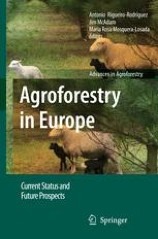
Agroforestry in Europe : Current Status and Future Prospects
Brings together some of the most important current research in European agroforestry, and evaluates the current scope and future potential of agroforestry across the EU.While the majority of Europe’s agroforestry practices are currently focused in the Mediterranean, this volume draws together examples from a wide range of countries – including Greece, Spain, the UK, Hungary, Germany, Italy, the Netherlands, Switzerland, France and Slovenia. The book also covers a range of agroforestry types, including silvopastoralism – Europe’s predominant form of agroforestry – as well as alley cropping, forest farming, silvoarable systems and the use of trees for shelter. Through these examples the book also discusses the potential roles for these traditional land management systems in addressing both environmental issues such as water quality, biodiversity conservation, desertification, ecosystem services and socioeconomic issues such as rural population stabilization.
