



الصفحة 1
الصفحة 1
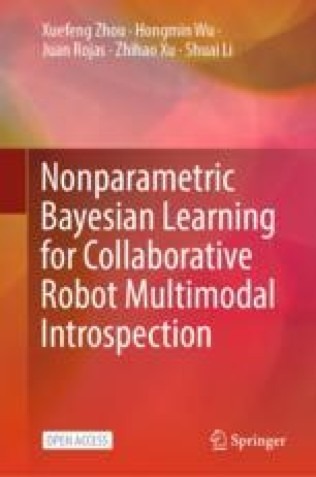
Nonparametric Bayesian Learning for Collaborative Robot Multimodal Introspection
This book focuses on robot introspection, which has a direct impact on physical human–robot interaction and long-term autonomy, and which can benefit from autonomous anomaly monitoring and diagnosis, as well as anomaly recovery strategies.

Multi-Sensor Data Fusion : An Introduction
This textbook provides a comprehensive introduction to the theories and techniques of multi-sensor data fusion. It is aimed at advanced undergraduate and first-year graduate students in electrical engineering and computer science, as well as researchers and professional engineers. The book is intended to be self-contained. No previous knowledge of multi-sensor data fusion is assumed, although some familiarity with the basic tools of linear algebra, calculus and simple probability theory is recommended.

Model-Based Reasoning in Science, Technology, and Medicine
The volume is based on the papers that were presented at the international conference Model-Based Reasoning in Science and Medicine (MBR’06 China), held at Sun Yat-sen University, Guangzhou, P.R. China in July 2006. The presentations given at the conference explored how scientific thinking uses models and explanatory reasoning to produce creative changes in theories and concepts. Some addressed the problem of model-based reasoning in technology, and stressed the issue of technological innovation and medical reasoning. The various contributions of the book are written by interdisciplinary researchers who are active in the area of creative reasoning in science and technology: the most recent results and achievements about the topics above are illustrated in detail in the papers.
Finite Mixture and Markov Switching Models
The prominence of finite mixture modelling is greater than ever. Many important statistical topics like clustering data, outlier treatment, or dealing with unobserved heterogeneity involve finite mixture models in some way or other. The area of potential applications goes beyond simple data analysis and extends to regression analysis and to non-linear time series analysis using Markov switching models.It is the first time that the Bayesian perspective of finite mixture modelling is systematically presented in book form. It is argued that the Bayesian approach provides much insight in this context and is easily implemented in practice. Although the main focus is on Bayesian inference, the author reviews several frequentist techniques, especially selecting the number of components of a finite mixture model, and discusses some of their shortcomings compared to the Bayesian approach. The aim of this book is to impart the finite mixture and Markov switching approach to statistical modelling to a wide-ranging community. This includes not only statisticians, but also biologists, economists, engineers, financial agents, market researcher, medical researchers or any other frequent user of statistical models. This book should help newcomers to the field to understand how finite mixture and Markov switching models are formulated, what structures they imply on the data, what they could be used for, and how they are estimated.

Data assimilation fundamentals : A unified formulation of the state and parameter estimation problem
This textbook's significant contribution is the unified derivation of data-assimilation techniques from a common fundamental and optimal starting point, namely Bayes' theorem. Unique for this book is the "top-down" derivation of the assimilation methods. It starts from Bayes theorem and gradually introduces the assumptions and approximations needed to arrive at today's popular data-assimilation methods. This strategy is the opposite of most textbooks and reviews on data assimilation that typically take a bottom-up approach to derive a particular assimilation method.

Computer Vision -- ECCV 2006 ; Vol. 3951 ; 9th European Conference on Computer Vision, Graz, Austria, May 7-13, 2006, Proceedings, Part I
The papers are organized in topical sections on recognition, statistical models and visual learning, 3D reconstruction and multi-view geometry, energy minimization, tracking and motion, segmentation, shape from X, visual tracking, face detection and recognition, and more.

Machine learning challenges : Evaluating predictive uncertainty, Visual Object Classification, and Recognizing Textual Entailment, 1st Pascal Machine Learning Challenges Workshop, MLCW 2005, Southampton, UK, April 11-13, 2005, Revised Selected Papers
Constitutes the refereed post-proceedings of the First PASCAL Machine Learning Challenges Workshop, MLCW 2005. 25 papers address three challenges: finding an assessment base on the uncertainty of predictions using classical statistics, Bayesian inference, and statistical learning theory; second, recognizing objects from a number of visual object classes in realistic scenes; third, recognizing textual entailment addresses semantic analysis of language to form a generic framework for applied semantic inference in text understanding.
Le raisonnement bayésien : Modélisation et inférence = Bayesian reasoning : Modeling and inference
Describes in detail the practice of the Bayesian statistical approach using many examples chosen for their educational interest. The first part gives the general principles of statistical modeling making it possible to supervise but also to come to the aid of the imagination of the apprentice modeler. By examining examples of increasing difficulty, the reader forges the keys to building their own model. The second part presents the most useful calculation algorithms for estimating the unknowns of the model. Each inference method is presented and illustrated by numerous application cases.

Classic Works on the Dempster-Shafer Theory of Belief Functions
This book brings together a collection of classic research papers on the Dempster-Shafer theory of belief functions. By bridging fuzzy logic and probabilistic reasoning, the theory of belief functions has become a primary tool for knowledge representation and uncertainty reasoning in expert systems.
Bayesian core : A practical approach to computational Bayesian statistics
This Bayesian modeling book provides an operational methodology for conducting Bayesian inference, rather than focusing on its theoretical justifications. Special attention is paid to the derivation of prior distributions in each case and specific reference solutions are given for each of the models.
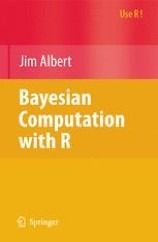
Bayesian computation with R : Introduces Bayesian modeling by use of computation using the R language
R's open source nature, free availability, and large number of contributor packages have made R the software of choice for many statisticians in education and industry. Bayesian Computation with R introduces Bayesian modeling by the use of computation using the R language.

Advances in Distribution Theory, Order Statistics, and Inference
Barry Arnold has made fundamental contributions to many different areas of statistics, including distribution theory, Bayesian inference, multivariate analysis, bounds and orderings, and characterization problems. Organized to honor Arnold’s significant contributions to the field, this volume is an outgrowth of the "International Conference on Distribution Theory, Order Statistics, and Inference," held at the University of Cantabria, Santander, Spain.Several distinguished and active researchers highlight some of the recent developments in statistical distribution theory, order statistics and their properties, as well as inferential methods associated with them. Applications to survival analysis, reliability, quality control, and environmental problems are emphasized.
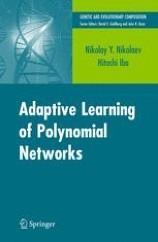
Adaptive Learning of Polynomial Networks : Genetic Programming, Backpropagation and Bayesian Methods
This book provides theoretical and practical knowledge for develop ment of algorithms that infer linear and nonlinear models. It offers a methodology for inductive learning of polynomial neural network mod els from data. The design of such tools contributes to better statistical data modelling when addressing tasks from various areas like system identification, chaotic time-series prediction, financial forecasting and data mining. The main claim is that the model identification process involves several equally important steps: finding the model structure, estimating the model weight parameters, and tuning these weights with respect to the adopted assumptions about the underlying data distrib ution. When the learning process is organized according to these steps, performed together one after the other or separately, one may expect to discover models that generalize well.
