



الصفحة 1
الصفحة 1

Nutraceuticals in insomnia and sleep problems
Sleep is one of the most important and crucial physiological needs for maintaining a healthy life. However, in today’s day and age, insomnia and other sleep disorders, such as sleep apnea, are increasing rapidly. This new book details the nutraceuticals from foods that help to promote good health and optimum sleep. The authors discuss the importance of sleep, the role of diet in sleep, the role of specific vitamins and minerals, amino acids and opioids as nutraceuticals for sleep, newer technologies for use and delivery of nutraceuticals for treating insomnia, and more. The book not only explores nutraceuticals that promote optimum sleep but also details foods that cause insomnia, such as processed, chemical-rich, and refined foods. Chapters also cover commensal and symbiotic microbes, microbial metabolites, and bacteriocins and their impact on sleep. A chapter on the ethical issues related to addiction to nutraceuticals for sleep induction is also included.
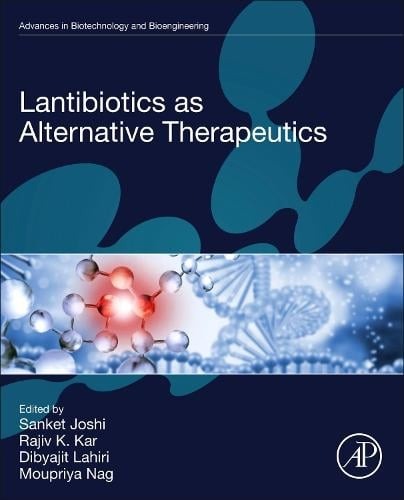
Lantibiotics as alternative therapeutics
Explores alternative therapeutics, lantibiotics and other novel drugs. This book provides concrete information to readers regarding lantibiotics and various types of antimicrobial peptides with their mode of actions in treating various multidrug resistant organisms. It explains various techniques that are involved in analyzing antimicrobial peptides and their mode of actions. The development of antibiotic resistance has now reached a point of crisis where innovative methods and application of novel compounds and methods are required to prevent the spread of drug resistant infections.
Bacteriocins : Ecology and Evolution
Microbes produce an extraordinary array of defense systems. These include bacteriocins, a class of antimicrobial molecules with narrow killing spectra, produced by bacteria. The book describes the diversity and ecological role of bacteriocins of Gram-positive and Gram-negative bacteria, presenting a new classification scheme for the former and a state-of-the-art look at the role of bacteriocins in bacterial communication. It discusses the molecular evolution of colicins and colicin-like bacteriocins, and provides a contemporary overview of archaeocins, bacteriocin-like antimicrobials produced by archaebacteria. Furthermore, various modeling (in silico) studies elucidate the role of bacteriocins in microbial community dynamics and fitness, delving into rock-paper-scissors competition and the counter-intuitive survival of the weakest. The book makes compelling reading for a multi-faceted scientific audience, including those working in the fields of biodiversity and biotechnology, notably in the human and animal health domain.
