



الصفحة 1
الصفحة 1
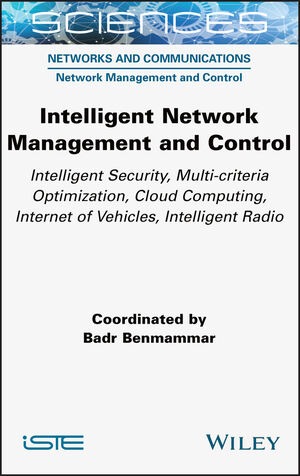
Intelligent Network Management and Control : Intelligent Security, Multi-criteria Optimization, Cloud Computing, Internet of Vehicles, Intelligent Radio
The management and control of networks can no longer be envisaged without the introduction of artificial intelligence at all stages. Deals with topical issues related mainly to intelligent security of computer networks, deployment of security services in SDN (software-defined networking), optimization of networks using artificial intelligence techniques and multi-criteria optimization methods for selecting networks in a heterogeneous environment. Focuses on selecting cloud computing services, intelligent unloading of calculations in the context of mobile cloud computing, intelligent resource management in a smart grid-cloud system for better energy efficiency, new architectures for the Internet of Vehicles (IoV), the application of artificial intelligence in cognitive radio networks and intelligent radio input to meet the on-road communication needs of autonomous vehicles.

Embedded robotics : From mobile robots to autonomous vehicles with Raspberry Pi and Arduino
Presents a unique examination of mobile robots and autonomous vehicles using embedded systems, from introductory to advanced level. It is structured in four parts, dealing with Embedded Systems (processors, sensors, actuators, control, multitasking and communication), Robot Hardware (driving and walking robots, autonomous boats and planes, as well as robot manipulators), Robot Software (localization, navigation, image processing and automotive systems), and Artificial Intelligence (neural networks, genetic algorithms and deep learning). The book is organized for ease of use, with numerous figures, photographs, and worked example programs. The book is written as a text for courses in computer science, computer engineering, IT, electronics engineering, and mechatronics, as well as a guide for robot hobbyists and researchers.

Autonomous vehicles technological trends
The automotive industry has always been synonymous with research and innovation, but nowadays the industry is adding pressure and is establishing the agenda of the researchers from the field. Visions have been provided, and the hardware and the software exist; the only question remaining is: “who is going to deliver”? To answer this question, we encouraged scientists, researchers, industry specialists, and academics to share their vision of autonomous vehicles. What will the platform look like? What kind of hardware and software is most suitable? Who will make the connection between these two interdependent environments (and how), so that in the end the AI will define the process? These are the pressing issues of the current moment, and this Special Issue will help all those interested in the topic to promote their vision and ideas.
Autonomous driving : Technical, legal and social aspects
This book takes a look at fully automated, autonomous vehicles and discusses many open questions: How can autonomous vehicles be integrated into the current transportation system with diverse users and human drivers? Where do automated vehicles fall under current legal frameworks? What risks are associated with automation and how will society respond to these risks? How will the marketplace react to automated vehicles and what changes may be necessary for companies?
Autonomes fahren : Technische, rechtliche und gesellschaftliche aspekte = Autonomous driving : Technical, legal and social aspects
This book provides answers to a wide range of these and other questions. Experts from Germany and the USA describe central topics related to the automation of vehicles on public roads from an engineering and social science perspective. They show which "decisions" are required of an autonomous vehicle or which "ethics" must be programmed. The authors discuss expectations and concerns that characterize the individual and societal acceptance of autonomous driving. An increased safety potential through autonomous vehicles is compared to the challenges and solution approaches that play a role in securing the safety concept. In addition, they explain what possibilities for change and opportunities arise for our mobility and the reorganization of traffic, not least for freight traffic. The book thus offers an up-to-date, comprehensive and scientifically sound examination of the topic of "autonomous driving".
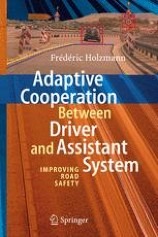
Adaptive Cooperation between Driver and Assistant System : Improving Road Safety
One of the next challenges in vehicular technology field is to improve drastically the road safety. Current developments are focusing on both vehicle platform and diverse assistance systems. This book presents a new engineering approach based on lean vehicle architecture ready for the drive-by-wire technology.
