



الصفحة 1
الصفحة 1

Internal Audit Handbook : Management with the SAP®-Audit Roadmap
The "Internal Audit Handbook" is a comprehensive, up-to-date presentation of the tasks and challenges facing internal audit. The handbook is based on the audit work of SAP®'s global internal audit department, which obtained the highest score available, "Generally Conforms," during a quality assessment review performed by the Institute of Internal Auditors. It presents the Audit Roadmap, the process model of internal auditing developed at SAP®, describing all stages of an audit. The in-depth description provides information on issues such as the identification of audit fields, the annual audit planning, the organization and execution of audits as well as reporting and follow-up. The handbook also discusses management-related subjects, e.g. the organizational structure of an internal audit department.

Intensive and Critical Care Medicine : Reflections, Recommendations and Perspectives
The volume will provide an update on problems concerning respiration, cardiovascular medicine, monitoring, organizational aspects and quality of care; other important aspects will be discussed, from critical patients' treatment and informed consent to costs managements, research and auditing, severity scores and control of infections in intensive care. Sepsis and organ dysfunction will be dealt with in detail. A brief account of records of the World Federation of Intensive and Critical Care Medicine introduces some of the drawbacks encountered during its thirty-year-old history.
Information technology auditing : An evolving agenda
An evolving agenda of Information Technology Auditing is subject of this book. The author presents various current and future issues in the domain of IT Auditing in both scholarly as well as highly practice-driven manner so as to make those issues clear in the mind of an IT auditor. The aim of the book is not to delve deep on the technologies but the impact of these technologies on practices and procedures of IT auditors. Among the topics are complex integrated information systems, enterprise resource planning, databases, complexities of internal controls, and enterprise application integration - all seen from an auditor's perspective. The book will serve a big purpose of support reference for an auditor dealing with the high-tech environment for the first time, but also for experienced auditors.

Information Security Handbook
Provides a comprehensive collection of knowledge for emerging multidisciplinary research areas such as cybersecurity, IoT, Blockchain, Machine Learning, Data Science, and AI. This book brings together, in one resource, information security across multiple domains. It explores basic and high-level concepts and serves as a manual for industry while also helping beginners to understand both basic and advanced aspects in security-related issues. The handbook explores security and privacy issues through the IoT ecosystem and implications to the real world and, at the same time, explains the concepts of IoT-related technologies, trends, and future directions.

Global Comparability of Financial Reporting Under IFRS : Does Comparability Enhance Value Relevance of Earnings Across Countries?
This book reviews research studies on the comparability of financial reporting at a global level as well as highlights empirical analyses that demonstrate the extent to which global comparability has been achieved, and how it enhances value relevance of earnings across countries. It also looks at the cross-country investors’ perspectives by shaping the empirical analysis to provide further insights on the role of the "Big Four" auditing services in enhancing the comparability of earnings.

Encyclopedia of Finance
The Encyclopedia of Finance, Second Edition, comprised of over 1000 individual definitions and chapters, is the most comprehensive and up-to-date resource in the field, integrating the most current terminology, research, theory, and practical applications. Showcasing contributions from an international array of experts, the revised edition of this major reference work is unparalleled in the breadth and depth of its coverage.

Determinants of audit fees : Evidence from Syria
Examines different factors that determine the value of audit fees in Syria. We test the impact of many factors related to audit firm as (audit report type, auditor type, audit firm market share and audit firm rotation) and factors related to client of audit firm (type, size, age and profitability) on the amounts of audit fees. To achieve that goal, the study depends on a practical study ; by extracting an actual data of the 24 companies listed at Damascus Securities Exchange (DSE) for the years 2016-2022. The extracted data were then analyzed by SPSS using descriptive statistics, simple linear regression test, and ANOVA test to examine the research hypothesis.

Data and applications security XXII ; 22nd Annual IFIP WG 11.3 Working Conference on data and applications security London, UK, July 13-16, 2008 Proceedings
This volume contains the papers presented at the 22nd Annual IFIP WG 11.3 Working Conference on Data and Applications Security (DBSEC) held in L- don, UK, July 13–16, 2008.
Data and applications security XXI ; 21st Annual IFIP WG 11.3 Working Conference on data and applications security, Redondo Beach, CA, USA, July 8-11, 2007, Proceedings
This book presented secure query evaluation, location-based security/mobile security, distributed security issues, cryptographic-based security, temporal access control and usage control, as well as system security issues.

Construction audit: building a solid foundation
Provides real-life solutions to common problems in construction. Introduces project management techniques; while not concentrating on a special methodology, the book builds on project management fundamentals. Understanding this will help enable the reader to talk to project managers more effectively.

Cloud Computing Solutions : Architecture, Data Storage, Implementation, and Security
Includes all the cloud-related technologies in a single platform, so that researchers, academicians, postgraduate students, and those in the industry can easily understand the cloud-based ecosystems. Discusses the evolution of cloud computing through grid computing and cluster computing. It will help researchers and practitioners to understand grid and distributed computing cloud infrastructure, virtual machines, virtualization, live migration, scheduling techniques, auditing concept, security and privacy, business models, and case studies through the state-of-the-art cloud computing countermeasures. The topics treated in the book include:The evolution of cloud computing from grid computing, cluster computing, and distributed systems / Covers cloud computing and virtualization environments / Discusses live migration, database, auditing, and applications as part of the materials related to cloud computing / Provides concepts of cloud storage, cloud strategy planning, and management, cloud security, and privacy issues / Explains complex concepts clearly and covers information for advanced users and beginners.
Managerial Uses of Accounting Information
“Joel Demski’s book is an excellent book in accounting that provides an insightful and comprehensive study on managerial accounting using issues through a new approach based on economic theory and quantitative methods. … this book is very insightful and worth reading. The book is recommended as teaching and research material since it motivates readers to study thoughtfully the philosophy and principles of managerial accounting, in addition addressing how to solve managerial problems based on accounting information.”

Laboratory control system operations in a GMP environment
In Laboratory Control System Operations in a GMP Environment, readers are given the guidance they need to implement a CGMP compliant Laboratory Control System (LCS) that fits within Global Regulatory guidelines. Using the Quality Systems Approach, regulatory agencies like the FDA and the European Medicine Agency have developed a scheme of systems for auditing pharmaceutical manufacturing facilities which includes evaluating the LCS.
Business Models and Corporate Reporting : Defining the Platform to Illustrate Value Creation
This book discusses the role of business models in corporate reporting. It illustrates the evolution of non-financial reporting, the importance of business model reporting, and the main conceptualisations of business models. It also offers a methodological contribution to the assessment of business model reporting. Finally, it discusses the main implication of business model reporting for different categories of subjects and some challenges related to this kind of disclosure
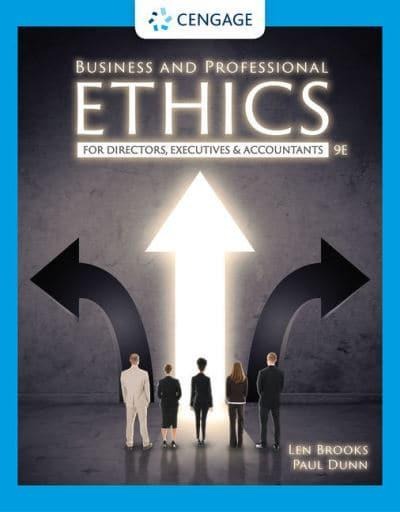
Business and Professional Ethics
Learn why ethical behavior is so important and how to recognize potential pitfalls that involve much more than memorizing rules. You master the skills to develop a corporate culture of integrity that maintains stakeholder support and enables directors and auditors to complete their jobs. You also learn how to use ethical strategies to make decisions, as this edition examines the latest information on governance scandals, legal liability and professional accounting and auditing issues.

Built on value : The Huawei philosophy of finance management
This book presents the concept of value as the central component to success and longevity of the global ICT industry player, Huawei. It provides examples of how Huawei focuses on customers to pursue sustainable and profitable growth rather than focusing on capital market valuation, which is a familiar scenario among Western companies. It is the business departments that are the creators of value for Huawei, whereas the finance department is tasked to provide support and services to those business departments and oversee their operations during the value creation process. The book illustrates how Huawei Finance sets rules, allocates resources, and builds centers of expertise all over the world to address future uncertainties. Huawei Finance adopts three types of centralized vertical management from the top down: treasury, accounting, and auditing. It does not transfer such central authority down to lower levels, but rather delegates all other authority to business organizations across all levels. This management model represents the focus of this book.
Artificial Intelligence and Cybersecurity : Advances and Innovations
Provides advanced system implementation for Smart Cities using artificial intelligence. It addresses the complete functional framework workflow and explores basic and high-level concepts. The book is based on the latest technologies covering major challenges, issues and advances, and discusses intelligent data management and automated systems.
Artificial Intelligence and COVID Effect on Accounting
This book considers the effects of COVID-19 on accounting, particularly with regard to the role of artificial intelligence in accounting in the post-pandemic business environment. The contributions in the book consider a variety of sectors that have been affected by the pandemic, such as the stock market, forensic accounting, Bitcoin, as well as the economic and educational responses to the pandemic and the aftermath felt by both developing and developed countries.
Advances in Dynamic Games : Applications to Economics, Management Science, Engineering, and Environmental Management
This book—an outgrowth of the 10th International Symposium on Dynamic Games—presents current developments of the theory of dynamic games and its applications to various domains, in particular energy-environment economics and management sciences.The volume uses dynamic game models of various sorts to approach and solve several problems pertaining to pursuit-evasion, marketing, finance, climate and environmental economics, resource exploitation, as well as auditing and tax evasions. In addition, it includes some chapters on cooperative games, which are increasingly drawing dynamic approaches to their classical solutions.
Accounting for social and environmental sustainability : A multi-capital approach
Offers an in‑depth examination of multi‑capital accounting, which has already been integrated within the corporate sustainability reporting directive and will follow on from sustainability reporting. the LIFTS model (limits and foundations towards sustainability accounting model) used in this book combines various scientific and practical contributions to develop budgets for environmental impacts and social obligations on an organisational scale. it proposes an accounting mechanism that enables an organization to manage each of its budgets and measure variances between forecast and actual. it provides an introduction to the principles of this model and its conditions of application and describes its implementation in numerous companies.
