



الصفحة 1
الصفحة 1

The handbook of salutogenesis
Readers will find numerous practical examples of how to implement salutogenesis to enhance the health and well-being of families, infants and young children, adolescents, unemployed young people, pre-retirement adults, and older people. A dedicated section addresses how salutogenesis helps tackle vulnerability, with chapters on at-risk children, migrants, prisoners, emergency workers, and disaster-stricken communities. Wide-ranging coverage includes new topics beyond health, like intergroup conflict, politics and policy-making, and architecture. The book also focuses on applying salutogenesis in birth and neonatal care clinics, hospitals and primary care, schools and universities, workplaces, and towns and cities.

School Violence and Primary Prevention
Paralleling the public concern generated by high-profile school shootings and the growing dialogue about bullying, professionals in school and public health settings need effective strategies for preventing violence, treating victims, and assessing at-risk children. In School Violence and Primary Prevention, more than three dozen clinicians, counselors, educators, and researchers provide readers with multiple levels of understanding on the subject: the scope of school violence, possible roles of the home environment, and the contexts of child/teen/school culture. Various forms of student aggression and antisocial behavior—from bullying to sexual harassment to mass shootings (including the Virginia Tech massacre)—are discussed in depth, and the book evenly balances theoretical knowledge with practical applications from elementary school to college.

Group interventions in schools : Promoting mental health for at-risk children and youth
Children who are labeled at-risk often suffer from severe deficiencies in cognitive, affective, and behavioral skills that, if unaddressed, may lead to limited prospects for future success and well-being. Tapping into the therapeutic potential of groups, this volume presents the theory and practice of cognitive-oriented group-centered counseling – combining intrinsic motivation, efficacy retraining, and targeted play therapy and social role-playing – that can be implemented to help children build core social skills and emotional regulation to complement their classroom instruction.

Emerging and Young Adulthood : Multiple Perspectives, Diverse Narratives
The delayed onset of maturity from adolescence to adulthood is gaining the considerable attention of scholars, not to mention that of the parents and the young adults themselves. The chapters in this volume examine the experiences of numerous individuals in their 20s and early 30s – as well as parents and employers – the end result of which is a finely nuanced, research-based portrait of today’s aging adolescents and the increasingly high hurdles they must jump to reach full-fledged adulthood.
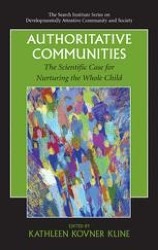
Authoritative communities : The scientific case for nurturing the whole child
Authoritative Communities: The Scientific Case for Nurturing the Whole Child introduces innovative solutions based firmly in the children’s mental health and resilience literature and in the hypothesis that humans are "hardwired to connect." These "authoritative communities" consist of such individuals and institutions as parents, teachers, coaches, elders, and a variety of organizations that are committed to each other’s well-being over the long-term and who instill children with prosocial values such as empathy and compassion. Living within these communities enables children and youth to develop a consistent sense of purpose and meaning, so that they, in turn, are able to grow up to be responsible, productive, and nurturing adults.
