



الصفحة 1
الصفحة 1

Metallocenes in Regio- and Stereoselective Synthesis
Metallocene is a well known sandwich complex with two cyclopentadienyl ligands such as ferrocene. Recently, such metallocene compounds have been found to be very characteristic and they have become very important, not only in the area of organic synthesis, but also in polymerization in industry. Metal complexes with one cyclopentadienyl ligand have also become popular as half sandwich complexes. The number of researchers in the field of metallocenes has increased rapidly. However, the origin of the characteristic reactivity of metallocenes is not fully understood. In this volume, the chemistry of metal complexes with at least one cyclopentadienyl ligand is comprehensively covered by leading experts. Reactions discussed here are (i) natural product synthesis, (ii) catalytic asymmetric synthesis, (iii) cyclization reactions, (iv)catalytic reactions, (iv) polymerization reactions and (v) carbon-carbon bond cleavage reactions. The reader will have access to useful information about the current state of metallocene chemistry.
Chiral Diazaligands for Asymmetric Synthesis
The use of phosphine derivatives has historically induced the tremendous development of catalysis (both non-asymmetric and asymmetric). Although the chemistry of amines is more documented, the use of nitrogen-containing ligands only appeared recently. Nevertheless, during the last ten years, the results describing chiral diamine preparations and their uses in asymmetric catalysis and synthesis are increasing faster than their phosphorus counterparts. The reader will find in this volume the most recent methods for the synthesis of chiral diamines as well as their applications in asymmetric catalysis of CC bond formation. Particular attention will be given to spartein and derivatives of such diamines. Recently, the particular properties and the chemistry of amines allowed to obtain catalysts easy to separate and recycle and new types of ligands such as diaminocarbenes, ureas and thioureas. Finally, the complexing properties of some diamines allowed the formation of complexes with chirality "at the metal " which is of major theoretical interest and presents numerous potential applications.
Catalytic role of amino acids in organic reactions
Asymmetric organometallic and organocatalytic processes have attracted great interest. Asymmetric synthesis using both natural and unnatural amino acids has been tremendously important from synthetic as well as industrial viewpoints, and numerous new methodologies have been developed in the last decades. Herein we provide an overview of old and very recent (since 1900 till now) advances and applications in the area of heterogeneous catalysis, homogeneous catalysis, electrocatalysis, photocatalysis, organocatalysis, thermal catalysis using amino acids [proline, glycine, alanine, valine, serine, threonine, cysteine, methionine, asparagine, glutamine, lysine, arginine, histidine, aspartate, glutamate, phenylalanine, and tryptophan], (supported or unsupported), an amino acid containing materials or amino acids derivatives as an essential component of catalysts, this book highlights the most important and recent developments to immobilize or support amino acids on various support materials. This book is suitable as supplementary reading for courses targeting the design, synthesis, and application of chiral catalysts, asymmetric catalysis, and sustainable production.
Axially chiral compounds : Asymmetric synthesis and applications
Appearing widely in natural products, biologically active molecules, asymmetric chemistry, and material science, axially chiral motifs constitute the core backbones of the majority of chiral ligands and organocatalysts in asymmetric catalysis. In a new work of particular relevance to synthetic chemists, Axially Chiral Compounds: Asymmetric Synthesis and Applications delivers a clearly structured and authoritative volume covering the classification, characteristics, synthesis, and applications of axial chirality.
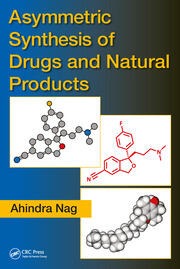
Asymmetric synthesis of drugs and natural products
Focuses on different techniques of asymmetric synthesis of important compounds, such as drugs and natural products. It gives insightful information on recent asymmetric synthesis by Inorganic, Organic and Enzymatic combinations
