



الصفحة 1
الصفحة 1

Multiple Stars Across the H-R Diagram ; Proceedings of the ESO Workshop held in Garching, Germany, 12-15 July 2005
Stars show a marked tendency to be in systems of different multiplicity, ranging from simple binaries and triples to globular clusters with several 10,000's of stars. The formation and evolution of multiple systems remains a challenging part of astrophysics, and the contributions in this book report on the significant progress that had been made in this research field in the last years. The reader will find a variety of research topics addressed, such as the dynamical evolution in multiple stars, the effects of the environment on multiple system parameters, stellar evolution within multiple stars, multiplicity of massive stars, pre-main sequence and intermediate mass stars, multiplicity of low-mass stars from embedded protostars to open clusters, and brown dwarfs and extrasolar planets in multiples.
Molecular Beams in Physics and Chemistry : From Otto Stern's Pioneering Exploits to Present-Day Feats
This book gives a comprehensive account of both the history and current achievements of molecular beam research. In 1919, Otto Stern launched the revolutionary molecular beam technique. This technique made it possible to send atoms and molecules with well-defined momentum through vacuum and to measure with high accuracy the deflections they underwent when acted upon by transversal forces. These measurements revealed unforeseen quantum properties of nuclei, atoms, and molecules that became the basis for our current understanding of quantum matter. This volume shows that many key areas of modern physics and chemistry owe their beginnings to the seminal molecular beam work of Otto Stern and his school. Written by internationally recognized experts, the contributions in this volume will help experienced researchers and incoming graduate students alike to keep abreast of current developments in molecular beam research as well as to appreciate the history and evolution of this powerful method and the knowledge it reveals.

Il cielo sopra Roma : I luoghi dell’astronomia = The sky above Rome : The places of astronomy
Astronomy in Rome has always been there, but a little hidden: it was in the palaces, in the churches or, better, above the churches, speculas scattered along a path that few know by now. Intrigued and frightened, the Romans witnessed the burning of Giordano Bruno in a familiar corner of Campo de 'Fiori, but they probably didn't quite understand what guilt he was accused of. They certainly did not think that he was a philosopher and a scientist who had tried to imagine what the world was like.

Ice, Rock, and Beauty : A Visual Tour of the New Solar System
Ice, Rock, and Beauty is a book for anybody who lives in the solar neighborhood, and takes an interest in its significance to us as residents.The book gathers images from a rich pool, many from national and international organizations such as NASA and ESA, some directly from academic astronomers, and a few from private individuals. Together they tell a story of the Solar System, and of its beauty, that has not been told before.
High Time Resolution Astrophysics
High Time Resolution Astrophysics (HTRA) is an important new window to the universe and a vital tool in understanding a range of phenomena from diverse objects and radiative processes. This importance is demonstrated in this volume with the description of a number of topics in astrophysics, including quantum optics, cataclysmic variables, pulsars, X-ray binaries and stellar pulsations to name a few. Underlining this science foundation, technological developments in both instrumentation and detectors are described. These instruments and detectors combined cover a wide range of timescales and can measure fluxes, spectra and polarisation. These advances make it possible for HTRA to make a big contribution to our understanding of the Universe in the next decade.

Gravity, Black Holes, and the Very Early Universe : An Introduction to General Relativity and Cosmology
In the early 1900s, Albert Einstein formulated two theories that would forever change the landscape of physics: the Special Theory of Relativity and the General Theory of Relativity. By 1925, quantum mechanics had been born out of the dissection of these two theories, and shortly after that, relativistic quantum field theory. We now had in place some important ties between the laws of physics and the types of particle interactions the new physics was uncovering. Gravity is one of the four types of forces that are found throughout the universe. In fact, although it is a relatively weak force, it operates at huge distances, and so must be accounted for in any cosmological system. Unfortunately, gravity continues to defy our neat categorization of how all the forces in nature work together.

Galaxies in the Local Vol.
Studies of Nearby Galaxies are currently the focus of many observations and numerical simulations. This book presents an overview of the galaxies within the Local Volume (D < 10 Mpc), including the Local Group (D < 1 Mpc) and our closest neighbours, the Andromeda Galaxy and the Magellanic Clouds. Presented are the latest results from radio, infrared and optical surveys as well as detailed multi-wavelength studies of individual galaxies. Accurate distances are now available for the majority of Local Volume galaxies providing a true 3-dimensional view of their distribution and flow pattern as well as their star formation.

Fundamentals in Nuclear Physics : From Nuclear Structure to Cosmology
Explores nuclear physics and its applications ranging from the structure of nuclei and their reactions, to astrophysics and cosmology. The physics is introduced with arguments based on simple ideas such as the empirical structure of nuclear forces and its interplay with the Pauli principle and Coulomb repulsion. The book then develops elementary nuclear models and illustrates nuclear systematics with experimental data. Reactions and decays are discussed both phenomenologically and from the point of view of fundamental electro-weak interaction theory. The discussions of fission and fusion emphasize nuclear energy production. This leads directly into nuclear astrophysics and nucleosynthesis. The book ends with a presentation of the latest ideas about cosmology. As a primer this course will lay the foundations for more specialized subjects within the vast domain of nuclear physics as a whole. This book emerged from a series of topical courses the authors delivered at the Ecole Polytechnique and will be useful for advanced undergraduates and for scientists in a variety of fields.

First Light in the Universe : Saas-Fee Advanced Course 36. Swiss Society for Astrophysics and Astronomy
The exploration of the first billion years of the history of the Universe, from the so-called Dark Ages to cosmic reionisation, represents one of the great challenges of contemporary astrophysics and one of the main drivers for future observational facilities. The book contains the elaborated notes of lectures given at the 36th Saas-Fee Advanced Course "First Light in the Universe" by three eminent scientists in the field: Abraham Loeb, Andrea Ferrara, and Richard Ellis. The formation of the first stars and black holes, the initial mass function, feedback effects, early dust formation, the history of cosmic star formation, distant galaxies, cosmic reionisation and the cosmic infrared background are the main topics treated. This book provides an accessible and up-to-date review of the field and will be useful to graduate students of astronomy, cosmologists, physicists and researchers.

Electronic Imaging in Astronomy : Detectors and Instrumentation
The second edition of Electronic Imaging in Astronomy: Detectors and Instrumentation describes the remarkable developments that have taken place in astronomical detectors and instrumentation in recent years – from the invention of the charge-coupled device (CCD) in 1970 to the current era of very large telescopes, such as the Keck 10-meter telescopes in Hawaii with their laser guide-star adaptive optics which rival the image quality of the Hubble Space Telescope. Authored by one of the world’s foremost experts on the design and development of electronic imaging systems for astronomy, this book has been written on several levels to appeal to a broad readership. Mathematical expositions are designed to encourage a wider audience, especially among the growing community of amateur astronomers with small telescopes with CCD cameras.

Clocks in the Sky : The Story of Pulsars
In this book, Geoff McNamara explores the history, subsequent discovery and contemporary research into pulsar astronomy. The story of pulsars is brought right up to date with the announcement in 2006 of a new breed of pulsar, Rotating Radio Transients (RRATs), which emit short bursts of radio signals separated by long pauses. These may outnumber conventional radio pulsars by a ratio of four to one. Geoff McNamara ends by pointing out that, despite the enormous success of pulsar research in the second half of the twentieth century, the real discoveries are yet to be made including, perhaps, the detection of the hypothetical pulsar black hole binary system by the proposed Square Kilometre Array - the largest single radio telescope in the world.
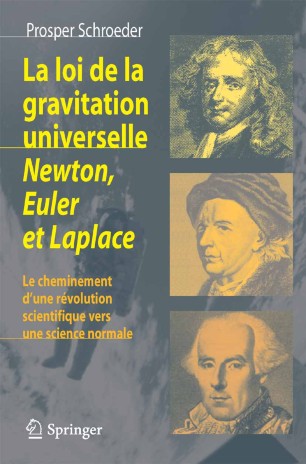
La loi de la gravitation universelle Newton, Euler et Laplace : Le cheminement d’une révolution scientifique vers une science normale = The law of universal gravitation Newton, Euler and Laplace : The progress of a scientific revolution towards a normal science
An analysis of Newton's ideas dismisses this hypothesis by the simple fact that the Principia sought to demonstrate the fallacy of earlier approaches. However, Newton suffered a failure in the application of his theory of gravitation to the explanation of the movement of the Moon, failure which marked the development of celestial mechanics throughout the 18th century. Clairaut, d'Alembert and Euler doubted the validity of Newtonian law almost at the same time and their ideas advanced celestial mechanics which reached the state of "normal science" with Laplace's treatise on celestial mechanics, a century after Newton.
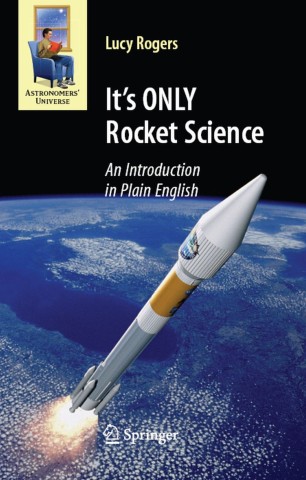
Its ONLY Rocket Science: An Introduction in Plain English
"Well, it’s not rocket science, is it?" How many times have you heard people use that expression when they mean something pretty simple? There are other areas of science and technology that are arguably more challenging than rocket science, but no other (perhaps apart from brain surgery) has entered mainstream English vocabulary as a byword for ‘difficult’.

Buchi neri nel mio bagno di schiuma : L’enigma di Einstein = Black holes in my bubble bath : Einstein's riddle
Einstein's Enigma, or black holes in my foam bath, tells the story of the theory of gravitation, from its beginnings to the latest developments in astrophysics, focusing on Albert Einstein's theory of general relativity and the physics of black holes. Through engaging conversations and diagrams scribbled on paper napkins, the rudiments of relativity, space-time and many aspects of modern physics follow one another. In skits narrated with pedagogical skill and remarkable literary talent, the reader will come across the informal lessons that a cosmopolitan astrophysicist gives to his friend Alfie, a free lance organizer of research projects. Join in the intellectual fun and get excited with sparkling ideas, while with your imagination you enjoy a relaxing soak in this magical tub!
Axions : Theory, Cosmology, and Experimental Searches
Axions are peculiar hypothetical particles that could both solve the CP problem of quantum chromodynamics and at the same time account for the dark matter of the universe. Based on a series of lectures by world experts in this field held at CERN (Geneva), this volume provides a pedagogical introduction to the theory, cosmology and astrophysics of these fascinating particles and gives an up-to-date account of the status and prospect of ongoing and planned experimental searches. Learners and practitioners of astroparticle physics will find in this book both a concise introduction and a current reference work to a showcase topic that connects the "inner space" of the elementary particle world with the "outer space" of the universe at large.
Astrophysics Update 2
"Astrophysics Updates" is intended to serve the information needs of professional astronomers and postgraduate students about areas of astronomy, astrophysics and cosmology that are rich and active research spheres. Observational methods and the latest results of astronomical research are presented as well as their theoretical foundations and interrelations. The contributed commissioned articles are written by leading exponents in a format that will appeal to professional astronomers and astrophysicists who are interested in topics outside their own specific areas of research. This collection of timely reviews may also attract the interest of advanced amateur astronomers seeking scientifically rigorous coverage.

Airglow as an Indicator of Upper Atmospheric Structure and Dynamics
The book summarizes international progress over the last few decades in upper atmosphere airglow research. Measurement methods, theoretical concepts and empirical models of a wide spectrum of upper atmospheric emissions and their variability are considered. The book contains a detailed bibliography of studies related to the upper atmosphere airglow.
African Cultural Astronomy : Current Archaeoastronomy and Ethnoastronomy research in Africa
Astronomy is the science of studying the sky using telescopes and light collectors such as photographic plates or CCD detectors. However, people have always studied the sky and continue to study the sky without the aid of instruments this is the realm of cultural astronomy. This is the first scholarly collection of articles focused on the cultural astronomy of Africans. It weaves together astronomy, anthropology, and Africa. The volume includes African myths and legends about the sky, alignments to celestial bodies found at archaeological sites and at places of worship, rock art with celestial imagery, and scientific thinking revealed in local astronomy traditions including ethnomathematics and the creation of calendars. Authors include astronomers Kim Malville, Johnson Urama, and Thebe Medupe; archaeologist Felix Chami, and geographer Michael Bonine, and many new authors.
A Century of Ideas : Perspectives from Leading Scientists of the 20th Century
Shortly after its inauguration in 1985 the Birla Science Centre, Hyderabad, India, started a series of lectures by Nobel Laureates and other scientists of international renown, usually in Physics and Astronomy, sometimes in Life Sciences and Chemistry. The present collection mostly consists of lectures on frontier topics. The transcript of each lecture is preceded by a short biography of the Nobel Laureate/Scientist in question.
