



الصفحة 1
الصفحة 1

New Light on Dark Stars : Red Dwarfs, Low-Mass Stars, Brown Stars
There has been very considerable progress in research into low-mass stars, brown dwarfs and extrasolar planets during the past few years, particularly since the fist edtion of this book was published in 2000. In this new edtion the authors present a comprehensive review of both the astrophysical nature of individual red dwarf and brown dwarf stars and their collective statistical properties as an important Galactic stellar population. Chapters dealing with the observational properies of low-mass dwarfs, the stellar mass function and extrasolar planets have been completely revised. Other chapters have been significantly revised and updated as appropriate, including important new material on observational techniques, stellar acivity, the Galactic halo and field star surveys. The authors detail the many discoveries of new brown dwarfs and extrasolar planets made since publication of the first edition of the book and provide a state-of-the-art review of our current knowledge of very low-mass stars, brown dwarfs and extrasolar planets, including both the latest observational results and theoretical work.

Hipparcos, the New Reduction of the Raw Data
This book provides overviews of the new reduction as well as on the use of the Hipparcos data in a variety of astrophysical implementations. A range of new results, like cluster distances and luminosity calibrations, is presented. The Hipparcos data provide a unique opportunity for the study of satellite dynamics.
High-Energy-Density Physics : Fundamentals, Inertial Fusion, and Experimental Astrophysics
The raw numbers of high-energy-density physics are amazing: shock waves at hundreds of km/s (approaching a million km per hour), temperatures of millions of degrees, and pressures that exceed 100 million atmospheres. This book introduces the reader to the fundamental tools and discoveries of high-energy-density physics. It surveys the production of high-energy-density conditions, the fundamental plasma and hydrodynamic models that can describe them and the problem of scaling from the laboratory to the cosmos. Connections to astrophysics are discussed throughout. The book is intended to support coursework in high-energy-density physics, to meet the needs of new researchers in this field, and also to serve as a useful reference on the fundamentals. Specifically the book has been designed to enable academics in physics, astrophysics, applied physics and engineering departments to provide in a single-course introduction to fluid mechanics and radiative transfer, with dramatic applications in the field of high-energy-density systems.

High Resolution Infrared Spectroscopy in Astronomy ; Proceedings of an ESO Workshop Held at Garching, Germany, 18-21 November 2003
Two specialized new instruments for ESO's VLT, VISIR and CRIRES, spawned the idea for this workshop. CRIRES is a dedicated very high resolution infrared spectrograph; VISIR features a high resolution spectroscopic mode. Together, the instruments combine the sensitivity of an 8m-telescope with the now well-established reliability of VLT-facility instruments. High resolution here means that lines in cool stellar atmospheres and HII-regions can be resolved. The astrophysical topics discussed in this rather specialized workshop range from the inner solar system to active galactic nuclei. There are many possibilities for new discoveries with these instruments, but the unique capability, which becomes available through high-resolution infrared spectroscopy, is the observation of molecular rotational-vibrational transitions in many astrophysical environments. Particularly interesting and surprising in this context, many papers on modeling and laboratory spectroscopy at the workshop appear to indicate that astronomical observations are lagging a bit behind in this field. The papers are an interesting mix of reports from existing high resolution facilities, reports on modeling efforts of synthetic spectra and reports on laboratory spectra. In this sense, a fruitful exchange between molecular physics and astronomy was again accomplished and is documented in this volume.

Heating versus Cooling in Galaxies and Clusters of Galaxies ; Proceedings of the MPA/ESO/MPE/USM Joint Astronomy Conference held in Garching, Germany, 6-11 August 2006
The present volume is the record of a recent topical conference on the interplay between heating and cooling processes in galaxies and clusters of galaxies. The volume documents recent progress in our understanding of the dense central regions of these objects.

Growing Black Holes: Accretion in a Cosmological Context ; Proceedings of the MPA/ESO/MPE/USM Joint Astronomy Conference Held at Garching, Germany, 21-25 June 2004
Supermassive black holes are now believed to play an important role in the evolution of the Universe. Every respectable galaxy hosts in its center a black hole that appears to regulate the growth of the galaxy itself. In this book, leading experts in the field review the most recent theoretical and observational results on the following topics: * formation and growth of the first black holes in the Universe and their role in the formation and evolution of galaxies * the physics of black-hole accretion and the production of relativistic jets * binary black-hole mergers and gravitational radiation. Theoretical work is supplemented by the most recent exciting results from space and ground based observatories. This volume is useful research and reference tool for the entire astrophysical community.

Galaxy Formation
This second edition of Galaxy Formation is an up-to-date text on astrophysical cosmology, expounding the structure of the classical cosmological models from a contemporary viewpoint. This forms the background to a detailed study of the origin of structure and galaxies in the Universe. The derivations of many of the most important results are derived by simple physical arguments which illuminate the results of more advanced treatments. A very wide range of observational data is brought to bear upon these problems, including the most recent results from WMAP, the Hubble Space Telescope, galaxy surveys like the Sloan Digital Sky Survey and the 2dF Galaxy Redshift Survey, studies of Type 1a supernovae, and many other observations.

Exploring the Cosmic Frontier : Astrophysical Instruments for the 21st Century
On May 18-21, 2004, the Max-Planck-Society’s Harnack-Haus in Dahlem, Berlin hosted the international symposium "Exploring the Cosmic Frontier: Astrophysical Instruments for the 21st Century". contains 70 papers from the meeting and is intended to give a lasting account of a snapshot of an evolving scientific discourse and interaction throughout our field of research.

Dense Molecular Gas around Protostars and in Galactic Nuclei : European Workshop on Astronomical Molecules 2004
The European Workshop on Astronomical Molecules was held at ‘The Conference Building’ in Zwolle, the Netherlands, on 18–20 February 2004. The idea behind the workshop was to bring together astronomers studying similar processes in different astrophysical environments; masers and dense molecular gas around young stars and galactic nuclei. There is considerable overlap in physical and chemical phenomena between these environments, with scales ranging from circumstellar to central regions of galaxies. This issue includes 12 reviews and 27 contributed papers presented in this Wo- shop, all of them were refereed by invited speakers or the editors. The quality of the papers is outstanding. The projects discussed here are often in an early stage and undoubtedly their progress has bene?ted greatly from the opportunity to discuss results with the experts in a wide range of areas. Similarly,

CP Violation in Particle, Nuclear and Astrophysics
This book provides a collection of up-to-date lectures on the physics of CP violation. As such it covers all relevant modern fields of elementary particle, nuclear and astrophysics. Special attention is paid to the neutral meson systems and the recent confirmation of CP violation in the B meson system. The theory and the novel methods needed for these experiments are given in detail. The classical and ongoing searches for the electric dipole moment of the neutron and other null tests of time-reversal symmetry are included. An elementary introduction is given to the astrophysical implications of CP violation, to tackle the puzzle of matter--antimatter asymmetry in our Universe. The aim of the book is to present recent achievements and discuss future developments in a way accessible to both postgraduate students and nonspecialist researchers. For the experienced researcher, the book will serve as a modern source of reference on this topic.
Magnetohydrodynamics : Historical Evolution and Trends
Magnetohydrodynamics (MHD) studies the interaction between the flow of an electrically conducting fluid and magnetic fields. It involves such diverse topics as the evolution and dynamics of astrophysical objects, thermonuclear fusion, metallurgy and semiconductor crystal growth, etc. Although the first ideas in magnetohydrodynamics appeared at the beginning of the last century, the "explosion" in theoretical and experimental studies occurred in the 1950s-60s. This state-of-the-art book aims at revising the evolution of ideas in various branches of magnetohydrodynamics (astrophysics, earth and solar dynamos, plasmas, MHD turbulence and liquid metals) and reviews current trends and challenges.
Astrophysics : A new approach
For a quantitative understanding of the physics of the universe - from the solar system through the milky way to clusters of galaxies all the way to cosmology - these edited lecture notes are perhaps among the most concise and also among the most critical ones: Astrophysics has not yet stood the redundancy test of laboratory physics, hence should be wary of early interpretations. Special chapters are devoted to magnetic and radiation processes, supernovae, disks, black-hole candidacy, bipolar flows, cosmic rays, gamma-ray bursts, image distortions, and special sources. At the same time, planet earth is viewed as the arena for life, with plants and animals having evolved to homo sapiens during cosmic time. -- This text is unique in covering the basic qualitative and quantitative tools, formulae as well as numbers, needed for the precise interpretation of frontline phenomena in astrophysical research. The author compares mainstream interpretations with new and even controversial ones he wishes to emphasize.
Astrophysical disks : Collective and stochastic phenomena
The book deals with collective and stochastic processes in astrophysical discs involving theory, observations, and the results of modelling. Among others, it examines the spiral-vortex structure in galactic and accretion disks , stochastic and ordered structures in the developed turbulence. It also describes sources of turbulence in the accretion disks, internal structure of disk in the vicinity of a black hole, numerical modelling of Be envelopes in binaries, gaseous disks in spiral galaxies with shock waves formation, observation of accretion disks in a binary system and mass distribution of luminous matter in disk galaxies.
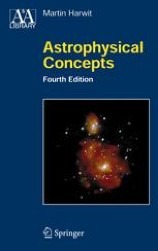
Astrophysical concepts
This classic text, aimed at senior undergraduates and beginning graduate students in physics and astronomy, presents a wide range of astrophysical concepts in sufficient depth to give the reader a quantitative understanding of the subject. Emphasizing physical concepts, the book outlines cosmic events but does not portray them in detail: it provides a series of astrophysical sketches. For this fourth edition, nearly every part of the text has been reconsidered and rewritten, new sections have been added to cover recent developments, and others have been extensively revised and brought up to date. The book begins with an outline of the scope of modern astrophysics and enumerates some of the outstanding problems faced in the field today. The basic physics needed to tackle these questions are developed in the next few chapters using specific astronomical processes as examples. The second half of the book enlarges on these topics and shows how we can obtain quantitative insight into the structure and evolution of stars, the dynamics of cosmic gases, the large-scale behavior of the Universe, and the origins of life.
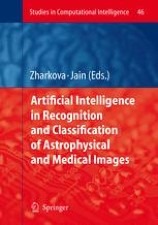
Artificial intelligence in recognition and classification of astrophysical and medical images
This book presents innovative techniques in Recognition and Classification of Astrophysical and Medical Images. The contents include: Introduction to pattern recognition and classification in astrophysical and medical images. Image standardization and enhancement. Region-based methods for pattern recognition in medical and astrophysical images. Advanced information processing using statistical methods. Feature recognition and classification using spectral method

Advances in Turbulence XI ; Proceedings of the 11th EUROMECH European Turbulence Conference, June 25-28, 2007, Porto, Portugal
This volume comprises the communications presented at the ETC 11, the EUROMECH European Turbulence Conference held in 2007 in Porto.The scientific committee has chosen the contributions out of the following topics: Acoustics of turbulent flows / Atmospheric turbulence / Control of turbulent flows / Geophysical and astrophysical turbulence / Instability and transition / Intermittency and scaling / Large eddy simulation and related techniques / MHD turbulence / Reacting and compressible turbulence / Transport and mixing / Turbulence in multiphase and non-Newtonian flows / Vortex dynamics and structure formation / Wall bounded flows
