



الصفحة 1
الصفحة 1

Ontologies for Software Engineering and Software Technology
The editors structured the contributions into three parts: first, a detailed introduction into the use of ontologies in software engineering and software technology in general; second, the use of ontologies to conceptualize different process-related domains such as software maintenance, software measurement, or SWEBOK, initiated by IEEE; third, the use of ontologies as artifacts in several software processes, like, for example, in OMG’s MOF or MDA.

Methods of IT Project Management
Provides students with all the concepts, techniques, artifacts, and methods found in the leading project management reference books and modern development methodologies (agile, hybrid, and traditional), while also conveying practical knowledge that can immediately be applied in real-world settings.
Intelligent Media Technology for Communicative Intelligence ; 2nd International Workshop, IMTCI 2004, Warsaw, Poland, September 13-14, 2004. Revised Selected Papers
The 2nd Workshop on Intelligent Media Technology for Communicative Intelligence commemorating the 10th anniversary of the Polish-Japanese Institute of Information Technology in Warsaw aimed to explore the current research topics in the ?eld of int- ligent media technologies for communicative intelligence. Communicative intelligence represents a new challenge towards building a sup- intelligence on the ubiquitous global network by accumulating a huge amount of - man andknowledgeresources.The term "communicativeintelligence"re?ects the view that communication is at the very core of intelligence and its creation. Communication permits novel ideas to emerge from intimate interactions by multiple agents, ranging from collaboration to competition. The recent advance of information and commu- cation technologies has established an information infrastructure that allows humans and artifacts to communicate with each other beyond space and time. It enables us to advance a step further to realize a communicative intelligence with many fruitful applications. Intelligentmediatechnologiesattempttocaptureandaugmentpeople’scommuni- tive activities by embedding computers into the environment to enhance interactions in an unobtrusive manner. The introduction of embodied conversational agents that might mediate conversations among people in a social context is the next step in the p- cess. The scope of intelligent media technologies includes design and development of intelligent supports for content production, distribution, and utilization, since rich c- tent is crucial for communication in many applications. The promising applications of intelligence media technologies include e-learning, knowledge management systems, e-democracy, and other communication-intensivesubject domains.

Informatics in the Future ; Proceedings of the 11th European Computer Science Summit (ECSS 2015), Vienna, October 2015
This volume discusses the prospects and evolution of informatics (or computer science), which has become the operating system of our world, and is today seen as the science of the information society. Its artifacts change the world and its methods have an impact on how we think about and perceive the world. Classical computer science is built on the notion of an “abstract” machine, which can be instantiated by software to any concrete problem-solving machine, changing its behavior in response to external and internal states, allowing for self-reflective and “intelligent” behavior. However, current phenomena such as the Web, cyber physical systems or the Internet of Things show us that we might already have gone beyond this idea, exemplifying a metamorphosis from a stand-alone calculator to the global operating system of our society.

Images, Representations and Heritage : Moving beyond Modern Approaches to Archaeology
Recent archaeological theory has show that images of the past have carried a particularly strong resonance within modern social groups. This volume explores the immeasurable impact that the phenomenon of archaeology has had on the representation of the past in the modern world. Modern society’s ‘archaeological imagination’ conceives of archaeology as a producer of images of the past which become representations of modern group identities. If archaeology is utilized by public groups to construct and represent identities, then what are archaeologists to do with that public? The very fact that the public is interested in the past and in archaeological research is an opportunity for archaeology to engage that public.

Hybrid Estimation of Complex Systems
This monograph provides a tool-set for hybrid estimation that can successfully monitor the behavior of complex artifacts with a large number of possible operational and failure modes such as production plants, automotive or aeronautic systems, and autonomous robots.

Gathering Hopewell : Society, Ritual and Ritual Interaction
In this book, twenty-one researchers in interwoven efforts immerse themselves and the reader in this vibrant archaeological record in order to richly reconstruct the faces, actions, and motivations Hopewellian people in their social and ritual life. Using a personalized and locally contextualized approach, the authors explore Hopewellian leadership, systems of social ranking and prestige, animal-totemic clan organization, kinship structures, sodalities, gender, community organizations, strategies of intercommunity alliance, and interregional travels for power questing, pilgrimage, healing, tutelage, and acquiring rituals.
Form-oriented analysis : A new methodology to model form-based applications
Form-based applications range from simple web shops to complex enterprise resource planning systems. Draheim and Weber adapt well-established basic modeling techniques in a novel way to achieve a modeling framework optimized for this broad application domain. They introduce new modeling artifacts, such as page diagrams and form storyboards, and separate dialogue patterns to allow for reuse. In their implementation they have developed new constructs such as typed server pages, and tools for forward and reverse engineering of presentation layers. The methodology is explained using an online bookshop as a running example in which the user can experience the modeling concepts in action. The combination of theoretical achievements and hands-on practical advice and tools makes this book a reference work for both researchers in the areas of software architectures and submit-response style user interfaces, and professionals designing and developing such applications. More information and additional material is also available online.

Digital Mammography ; 9th International Workshop, IWDM 2008 Tucson, AZ, USA, July 20-23, 2008 Proceedings
This volume (5116) of Springer’s Lecture Notes in Computer Science contains the th proceedings of the 9 International Workshop on Digital Mammography (IWDM) which was held July 20 – 23, 2008 in Tucson, AZ in the USA.

Digging it up down under : A practical guide to doing archaeology in Australia
This book contains the answers to these questions, and more. Whether you are a graduate student seeking to gain overseas experience, a volunteer wanting to learn more about archaeology by working on a real site, or a professional archaeologist interested in gaining employment, this volume provides a unique introduction to undertaking archaeology in an Australian setting. Grounded in the social, political and ethical issues that inform Australian archaeology today, Digging it up Down Under includes advice on the local legislative situation, relevant codes of ethics, definitions of artifacts and sites, and the history and characteristic features of the occupation of the continent by both Aboriginal and European people.
Design for Manufacturability and Yield for Nano-Scale CMOS
This book presented aspects of manufacturability and yield in a nano-CMOS process and how to address each aspect at the proper design step starting with the design and layout of standard cells and how to yield-grade libraries for critical area and lithography artifacts through place and route, CMP model based simulation and dummy-fill insertion, mask planning, simulation and manufacturing, and through statistical design and statistical timing closure of the design. It alerts the designer to the pitfalls to watch for and to the good practices that can enhance a design’s manufacturability and yield. This book is a must read book the serious practicing IC designer and an excellent primer for any graduate student intent on having a career in IC design or in EDA tool development.

Confronting Scale in Archaeology : Issues of Theory and Practice
This book discusses the cultural, social and spatial aspects of scale and its impact on archaeology in practical and applicable cases. Each author takes one of the fundamental elements of archaeology - from the experience of time and space to the visualization of individuals, sites and landscapes to the intricacies of archaeological discourse - and shows how an awareness of scale can create new and exciting interpretations.
Computer Supported Cooperative Work in Design III ; 10th International Conference, CSCWD 2006, Nanjing, China, May 3-5, 2006, Revised Selected Papers
The design of complex artifacts and systems requires the cooperation of multidiscip- nary design teams using multiple commercial and proprietary engineering software tools (e.g., CAD, modeling, simulation, visualization, and optimization), engineering databases, and knowledge-based systems. Individuals or individual groups of mult- isciplinary design teams usually work in parallel and separately with various en- neering software tools which are located at different sites. In addition, individual members may be working on different versions of a design or viewing the design from different perspectives, at different levels of detail. In order to accomplish the work, it is necessary to have effective and efficient c- laborative design environments. Such environments should not only automate in- vidual tasks, in the manner of traditional computer-aided engineering tools, but also enable individual members to share information, collaborate, and coordinate their activities within the context of a design project. CSCW (computer-supported coope- tive work) in design is concerned with the development of such environments.
Computer Supported Cooperative Work in Design I
The design of complex artifacts and systems requires the cooperation of multidisciplinary design teams using multiple commercial and non-commercial engineering tools such as CAD tools, modeling, simulation and optimization software, engineering databases, and knowledge-based systems. Individuals or individual groups of multidisciplinary design teams usually work in parallel and separately with various engineering tools, which are located on different sites, often for quite a long time. At any moment, individual members may be working on different versions of a design or viewing the design from various perspectives, at different levels of detail. In order to meet these requirements, it is necessary to have effective and efficient collaborative design environments. These environments should not only automate individual tasks, in the manner of traditional computer-aided engineering tools, but also enable individual members to share information, collaborate and coordinate their activities within the context of a design project. CSCW (computer-supported cooperative work) in design is concerned with the development of such environments.

Clinical PET and PET
A practical manual covering the full spectrum of PET and PET/CT imaging, now in common clinical practice, this book includes images of normal variants, artifacts, and pathologic conditions. Indications for and the relative clinical value of PET in the armamentarium of diagnostic medical imaging are reviewed. The information in the book is organized to be brief, concise, easy-to-understand and readily accessed.
Material Agency : Towards a Non-Anthropocentric Approach
This book is a groundbreaking attempt to address questions of non-human and material agency from a wide range of perspectives and disciplines: archaeology, anthropology, sociology, cognitive science, philosophy, and economics. The editors and authors demostrate that a distributed, relational approach to agency, incorporating both humans and artifacts, has important ramifications for how we understand material culture.
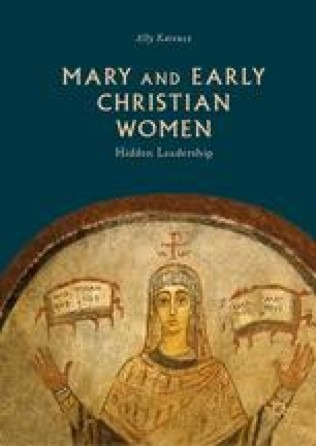
Mary and Early Christian Women : Hidden Leadership
This book reveals exciting early Christian evidence that Mary was remembered as a powerful role model for women leaders—women apostles, baptizers, and presiders at the ritual meal. Early Christian art portrays Mary and other women clergy serving as deacon, presbyter/priest, and bishop. In addition, the two oldest surviving artifacts to depict people at an altar table inside a real church depict women and men in a gender-parallel liturgy inside two of the most important churches in Christendom—Old Saint Peter’s Basilica in Rome and the second Hagia Sophia in Constantinople. Dr. Kateusz’s research brings to light centuries of censorship, both ancient and modern, and debunks the modern imagination that from the beginning only men were apostles and clergy.
Making with data : Physical design and craft in a data-driven world
Making with Data: Physical Design and Craft in a Data-Driven World provides a snapshot of the diverse practices contemporary creators are using to produce objects, spaces, and experiences imbued with data. Across 25+ beautifully-illustrated chapters, international artists, designers, and scientists each explain the process of creating a specific data-driven piece—illustrating their practice with candid sketches, photos, and design artifacts from their own studios. Featuring influential voices in computer science, data science, graphic design, art, craft, and architecture, Making with Data is accessible and inspiring for enthusiasts and experts alike.

Component-Based Software Testing with UML
Component-based software development regards software construction in terms of conventional engineering disciplines where the assembly of systems from readily-available prefabricated parts is the norm. Because both component-based systems themselves and the stakeholders in component-based development projects are different from traditional software systems, component-based testing also needs to deviate from traditional software testing approaches. Gross first describes the specific challenges related to component-based testing like the lack of internal knowledge of a component or the usage of a component in diverse contexts. He argues that only built-in contract testing, a test organization for component-based applications founded on building test artifacts directly into components, can prevent catastrophic failures like the one that caused the now famous ARIANE 5 crash in 1996. This book is the first comprehensive treatment of the intricacies of testing component-based software systems. With its strong modeling background, it appeals to researchers and graduate students specializing in component-based software engineering. Professionals architecting and developing component-based systems will profit from the UML-based methodology and the implementation hints based on the XUnit and JUnit frameworks.
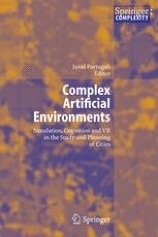
Complex Artificial Environments : Simulation, Cognition and VR in the Study and Planning of Cities
This book explores the possibilities of applying the theories of complexity and self-organization developed to account for various phenomena in the natural science to artifacts traditionally the realm of humanities and social sciences. The emphasis of this volume is on the development of cities and the impact of these methods on urban simulation methods.
