



الصفحة 1
الصفحة 1
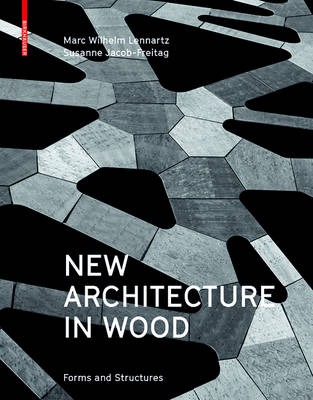
New architecture in wood : forms and structures
Building with wood is currently enjoying a comeback. The reasons for the return of this ancient construction material are manifold. More than just being a renewable material that stores the carbon dioxide so damaging to the climate, it also has excellent structural properties, creates an ideal interior climate, and is easily combined with all other common building materials. The diverse applications can draw on expertise with wooden structures gained over centuries plus current research into modern timber engineering. Significant new developments in this specialist discipline have been seen in recent decades, especially in the German-speaking countries.

EigenArchitecture : Applied virtuality
A path out of the technological and economical excesses in contemporary architecture:A book on research and education in architecture and information technology, conceived of as philosophical interplay between two species similar in kind. Neither of them is in the least disciplinal: both affect everything, both are arts of structuring. The one 2500 years old and dignified, the other just 50 years of age and impatient.

Diagrid structures : systems, connections, details
Diagrids are load-bearing structures made of steel diagonal grids. They were first used in the great buildings of the turn of the millennium, such as the Swiss Re Tower in London ("The Gherkin") and the Hearst Magazine Tower in New York City. Dagrids owe their ensuing popularity not only to their stunning aesthetic value, but also to their very tangible benefits: lateral loading capacity, a massive saving of material, a significant gain in open, usable floor area, and increased flexibility. At its opening in 2014, the Leadenhall Building in London will be the first skyscraper without a bearing inner core-thanks to a diagrid structure.

David Chipperfield Architects = Architektur und Baudetails: Architecture and Construction Details
Supplemented by three current projects. It gives a glimpse behind the scenes, describes processes and provides plenty of building details.

Critical practices in architecture : The unexamined
Embraces the idea that in today's complex world, multiple, emerging perspectives are critical to the design fields, the environment, and society. It also brings authors into conversation to focus on the built environment from the perspective of critical practice.
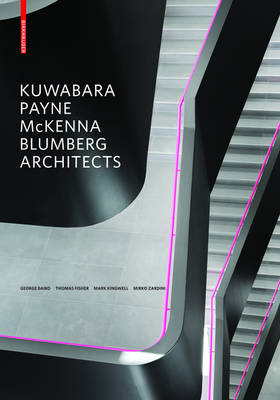
Kuwabara Payne McKenna Blumberg Architects
Kuwabara Payne McKenna Blumberg Architects, founded in 1987 in Toronto, is one of most innovative architectural offi ces in North America today. They have made a name for themselves both for their integrated design process embodying collaboration with experts, clients and future users as well as the diversity of their aesthetically refined and finely detailed designs. The work ranges from cultural institutions such as the Toronto International Film Festival and Orchestra Hall in Minneapolis to ecologically innovative concepts such as Manitoba Hydro Place in Winnipeg, developed with leading climate engineers Transsolar of Stuttgart.
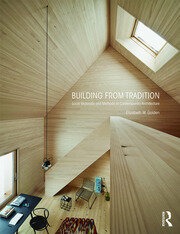
Building from tradition : Local materials and methods in contemporary architecture
Examines the recent resurgence of interest in the handmade building and the use of local and renewable materials in contemporary construction. In the past, raw materials were shaped to provide shelter and to accommodate the cultural, social, and economic needs of individuals and communities. This is still true today as architects, engineers, and builders turn once again to local resources and methods, not simply for constructing buildings, but also as a strategy for supporting social engagement, sustainable development, and cultural continuity. Building from Tradition features global case studies that allow readers to understand how building practices-developed and refined by previous generations-continue to be adapted to suit a broad range of cultural and environmental contexts. The book provides: a survey of historical and technical information about geologic and plant-based materials such as: stone, earth, reed and grass, wood, and bamboo; 24 detailed case studies examining the disadvantages and benefits to using traditional materials and methods and how they are currently being integrated with contemporary construction practices
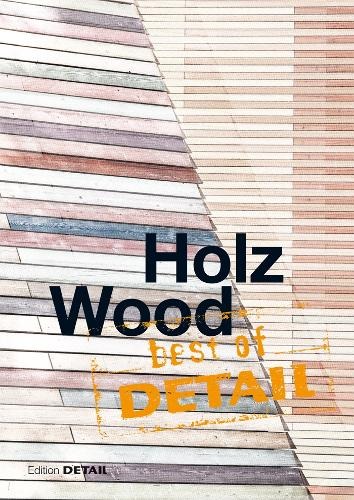
Best of detail : Holz / wood
Brings together highlights from DETAIL about wood as a material. Besides a theoretical basis, the publication also offers a comprehensive section on projects, ranging from experiments to elaborate details, which provides abundant inspiration and examples of successful architectural design using wood.
Basics design and living
Residential Buildings are normally the first design projects encountered by the student in his or her training. The focus at this point is on the different conceptual possibilities that allow one to take the first step toward an actual idea. Themes: concepts and kinds of cohabitation and dwelling residential functions the creation of living space design in housing construction This book is intended to help readers to find an easy way into the complex subject of housing design, explaining fundamental concepts, the way the individual living areas can cohere, and building form variations.
A Language of Contemporary Architecture : An Index of Topology and Typology
Provides an index of ideas, theories, projects, and definitions that string into a methodology for evaluating the contemporary language of architecture described as “contemporism” through a review of topology (form) and typology (system and elements). Trying to answer the postmodern question of how to move beyond modernism through a thread of architectural styles that tried to respond to deficiencies from the modern promise and contextual changes. Yet, the question remains, should this ongoing struggle to move beyond modernism be a stylistic battle? Has the present architectural practice ever left the modernist tendencies, and is there a structure for a contemporary language in architecture?. Presents a collection of highly illustrated projects that have worked under these parameters to break away from modernism in order to present a holistic integration of topology and typology as a language for “contemporism.” The index is illustrated with individual spreads, which can be read sequentially or independently, and encourages the reader to make their own connections. It also includes interviews and contributions from Toyo Ito, Anthony Vidler, Ben van Berkel, Christian Kerez, and Greg Lynn.
