



الصفحة 1
الصفحة 1

Old Buildings New Designs
Increasingly, architects are hired to design new work for existing structures. Whether for reasons of preservation, sustainability, or cost-effectiveness, the movement to reuse buildings presents a variety of design challenges and opportunities. Old Buildings, New Designs is an Architecture Brief devoted to working within a given architectural fabric from the technical issues that arise from aging construction to the controversy generated by the various project stakeholders to the unique aesthetic possibilities created through the juxtaposition of old and new.

Move : Architecture in Motion - Dynamic Components and Elements
Dynamic components and adaptive elements are becoming increasingly important in contemporary architecture, and not just because of their visual effect. If architects and engineers are engaging more and more with the issue of movement – whether in the form of sun-tracking solar cells, lowerable walls, or intelligently programmed elevators – it’s because they are busy exploring responses to three challenges: How can we control and reduce the energy requirement of buildings? How can we expand the range of possible uses? And how can we represent, illustrate, accommodate, and control dynamic movements in buildings?

Inessential Colors : Architecture on Paper in Early Modern Europe
Addresses color as a key player in the long history of rivalry and exchange between European traditions in architectural representation and practice.Featuring a wealth of previously unpublished drawings, Inessential Colors challenges the long-standing misreading of architectural drawings as illustrations rather than representations, pointing instead to their inherent qualities as independent objects whose beauty paved the way for the visual system architects use today.

Glass Construction Manual
Presents the current state of the art on planning and building with glass, from the history through the technical foundations all the way to the most innovative applications. Astonishing perspectives on thermal insulation and solar protection and the addition of thoughtfully selected new practical examples round off this comprehensive reference work. Glass constructions in detail – all mounting methods are systematically depicted with detail drawings. Contains laws and guidelines, with the new EU norms

Facade Construction Manual : Construction Manuals ; 2nd ed.
In recent years, facades have become more important in architectural practice and in public perception. As well as functioning as a protective shell and visible 'face' and supplying heat and electricity, a building's exterior interacts directly with the surrounding public space. This revised and expanded new edition of the Facade Construction Manual offers readers technical and design planning fundamentals in a compact reference work.

Engineered Bamboo Structures
Bamboo is in the spotlight as a potential building material in the current pursuit of a CO2-neutral society, due to its rapid maturation and excellent mechanical properties. Despite the growing interest in bamboo in academia and society, there is a lack of systematic understanding of the fabrication, design and construction processes using bamboo as a modern industrial material. Describes a new category of structural systems constructed with engineered bamboo. It gives a definition of engineered bamboo (glubam) in an analogy with steel structures and wood structures. Structural systems and components have been designed using glubam; then industrialized production processes of glubam are described.

Digital workflows in architecture : Design - assembly - industry
The logics of digital processes in architecture have begun to structure the way that architects design, the way that builders build, and the way that industry is reorganizing. This book is a reference work on digital technologies as key factors in architectural design, fabrication and workflow organization. It presents essays and case studies from some of the leading voices on the topic.

Materials encyclopedia for creatives
Materials and the myriad technologies that have been developed to manipulate them are of essential relevance to product designers, architects, artists and stylists, as they represent the starting point for every product and every architectural work. The book is an encyclopaedic compendium of around 1,000 terms in this field, from aerogel to marble to zirconium. It features traditional and frequently used materials, as well as new and unexpected ones. Their respective advantages and disadvantages are precisely described.

Light earth building : a handbook for building with wood and earth
Light clay, which is light in weight and easy to work, is presented here as a versatile and forward-looking building material for modern computer-aided timber construction and the renewal of historic timber-framed buildings with clay infill. The balanced building physics properties of the material, which can be controlled through the mixing proportions, make it suitable for resource-efficient building in various different climate zones. Thermal storage, sound insulation, protection against moisture and fire in conventional timber construction are improved, and the construction is simplified.
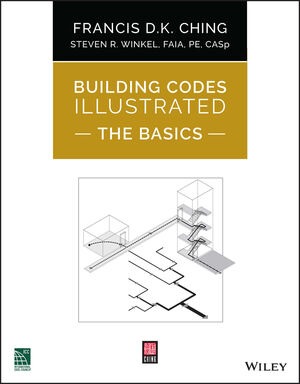
Building codes illustrated : The basics
Delivers a concise visual introduction to the 2021 International Building Code (IBC) distilled from the industry bestseller Building Codes Illustrated. With clear language and Frank Ching's distinctive illustrations, the book offers readers a sound understanding of the foundations of the IBC. A solid understanding of the fundamentals of the 2021 International Building Code for students without a background in architecture or engineering Intuitive and memorable study material for people seeking licensure via the Architect Registration Exam Visually striking and memorable material designed to catch the reader's eye, hold attention, and improve retention
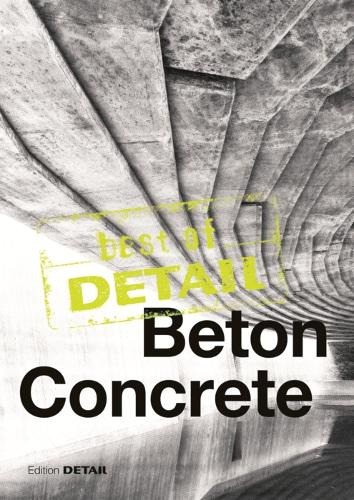
Best of Detail : Beton / Concrete - Best of DETAIL
Presents highlights from the magazine published in recent years about concrete, a powerful medium for architectural expression. In additional to compelling specialist articles, this book contains a special section with a wide range of examples to inspire your own architectural practice, from train stations and churches to single-family homes
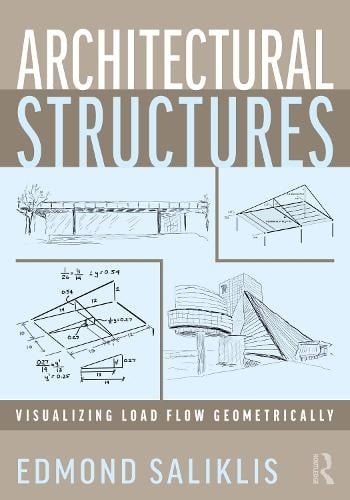
Architectural structures : Visualizing load flow geometrically
Presents an alternative approach to understanding structural engineering load flow using a visually engaging and three-dimensional format. This book presents a ground-breaking new way of establishing equilibrium in architectural structures using the Modern Müller-Breslau method. Includes approachable coverage of parametric modeling of two-dimensional and three-dimensional structures, as well as more advanced topics such as indeterminate structural analysis and plastic analysis. Hundreds of detailed drawings created by the author are included throughout to aid understanding. Architecture and structural engineering students can employ this novel method by hand sketching, or by programming in parametric design software.
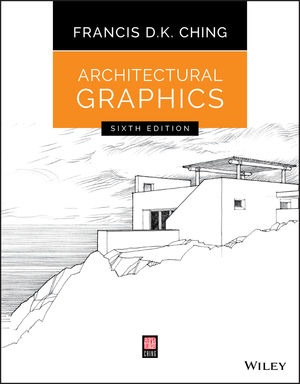
Architectural graphics ; 6th ed.
Offers a comprehensive introduction to using graphic tools and drafting conventions to translate architectural ideas into effective visual presentations, using hundreds of the author's distinctive drawings to illustrate the topic effectively. Includes new information on orthographic projection in relation to 3D models, and revised explanations of line weights, scale and dimensioning, and perspective drawing to clarify some of the most difficult concepts. New examples of modern furniture, APA facilities, and presentation layout provide more up-to-date visuals, and the Reference Center features all new animations, videos, and practice exercises. Architectural graphics are key tools for conveying design through representation on paper or on screen, and this book is the ultimate guide to mastering the skill, then applying your talent to create more effective design communication.
