



الصفحة 1
الصفحة 1

Multimodality in architecture : Collaboration, technology and education
Examines multimodality in architecture and its impacts on collaborative, technical and educational processes or systems. Multimodality is becoming increasingly critical in contemporary architectural practice and education. Creative design teams face new challenges when they embrace new modes of communication, technology, and knowledge development processes. From diverse online modes of communication to shared digital environments, generative AI and advanced hardware solutions, new modes of information creation, sharing, and application are changing the ways architects and designers work. The book presents new research which empowers international researchers and designers to work more effectively in a diverse range of digital environments. Whether the readers are architects, teachers, students, or scholars, this book provides critical insights and practical tools for understanding and optimising processes in architecture and design.

Integrating Innovation in Architecture : Design, Methods and Technology for Progressive Practice and Research
Covers new materials and design methods, advances in computational design practices, innovations in building technologies and construction techniques, and the integration of research with design. Moreover, it discusses strategies for integrating innovation into design practices, risks and economic impacts. Through numerous case studies, it illustrates how innovations have been implemented on actual architectural projects, and how design and technical innovations are used to improve building performance, as well as design practices in cutting-edge architectural and engineering firms.

From Object to Experience : The New Culture of Architectural Design
Combines a history of ideas about architectural experience with the latest insights from the fields of neuroscience, cognitive science and evolutionary biology to make a powerful argument about the nature and future of architectural design. Today, the sciences have granted us the tools to help us understand better than ever before the precise ways in which the built environment can affect the building user's individual experience. Through an understanding of these tools, architects should be able to become better designers, prioritizing the experience of space - the emotional and aesthetic responses, and the sense of homeostatic well-being, of those who will occupy any designed environment. In From Object to Experience, Mallgrave goes further, arguing that it should also be possible to build an effective new cultural ethos for architectural practice. Drawing upon a range of humanistic and biological sources, and emphasizing the far-reaching implications of new neuroscientific discoveries and models, this book brings up-to-date insights and theoretical clarity to a position that was once considered revolutionary but is fast becoming accepted in architecture

Feasibility studies : An architect's guide
Details the benefits of a feasibility study. Once you’ve secured the commission, how do you ensure you’re following current best practice? Aimed at architects, it identifies the pitfalls involved in undertaking a feasibility study and explains how to set boundaries, organise the process and manage clients’ aspirations. By featuring recent live projects, alongside advice from successful architectural practices, it illustrates how a feasibility study can help achieve positive outcomes and avoid the dangers of a poorly defined brief and service proposal. Presenting the client’s, as well as the architect’s, perspective, this publication highlights why a feasibility study is a sensible way of establishing viability prior to committing to a full-service commission. It underlines the significance of ‘adding value’ as an architect.

Facade Construction Manual : Construction Manuals ; 2nd ed.
In recent years, facades have become more important in architectural practice and in public perception. As well as functioning as a protective shell and visible 'face' and supplying heat and electricity, a building's exterior interacts directly with the surrounding public space. This revised and expanded new edition of the Facade Construction Manual offers readers technical and design planning fundamentals in a compact reference work.

Designing sustainable cities
Emphasizes new ways of designing for a sustainable city and urban environment. From several angles the future of our urbanism is illuminated. From a philosophical point of view, the city is seen as an organism, following complex ecosystemic principles, shining light on indigenous perspectives to become beneficial for sustainable design and core questions are asked whether current architectural practice is really sustainable. Simultaneously concrete practices are presented for cities in transformation, focusing on green infrastructure, smart city principles and health.

Design Technology in Contemporary Architectural Practice
Offers rare insights about how these firms apply technology to purposefully disrupt and support their creative design processes in order to then explore how technology can be integrated on an organisational level. The resulting practice stories are loosely tied to four chapters that discuss how Design Technology corresponds to studio culture, collaboration and delivery protocols, business opportunities, knowledge sharing, staff empowerment, and more. Focused on cultural and organisational challenges and opportunities. This book benefits both the professional market (such as design firms reflecting on their technology use), as well as the academic context (with its critical reflection on the interface between design process and technology support). Stories from the following design firms are included: Coop Himmelb(l)au ; Foster + Partners ; Bjarke Ingels Group (BIG) ; Zaha Hadid Architects ; Diller Scofidio + Renfo ; Heatherwick Studio ; Morphosis Architects ; SO-IL ; Woods Bagot ; Herzog & de Meuron ; LASSA

Cranbrook Architecture : A legacy of latitude
The renowned Cranbrook Academy of Art near Detroit, Michigan, has been described as the epicentre of American Modernism. When it opened in 1932 it combined a stunning Eliel Saarinen-designed campus with a radically open educational philosophy to attract and produce some of the most influential artists, designers and architects in US history, including Charles and Ray Eames, Fumihiko Maki, Florence Knoll and Edmund Bacon. Often compared to other experimental schools such as the Bauhaus, Black Mountain College and Taliesin, Cranbrook’s sustained purpose has been advancing a wide, interdisciplinary latitude and self-directed design research to expand and diversify its approaches to architectural practice.
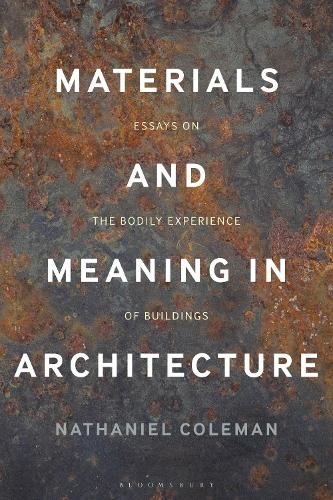
Materials and meaning in architecture : Essays on the bodily experience of buildings
Interweaving architecture, philosophy and cultural history, Materials and Meaning in Architecture develops a rich and multi-dimensional exploration of materials and materiality, in an age when architectural practice seems otherwise preoccupied with image and visual representation.
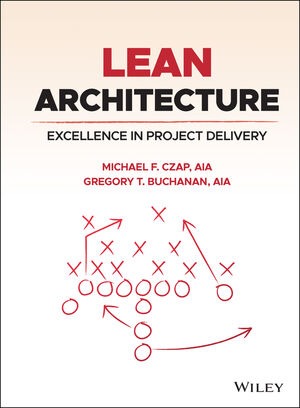
Lean Architecture : Excellence in Project Delivery
Shows readers a path to improve their project delivery via the application of lean concepts and process management. Authors Michael Czap and Gregory Buchanan challenge readers to reexamine their approach to architectural practice and projects by presenting a unique and compelling alternative. Readers will learn to: Maximize the use of their resources to deliver superior results in less time / Minimize waste, cost, and inefficiency in their firm’s operations / Move between radically different project scales while retaining efficient and effective processes
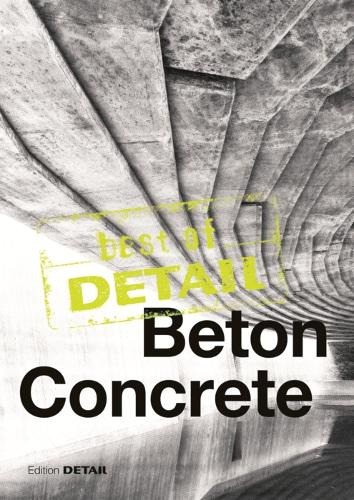
Best of Detail : Beton / Concrete - Best of DETAIL
Presents highlights from the magazine published in recent years about concrete, a powerful medium for architectural expression. In additional to compelling specialist articles, this book contains a special section with a wide range of examples to inspire your own architectural practice, from train stations and churches to single-family homes
Architectural scale models in the digital age : Design, representation and manufacturing
Complex geometric forms generated using virtual media can be tested and validated only by means of physical models, which also make it possible to assess their practical application. The complexity of contemporary architectural design requires the mastery of new methods of producing scale models, which opens a new chapter in the field of modeling, and is the focus of this book. Along with the traditional methods that provide the basis for modeling, this book presents the principles of digital NURBS modeling, parametric modeling, digital modeling support, and model creation, complete with a number of tutorials, practical advice and examples found in architectural practice today.
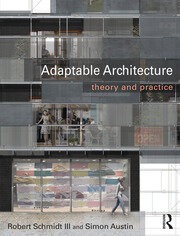
Adaptable Architecture : Theory and practice
provides thought-provoking and inquisitive insights into how we can prolong the useful life of buildings by designing them to be more adaptable, and hence create a more sustainable built environment. The book provides a theoretical foundation counterpointed by the experiences and ideas of those involved in the design and use of buildings. It explains many approaches to designing for change, with lessons from history, and case studies including The Cedar Rapids Public Library, Kentish Town Health Centre and Folkestone Performing Arts Centre, which stretch our thinking beyond the conventional notions of adaptability. The authors reveal the many conditions that make it a complex design phenomenon, by considering the purpose, design and business case of buildings as well as the physical product. Full of summaries, diagrams, reference charts, tables, and photos of exemplar solutions for use as conversational tools or working aids, this book is for any professional or student who wants to research, question, imagine, illustrate - and ultimately design for - adaptation.
A Language of Contemporary Architecture : An Index of Topology and Typology
Provides an index of ideas, theories, projects, and definitions that string into a methodology for evaluating the contemporary language of architecture described as “contemporism” through a review of topology (form) and typology (system and elements). Trying to answer the postmodern question of how to move beyond modernism through a thread of architectural styles that tried to respond to deficiencies from the modern promise and contextual changes. Yet, the question remains, should this ongoing struggle to move beyond modernism be a stylistic battle? Has the present architectural practice ever left the modernist tendencies, and is there a structure for a contemporary language in architecture?. Presents a collection of highly illustrated projects that have worked under these parameters to break away from modernism in order to present a holistic integration of topology and typology as a language for “contemporism.” The index is illustrated with individual spreads, which can be read sequentially or independently, and encourages the reader to make their own connections. It also includes interviews and contributions from Toyo Ito, Anthony Vidler, Ben van Berkel, Christian Kerez, and Greg Lynn.
