



الصفحة 1
الصفحة 1

Worldmodelling architectural models in the 21st century
As architects postulate ever-increasing complex world models from which to draw inspiration and inform their practice, questions of scale, representation and collaboration emerge. Discussed through a range of articles from acclaimed international contributors in the fields of both architecture and media studies, this issue explores how the architectural model is situated between concepts of worldbuilding and worldmaking, in the creative space of worldmodelling.
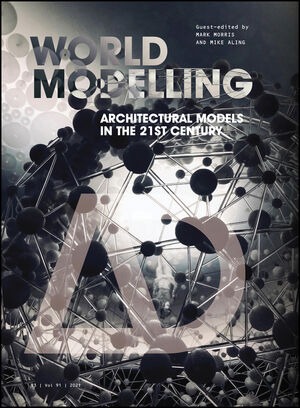
Worldmodelling : Architectural Models in the 21st Century
Worldbuilding is the creation of imaginary worlds through forms of cultural production. Although this discourse began with an analysis of imaginary places constructed in works of literature, it has evolved to encompass worlds from fields such as cinema, games, design, landscape, urbanism and architecture. Worldbuilding differs from the notion of worldmaking, which deals with how speculative thinking can influence the construction of the phenomenal world. As architects postulate ever-increasingly complex world models from which to draw inspiration and inform their practice, questions of scale, representation and collaboration emerge. Discussed through a range of articles from acclaimed international contributors in the fields of both architecture and media studies, this issue explores how the architectural model is situated between concepts of worldbuilding and worldmaking – in the creative space of worldmodelling.

The Routledge companion to architectural drawings and models : From translating to archiving, collecting and displaying
Fills a lacuna in current scholarship, questioning the significance of the lives of drawings and models after construction. Including emerging, well-known, and world-renowned scholars in the fields of architectural history and theory and curatorial practices, the thirty-five contributions define recent research in four key areas: drawing sites/sites of knowledge construction: drawing, office, construction site; the afterlife of drawings and models: archiving, collecting, displaying, and exhibiting; tools of making: architectural representations and their apparatus over time; and the ethical responsibilities of collecting and archiving: authorship, ownership, copyrights, and rights to copy.

Software Architecture ; 14th European Conference, ECSA 2020, L'Aquila, Italy, September 14–18, 2020, Proceedings
Constitutes the refereed proceedings of the 14th International Conference on Software Architecture, ECSA 2020, held in A’quila, Italy, in September 2020. In the Research Track, 12 full papers presented together with 5 short papers were carefully reviewed and selected from 103 submissions. They are organized in topical sections as follows: microservices; uncertainty, self-adaptive, and open systems; model-based approaches; performance and security engineering; architectural smells and source code analysis; education and training; experiences and learnings from industrial case studies; and architecting contemporary distributed systems.
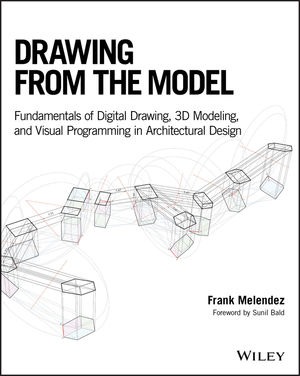
Drawing from the model : Fundamentals of digital drawing, 3D modeling, and visual programming in architectural design
Bridges traditional and contemporary methods of creating architectural design drawings and 3D models through digital tools and computational processes.
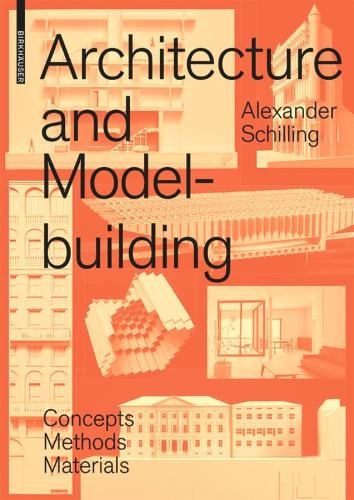
Architecture and modelbuilding : Concepts, methods, materials
Provides in-depth information Numerous practical tips, clear explanations, concrete examples Aims and Scope Architectural models are used at various stages of a project. As working models they support the design process: they are made up from time to time using simple materials, such as cardboard, without any attempt at accuracy, and continue to be adjusted and added to as the ideas and the design progress. The point here is to swiftly check a design idea, to allow it to be continued or dismissed. Presentational models are more involved; at this stage the design has been completed and the purpose of the model is to convey the ideas to the potential user in a clear and easy-to-understand way.
Architectural scale models in the digital age : Design, representation and manufacturing
Complex geometric forms generated using virtual media can be tested and validated only by means of physical models, which also make it possible to assess their practical application. The complexity of contemporary architectural design requires the mastery of new methods of producing scale models, which opens a new chapter in the field of modeling, and is the focus of this book. Along with the traditional methods that provide the basis for modeling, this book presents the principles of digital NURBS modeling, parametric modeling, digital modeling support, and model creation, complete with a number of tutorials, practical advice and examples found in architectural practice today.
