



الصفحة 1
الصفحة 1

Introducing architectural tectonics
Focuses on the tectonic analysis of twenty contemporary works of architecture located in eleven countries including Germany, Italy, United States, Chile, Japan, Bangladesh, Spain, and Australia and designed by such notable architects as Tadao Ando, Herzog & de Meuron, Kengo Kuma, Olson Kundig, and Peter Zumthor. Although similarities do exist between the projects, their distinctly different characteristics – location and climate, context, size, program, construction methods – and range of interpretations of tectonic expression provide the most significant lessons of the book, helping you to understand tectonic theory. Written in clear, accessible language, these investigations examine the poetic creation of architecture, showing you lessons and concepts that you can integrate into your own work, whether studying in a university classroom or practicing in a professional office.

Interior Design Concept : Critical Practices, Processes and Explorations in Interior Architecture and Design
Combines a comprehensive introduction to design concept, with a reflective examination upon the various ways it can be understood, harnessed, and implemented. Within interior architecture and design, the power of conceptual thinking to fuel creativity, innovation, and collaboration is evident in the use of design concept. Broadly accepted as an essential component in the design process, design concept is a notoriously elusive topic which has, until now, received little critical attention. This book offers a reevaluation of current academic ideas about design methodologies and the nature of inspiration, alongside brand-new data from an international research study to help clarify what creativity really means in the modern world.

Exercises in Architecture : Learning to Think as an Architect
It involves awakening abilities that remain dormant in most people. It is like learning language for the first time; a task made more mystifying by the fact that architecture deals not in words but in places: places to stand, to walk, to sit, to hide, to sleep, to cook, to eat, to work, to play, to worship… Written for those who want to be architects. It suggests a basis for early experiences in a school of architecture; but it could also be used in secondary schools and colleges, or as self-directed preparation for students in the months before entering professional education.

Enabling things to talk : Designing IoT solutions with the IoT architectural reference model
The Internet of Things (IoT) is an emerging network superstructure that will connect physical resources and actual users. It will support an ecosystem of smart applications and services bringing hyper-connectivity to our society by using augmented and rich interfaces. Whereas in the beginning IoT referred to the advent of barcodes and Radio Frequency Identification (RFID), which helped to automate inventory, tracking and basic identification, today IoT is characterized by a dynamic trend toward connecting smart sensors, objects, devices, data and applications. The next step will be “cognitive IoT,” facilitating object and data re-use across application domains and leveraging hyper-connectivity, interoperability solutions and semantically enriched information distribution.

Designing tall buildings : Structure as architecture
Advises you to consider the influence of a particular site's geology, wind conditions, and seismicity. Using this contextual knowledge and analysis, you can determine what types of structural solutions are best suited for a tower on that site. You can then conceptualize and devise efficient structural systems that are not only safe, but also constructible and economical. Sarkisian also addresses the influence of nature in design, urging you to integrate structure and architecture for buildings of superior performance, sustainability, and aesthetic excellence.

Creative Practice Inquiry in Architecture
This collection introduces, illustrates, and advances fresh ideas about creative practice inquiry in architecture. It concerns architectural knowledge: how architects can use their distinctive skills, habits, and values to advance professional insight, and how such insights can be extended to make wider contributions to society, culture, and scholarship. It shows how architectural ways of knowing and working can be mobilised as tools for research.

Collage and architecture
This new edition includes: A stronger focus on contemporary practices, including digital methods; New designers and architects, including Marshall Brown, WAI Architecture Think Tank, and Tatiana Bilbao, bringing their methods and work to life; An expanded global and diverse perspective of architecture as collage; Collage is an important instrument for analysis and design. Through its 261 color images, this book shows how this versatile medium can be adapted and transformed in your own work.
Building meaning : An architecture studio Primer on design, theory, and history
Introduction to the complex relationship between form making, historical analysis, and conceptual explorations. This book focuses on the relationship and interdependence between design, theory, and history for an innovative and holistic studio approach. Draws from a diverse range of thinkers and designers to highlight the many interpretations of key architectural concepts, and provides readers with the context essential for developing their own approaches to any design problem.
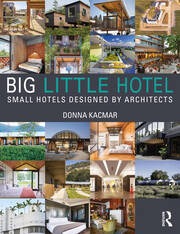
Big little hotel : Small hotels designed by architects
This book showcases small hotels, all located in the United States, designed by architects who use light and materials in interesting and intentional ways. The designs also deliberately connect to their local history, context, or land – in many cases all three. Both the architecture and the operations harmonize with the place, whether that is a bustling city, small town, or natural area. Many are new buildings but some are adaptive reuse projects or renovations of historic properties, extending the connectivity of the place into the future.
Architecture : Form, Space, and Order ; 4th ed.
The revered architectural reference, updated with contemporary examples and interactive 3D modelsAn access card with redemption code for the online Interactive Resource Center is included with all new, print copies or can be purchased separately.
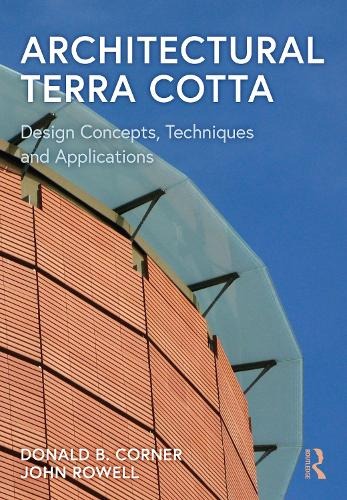
Architectural Terra Cotta : Design concepts, techniques and applications
Examines the evolution of terra cotta and prepares architects and builders to make new, creative uses of the timeless material. Terra cotta is among the oldest of manufactured building products, yet it has once again become a material of choice in contemporary façade design. From the walls of Babylon to high performance rainscreens, terra cotta claddings have repeatedly proven to be technically superior and aesthetically triumphant. Understanding the evolution of terra cotta prepares architects to add new, creative chapters to a rich history.
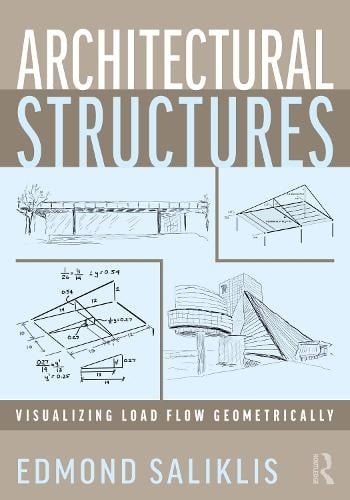
Architectural structures : Visualizing load flow geometrically
Presents an alternative approach to understanding structural engineering load flow using a visually engaging and three-dimensional format. This book presents a ground-breaking new way of establishing equilibrium in architectural structures using the Modern Müller-Breslau method. Includes approachable coverage of parametric modeling of two-dimensional and three-dimensional structures, as well as more advanced topics such as indeterminate structural analysis and plastic analysis. Hundreds of detailed drawings created by the author are included throughout to aid understanding. Architecture and structural engineering students can employ this novel method by hand sketching, or by programming in parametric design software.
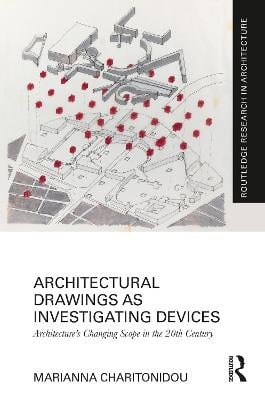
Architectural drawings as investigating devices : Architecture’s changing scope in the 20th century
Explores how the changing modes of representation in architecture and urbanism relate to the transformation of how the addressees of architecture and urbanism are conceived. Diagnoses the dominant epistemological debates in architecture and urbanism during the 20th and 21st centuries. It traces their transformations, paying special attention to Le Corbusier and Ludwig Mies van der Rohe’s preference for perspective representation, to the diagrams of Team 10 architects, to the critiques of functionalism, and the upgrade of the artefactual value of architectural drawings in Aldo Rossi, John Hejduk, Peter Eisenman, and Oswald Mathias Ungers, and, finally, to the reinvention of architectural programme through the event in Bernard Tschumi and the Office for Metropolitan Architecture (OMA). Particular emphasis is placed on the spirit of truth and clarity in modernist architecture, the relationship between the individual and the community in post-war era architecture, the decodification of design process as syntactic analogy and the paradigm of autonomy in the 1970s and 1980s architecture, the concern about the dynamic character of urban conditions and the potentialities hidden in architectural programme in the post-autonomy era.
Architectonics and parametric thinking : computational modeling for beginning design
Architectonics and Parametric Thinking begins by clearly positioning the potentials of parametric design through a series of chapters written by leaders in their respective industries. This helps to situate the vast potential of parametric softwares, allowing the reader to understand the full range of what is made possible by working computationally. Following this theoretical introduction, the book presents a manual that walks readers through the step-by-step construction of parametric modeling scripts built through an architectonic lens using clear, compelling diagrams.

A Short Dictionary of Furniture : Containing Over 2,600 Entries That Include Terms and Names Used in Britain and the USA
Contains 2,612 entries and over 1,000 illustrations, reproduced from contemporary sources and from drawings by Ronald Escott, Marcelle Barton and Maureen Stafford. 6 sections: the first and second concern the description and design of furniture, the third contains the entries, the fourth gives a list of furniture makers in Britain and North America, section five records books and periodicals on furniture and design and the concluding section sets out in tabular form the periods with the materials used, and types of craftsmen employed from 1100 to 1950.
A Language of Contemporary Architecture : An Index of Topology and Typology
Provides an index of ideas, theories, projects, and definitions that string into a methodology for evaluating the contemporary language of architecture described as “contemporism” through a review of topology (form) and typology (system and elements). Trying to answer the postmodern question of how to move beyond modernism through a thread of architectural styles that tried to respond to deficiencies from the modern promise and contextual changes. Yet, the question remains, should this ongoing struggle to move beyond modernism be a stylistic battle? Has the present architectural practice ever left the modernist tendencies, and is there a structure for a contemporary language in architecture?. Presents a collection of highly illustrated projects that have worked under these parameters to break away from modernism in order to present a holistic integration of topology and typology as a language for “contemporism.” The index is illustrated with individual spreads, which can be read sequentially or independently, and encourages the reader to make their own connections. It also includes interviews and contributions from Toyo Ito, Anthony Vidler, Ben van Berkel, Christian Kerez, and Greg Lynn.
