



الصفحة 1
الصفحة 1

Numerical Methods for Controlled Stochastic Delay Systems
The Markov chain approximation methods are widely used for the numerical solution of nonlinear stochastic control problems in continuous time. This book extends the methods to stochastic systems with delays. Because such problems are infinite-dimensional, many new issues arise in getting good numerical approximations and in the convergence proofs. Useful forms of numerical algorithms and system approximations are developed in this work, and the convergence proofs are given. All of the usual cost functions are treated as well as singular and impulsive controls. A major concern is on representations and approximations that use minimal memory.

Mixed Finite Elements, Compatibility Conditions, and Applications : Lectures given at the C.I.M.E. Summer School held in Cetraro, Italy June 26–July 1, 2006
Since the early 70's, mixed finite elements have been the object of a wide and deep study by the mathematical and engineering communities. The fundamental role of this method for many application fields has been worldwide recognized and its use has been introduced in several commercial codes. An important feature of mixed finite elements is the interplay between theory and application. Discretization spaces for mixed schemes require suitable compatibilities, so that simple minded approximations generally do not work and the design of appropriate stabilizations gives rise to challenging mathematical problems.

Meshfree Methods for Partial Differential Equations II
A Particle Strategy for Solving the Fokker-Planck Equation Modelling the Fiber Orientation Distribution in Steady Recirculating Flows Involving Short Fiber Suspensions.- Extended Meshfree Method for Elastic and Inelastic Media.- Meshfree Petrov-Galerkin Methods for the Incompressible Navier-Stokes Equations.- The ?-shape Based Natural Element Method in Solid and Fluid Mechanics.- A Particle-Partition of Unity Method Part VI: A p-robust Multilevel Solver.- Enriched Reproducing Kernel Approximation: Reproducing Functions with Discontinuous Derivatives.- Reproducing Kernel Element Interpolation: Globally Conforming I m/C n/P k Hierarchies.- Multi-scale Analysis Using Two Influence Radii in EFGM.- Solution of a Dynamic Main Crack Interaction with a System of Micro-Cracks by the Element Free Galerkin Method.- Finite Cover Method for Physically and Geometrically Nonlinear Problems.- A Numerical Scheme for Solving Incompressible and Low Mach Number Flows by the Finite Pointset Method.- SPH Renormalized Hybrid Methods for Conservation Laws: Applications to Free Surface Flows.- Discontinuous Radial Basis Function Approximations for Meshfree Methods.- Treating Moving Interfaces in Thermal Models with the C-NEM.- Bridging Scale Particle and Finite Element Methods.

Introduction aux méthodes numériques
Au cours de l’histoire, les méthodes de calcul ont été l’expression de pratiques sans cesse renouvelées. Le développement de l’informatique a largement contribué à une rapide progression de l’ensemble des techniques numériques. En moins de cinquante ans, le paysage algorithmique a été complètement transformé. Aujourd’hui, la plupart des logiciels que nous employons font appel à des méthodes de plus en plus efficaces. Dans les simulations, comme dans les modélisations, l’analyse numérique occupe une place centrale. Composants essentiels de la vie scientifique, les méthodes et algorithmes qui sont présentés ici, illustrés par de nombreux exemples, sont mis à la portée de tous. De l’approximation polynomiale à la résolution d’équations aux dérivées partielles par des méthodes de différences, de volumes et d’éléments finis, ce livre offre un large panorama des méthodes numériques actuelles.

Instability in Models Connected with Fluid Flows II
Instability in Models Connected with Fluid Flows II presents chapters from world renowned specialists. The stability of mathematical models simulating physical processes is discussed in topics on control theory, first order linear and nonlinear equations, water waves, free boundary problems, large time asymptotics of solutions, stochastic equations, Euler equations, Navier-Stokes equations, and other PDEs of fluid mechanics. Fields covered include: the free surface Euler (or water-wave) equations, the Cauchy problem for transport equations, irreducible Chapman--Enskog projections and Navier-Stokes approximations, randomly forced PDEs, stability of equilibrium figures of uniformly rotating viscous incompressible liquid, Navier-Stokes equations in cylindrical domains, Navier-Stokes-Poisson flows in a vacuum.

Hybrid Methods of Molecular Modeling
Hybrid Methods of Molecular Modeling is a self-contained advanced review volume. It provides a step by step derivation of the consistent theoretical picture of hybrid modeling methods and a thorough analysis of the concepts and current practical methods of hybrid modeling based on this theory. The book presents its material sequentially, paying attention both to the physical soundness of the approximations used and to the mathematical rigor necessary for the practical development of the robust modeling code.

High Energy Polarized Proton Beams : A Modern View
This monograph begins with a review of the basic equations of spin motion in particle accelerators. It then reviews how polarized protons can be accelerated to several tens of GeV using as examples the preaccelerators of HERA, a 6.3 km long cyclic accelerator at DESY / Hamburg. Such techniques have already been used at the AGS of BNL / New York, to accelerate polarized protons to 25 GeV. But for acceleration to energies of several hundred GeV as in RHIC, TEVATRON, HERA, LHC, or a VLHC, new problems can occur which can lead to a significantly diminished beam polarization. For these high energies, it is necessary to look in more detail at the spin motion, and for that the invariant spin field has proved to be a useful tool. This is already widely used for the description of high-energy electron beams that become polarized by the emission of spin-flip synchrotron radiation. It is shown that this field gives rise to an adiabatic invariant of spin-orbit motion and that it defines the maximum time average polarization available to a particle physics experiment.

Hierarchical Matrices : A Means to Efficiently Solve Elliptic Boundary Value Problems
Hierarchical matrices are an efficient framework for large-scale fully populated matrices arising, e.g., from the finite element discretization of solution operators of elliptic boundary value problems. In addition to storing such matrices, approximations of the usual matrix operations can be computed with logarithmic-linear complexity, which can be exploited to setup approximate preconditioners in an efficient and convenient way. Besides the algorithmic aspects of hierarchical matrices, the main aim of this book is to present their theoretical background. The book contains the existing approximation theory for elliptic problems including partial differential operators with nonsmooth coefficients.

Guidelines for the use of advanced numerical analysis
It is an authoritative guide that explains in detail the potential restrictions and pitfalls and so help engineers undertake advanced numerical analysis. It discusses the major approximations involved in nonlinear numerical analysis and describes some of the more popular constituitive models currently available and explores their strengths and weaknesses.

Finite element analysis in geotechnical engineering ; Vol.1 : Theory
Provides the reader with a detailed insight into the use of the finite element method in geotechnical engineering. As specialist knowledge required to perform geotechnical finite element analysis is not normally part of a single engineering degree course, this lucid work will prove invaluable. It brings together essential information presented in a manner understandable to most engineers. Volume 1 presents the theory, assumptions and approximations involved in finite element analysis

Extreme Nonlinear Optics : An Introduction
Following the birth of the laser in 1960, the field of "nonlinear optics" rapidly emerged. Today, laser intensities and pulse durations are readily available, for which the concepts and approximations of traditional nonlinear optics no longer apply. In this regime of "extreme nonlinear optics," a large variety of novel and unusual effects arise, for example frequency doubling in inversion symmetric materials or high-harmonic generation in gases, which can lead to attosecond electromagnetic pulses or pulse trains. Other examples of "extreme nonlinear optics" cover diverse areas such as solid-state physics, atomic physics, relativistic free electrons in a vacuum and even the vacuum itself. This book starts with an introduction to the field based primarily on extensions of two famous textbook examples, namely the Lorentz oscillator model and the Drude model. Here the level of sophistication should be accessible to any undergraduate physics student. Many graphical illustrations and examples are given. The following chapters gradually guide the student towards the current "state of the art" and provide a comprehensive overview of the field. Every chapter is accompanied by exercises to deepen the reader's understanding of important topics, with detailed solutions at the end of the book.

Drug target selection and validation
Focuses on the computational aspects of early drug discovery, drug target identification, and validation. It revises current classical paradigms in target and phenotypic-based drug design with still ingrained approximations and concepts and discusses the research in the new network approach concept that include kinetic selectivity and metabolic analysis. Many often-overlooked approximations and concepts in drug discovery are fully covered. Drug Target Selection and Validation includes both introductory sections and research-based sections to be of use to both students and research scientists in drug discovery, design, kinetics and metabolic analysis. Pharmaceutical scientists, pharmaceutics, drug developers, pharmacologists, biomedical researchers in computer science, medicinal chemists, and precision medicine developers benefit from the information provided. The book concludes with a chapter on chemical and structural databases.

Domain Decomposition Methods for the Numerical Solution of Partial Differential Equations
Domain decomposition methods are divide and conquer methods for the parallel and computational solution of partial differential equations of elliptic or parabolic type. They include iterative algorithms for solving the discretized equations, techniques for non-matching grid discretizations and techniques for heterogeneous approximations. This book serves as an introduction to this subject, with emphasis on matrix formulations. The topics studied include Schwarz, substructuring, Lagrange multiplier and least squares-control hybrid formulations, multilevel methods, non-self adjoint problems, parabolic equations, saddle point problems (Stokes, porous media and optimal control), non-matching grid discretizations, heterogeneous models, fictitious domain methods, variational inequalities, maximum norm theory, eigenvalue problems, optimization problems and the Helmholtz scattering problem. Selected convergence theory is included.

Domain Decomposition Methods - Algorithms and Theory
This book offers a comprehensive presentation of some of the most successful and popular domain decomposition preconditioners for finite and spectral element approximations of partial differential equations. It places strong emphasis on both algorithmic and mathematical aspects. It covers in detail important methods such as FETI and balancing Neumann-Neumann methods and algorithms for spectral element methods.

Data assimilation fundamentals : A unified formulation of the state and parameter estimation problem
This textbook's significant contribution is the unified derivation of data-assimilation techniques from a common fundamental and optimal starting point, namely Bayes' theorem. Unique for this book is the "top-down" derivation of the assimilation methods. It starts from Bayes theorem and gradually introduces the assumptions and approximations needed to arrive at today's popular data-assimilation methods. This strategy is the opposite of most textbooks and reviews on data assimilation that typically take a bottom-up approach to derive a particular assimilation method.

Cosmic Ray Interactions, Propagation, and Acceleration in Space Plasmas
"The book consists of four Chapters. Chapter 1 shortly describes main properties of space plasmas and primary CR, different types of CR interactions with space plasmas components Chapter 2 considers the problem of CR propagation in space plasmas described by the kinetic equation and different types of diffusion approximations ,Chapter 3 is devoted to CR non-linear effects in space plasmas caused by CR pressure and CR kinetic stream instabilities with the generation of Alfvèn turbulence In Chapter 4 different processes of CR acceleration in space plasmas are considered: the development of the Fermi statistical mechanism, acceleration in the turbulent plasma, Alfven mechanism of magnetic pumping, induction mechanisms, acceleration during magnetic collapse and compression, cumulative acceleration mechanism near the zero lines of a magnetic field, acceleration in shear flows, shock-wave diffusion (regular) acceleration. The book ends with a list providing more than 1,300 full references, a discussion on future developments and unsolved problems, as well as Object and Author indexes. "

Computational Electromagnetics
Computational Electromagnetics is a young and growing discipline, expanding as a result of the steadily increasing demand for software for the design and analysis of electrical devices. This book introduces three of the most popular numerical methods for simulating electromagnetic fields: the finite difference method, the finite element method and the method of moments. In particular it focuses on how these methods are used to obtain valid approximations to the solutions of Maxwell's equations, using, for example, "staggered grids" and "edge elements." The main goal of the book is to make the reader aware of different sources of errors in numerical computations, and also to provide the tools for assessing the accuracy of numerical methods and their solutions. To reach this goal, convergence analysis, extrapolation, von Neumann stability analysis, and dispersion analysis are introduced and used frequently throughout the book. Another major goal of the book is to provide students with enough practical understanding of the methods so they are able to write simple programs on their own. To achieve this, the book contains several MATLAB programs and detailed description of practical issues such as assembly of finite element matrices and handling of unstructured meshes.
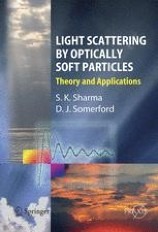
Light Scattering by Optically Soft Particles: Theory and Applications
Deals with a particular class of approximation methods in the context of light scattering by small particles. This class of approximations has been termed as eikonal or soft particle approximations. The eikonal approximation was studied extensively in the potential scattering and then adopted in optical scattering problems. In this context, the eikonal and other soft particle approximations pertain to scatterers whose relative refractive index compared to surrounding medium is close to unity. The study of these approximations is very important because soft particles occur abundantly in nature. For example, the particles that occur in ocean optics, biomedical optics, atmospheric optics and in many industrial applications can be classified as soft particles. This book was written in recognition of the long-standing and current interest in the field of scattering approximations for soft particles. It should prove to be a useful addition for researchers in the field of light scattering.
Compatible Spatial Discretizations
Compatible spatial discretizations are those that inherit or mimic fundamental properties of the PDE such as topology, conservation, symmetries, and positivity structures and maximum principles. It offer a snapshot of the current trends and developments in compatible spatial discretizations. The reader will find valuable insights on spatial compatibility from several different perspectives and important examples of applications compatible discretizations in computational electromagnetics, geosciences, linear elasticity, eigenvalue approximations and MHD. The contributions collected in this volume will help to elucidate relations between different methods and concepts and to generally advance our understanding of compatible spatial discretizations for PDEs.

Cálculo científico con MATLAB y Octave = Scientific computing with MATLAB and Octave
This textbook is an introduction to Scientific Calculus, illustrating various numerical methods for the computer solution of certain classes of mathematical problems. The authors show how to compute the zeros or integrals of continuous functions, solve linear systems, approximate functions by polynomials, and construct precise approximations for the solution of differential equations. To make the presentation concrete and attractive, the MATLAB programming environment has been adopted as a faithful companion.
