



الصفحة 1
الصفحة 1

Web Reasoning and Rule Systems : 2nd International Conference, RR 2008, Karlsruhe, Germany, October 31-November 1, 2008. Proceedings
This book address all current topics in Web reasoning and rule systems such as acquisition of rules and ontologies by knowledge extraction, design and analysis of reasoning languages, implemented tools and systems, standardization, ontology usability, ontology languages and their relationships, rules and ontologies, reasoning with uncertainty, reasoning with constraints, rule languages and systems, semantic Web services modeling and applications.

Transactions on Rough Sets VI : Commemorating Life and Work of Zdislaw Pawlak ; Part I
This volume introduces a number of new advances in the foundations and applications of artificial intelligence, engineering, logic, mathematics, and science. These advances have significant implications in a number of research areas such as the foundations of rough sets, approximate reasoning, bioinformatics, computational intelligence, cognitive science, data mining, information systems, intelligent systems, machine intelligence, and security. In addition, it is evident from the papers included in this volume that rough set theory and its application form a very active research area worldwide.

Transactions on Rough Sets V
Volume V of the Transactions on Rough Sets (TRS) is dedicated to the monu-mental life and work of Zdzis law Pawlak1. During the past 35 years, This volume continues the traditionbegun with earlier volumes of the TRS series and introduces a number of newadvances in the foundations and application of rough sets. These advances haveprofound implications in a number of research areas such as adaptive learning,approximate reasoning and belief systems, approximation spaces, Boolean rea-soning, classification methods, classifiers, concept analysis, data mining, decisionlogic, decision rule importance measures, digital image processing, recognitionof emotionally-charged gestures in animations, flow graphs, Kansei engineering,movie sound track restoration, multicriteria decision analysis, relational informa-tion systems, rough-fuzzy sets, rough measures, signal processing, variable pre-cision rough set model, and video retrieval.

Transactions on Rough Sets IV
Volume IV of the Transactions on Rough Sets (TRS) introduces a number of new advances in the theory and application of rough sets. Rough sets and - proximationspaceswereintroducedmorethan30yearsagobyZdzis lawPawlak. These advances have profound implications in a number of research areas such as the foundations of rough sets, approximate reasoning, arti?cial intelligence, bioinformatics,computationalintelligence, cognitivescience, intelligentsystems, datamining,machineintelligence,andsecurity. Inaddition,itisevidentfromthe papers included in this volume that the foundations and applications of rough sets is a very active research area worldwide.

Transactions on Computational Science II
Transactions on Computational Science II is devoted to the subject of denotational mathematics for computational intelligence. Denotational mathematics, as a counterpart of conventional analytic mathematics, is a category of expressive mathematical structures that deals with high-level mathematical entities beyond numbers and sets, such as abstract objects, complex relations, behavioral information, concepts, knowledge, processes, granules, and systems. This volume includes 12 papers covering the following four important areas: foundations and applications of denotational mathematics; rough and fuzzy set theories; granular computing; and knowledge and information modeling.

Soft Computing in Industrial Applications : Recent and Emerging Methods and Techniques
Soft Computing admits approximate reasoning, imprecision, uncertainty and partial truth in order to mimic aspects of the remarkable human capability of making decisions in real-life and ambiguous environments. "Soft Computing in Industrial Applications" contains a collection of papers that were presented at the 11th On-line World Conference on Soft Computing in Industrial Applications, held in September-October 2006. This carefully edited book provides a comprehensive overview of the recent advances in the industrial applications of soft computing and covers a wide range of application areas, including data analysis and data mining, computer graphics, intelligent control, systems, pattern recognition, classifiers, as well as modeling optimization. The book is aimed at researchers and practitioners who are engaged in developing and applying intelligent systems principles to solving real-world problems. It is also suitable as wider reading for science and engineering postgraduate students.

Fuzzy Implications
Fuzzy Implications (FIs) generalize the classical implication and play a similar important role in Fuzzy Logic (FL), both in FL_n and FL_w in the sense of Zadeh. Their importance in applications of FL, viz., Approximate Reasoning (AR), Decision Support Systems, Fuzzy Control (FC), etc., is hard to exaggerate. This treatise is perhaps the first attempt at dealing exclusively with this class of operations.
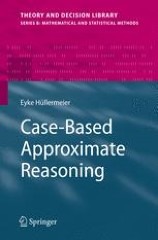
Case-Based Approximate Reasoning
Case-based reasoning (CBR) has received a great deal of attention in recent years and has established itself as a core methodology in the field of artificial intelligence. The key idea of CBR is to tackle new problems by referring to similar problems that have already been solved in the past. More precisely, CBR proceeds from individual experiences in the form of cases. The generalization beyond these experiences typically relies on a kind of regularity assumption demanding that 'similar problems have similar solutions'. Making use of different frameworks of approximate reasoning and reasoning under uncertainty, notably probabilistic and fuzzy set-based techniques, this book develops formal models of the above inference principle, which is fundamental to CBR. The case-based approximate reasoning methods thus obtained especially emphasize the heuristic nature of case-based inference and aspects of uncertainty in CBR. This way, the book contributes to a solid foundation of CBR which is grounded on formal concepts and techniques from the aforementioned fields. Besides, it establishes interesting relationships between CBR and approximate reasoning, which not only cast new light on existing methods but also enhance the development of novel approaches and hybrid systems.

Annotating, Extracting and Reasoning about Time and Events ; International Seminar, Dagstuhl Castle, Germany, April 20-15, 2005, Revised Papers
The book presented centers around an emergingde factost and ardfortime and event annotation: TimeML. TimeML has recently been adopted as a candidate for an ISO standard, and is currently being reviewed in this capacity.It discussions focussed on the following three Time- related issues: using the TimeML language efiectively for consistent annotation, determining how useful such annotation is for further processing,and describing modifications that should be applied to the standard for applications such as question-answering and information retrieval. Discussions at the Dagstuhl Seminar led to new researchideas, and a variety
