



الصفحة 1
الصفحة 1

Observing our Changing Earth ; Proceedings of the 2007 IAG General Assembly, Perugia, Italy, July 2 - 13, 2007
Contains a selection of 99 papers from the International Association of Geodesy (IAG) quadrennial General Assembly, held in Perugia, Italy, from July 2 to 13, 2007, in conjunction with the XXIV General Assembly of the International Union of Geodesy and Geophysics (IUGG).
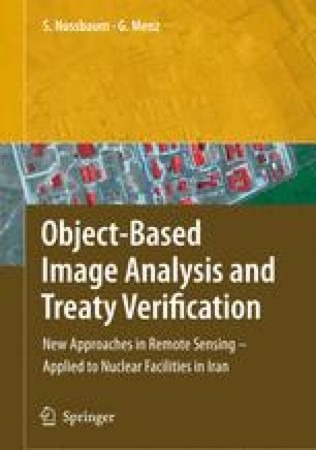
Object-Based Image Analysis and Treaty Verification : New Approaches in Remote Sensing – Applied to Nuclear Facilities in Iran
This book describes recent progress in object-based image interpretation, and also presents many new results in its application to verification of nuclear non-proliferation. A comprehensive workflow and newly developed algorithms for object-based high resolution image (pre-) processing, feature extraction, change detection, classification and interpretation are developed, applied and evaluated. The entire analysis chain is demonstrated with high resolution imagery acquired over Iranian nuclear facilities.

Nonlinear Time Series Analysis in the Geosciences : Applications in Climatology, Geodynamics and Solar-Terrestrial Physics
This book presents recent developments in nonlinear time series which have been motivated by present day problems in geosciences. Modern methods of spatio-temporal data analysis, time-frequency analysis, dimension analysis, nonlinear correlation and synchronization analysis and other nonlinear concepts are used to study emerging questions in climatology, geophysics, solar-terrestrial physics and related scientific disciplines. This volume collects contributions of some of the world's leading experts in geoscientific time series analysis.

Model tests and numerical simulations of liquefaction and lateral spreading ; LEAP-UCD-2017
This book presents work collected through the Liquefaction Experiments and Analysis Projects (LEAP) in 2017. It addresses the repeatability, variability, and sensitivity of lateral spreading observed in twenty-four centrifuge model tests on mildly sloping liquefiable sand.

Mine Wastes : Characterization, Treatment and Environmental Impacts
Provides an overview of the accumulation of wastes at mine, including sulfidic mine wastes, mine water, tailings, cyanidation wastes of gold-silver ores, radioactive wastes of uranium ores, and wastes of phosphate and potash ores. This work presents crucial aspects of mine wastes as scientific issues.

Microearthquake Seismology and Seismotectonics of South Asia
This volume comprehensively deals with plate tectonics and seismic waves in general and earthquake monitoring by permanent and temporary networks for active fault mapping, aftershock, swarm and induced seismicity investigations in interplate collision and subduction zones and in intraplate shield region.

Microdynamics Simulation
This volume deals with the simulation of metamorphic and tectonic microstrucutres in rocks with a special emphasis on the modelling package "Elle". The first part provides a review of the problems and opportunities in the modelling of microstructures, followed by an introduction to various numerical modelling techniques. In the second part examples of the modelling of different processes which alter rock microstructure are presented, beginning with individual processes and progressing to modelling multiple coupled processes.

Groundwater Geochemistry : A Practical Guide to Modeling of Natural and Contaminated Aquatic Systems
Numerical groundwater flow, transport, and geochemical models are important tools besides classical deterministic and analytical approaches. Solving complex linear or non-linear systems of equations, commonly with hundreds of unknown parameters, is a routine task for a PC. Modeling hydrogeochemical processes requires a detailed and accurate water analysis, as well as thermodynamic and kinetic data as input. Thermodynamic data, such as complex formation constants and solubility-products, are often provided as databases within the respective programs. However, the description of surface-controlled reactions (sorption, cation exchange, surface complexation) and kinetically controlled reactions requires additional input data. Unlike groundwater flow and transport models, thermodynamic models, in principal, do not need any calibration.

Ground improvement and reinforced soil structures ; Proceedings of Indian Geotechnical Conference 2020 Vol. 2
This volume comprises the select proceedings of the Indian Geotechnical Conference (IGC) 2020. The contents focus on recent developments in geotechnical engineering for sustainable tomorrow. The volume covers the topics related advances in ground improvement of weak foundation soils for various civil engineering projects and design/construction of reinforced soil structures with different fill materials using synthetic and natural reinforcements in different forms.

Granular dynamic theory and its applications
Granular Dynamic Theory and Its Applications introduces both theory and applications in detail, including differential dynamical models of granular shearing, dynamical strength characteristics and the excited response of granules subject to vibration, granular liquefaction properties and the mechanisms under vibration, granular flow theory and vibration-aided flow, propagation laws of waves in granular media and their mechanism, fractal properties of granules, the vibrating ore-drawing technologies, and so on

Geotechnical Engineering for Disaster Mitigation and Rehabilitation ; Proceedings of the 2nd International Conference GEDMAR08, Nanjing, China 30 May – 2 June, 2008
"Geotechnical Engineering for Disaster Mitigation and Rehabilitation" presents the latest developments and case studies in the field. All contributions to this proceedings were rigorously reviewed to cover the newest developments in disasters related to earthquakes, landslides and slopes, soil dynamics, risk assessment and management, disaster mitigation and rehabilitation, and others.
Geospatial Technologies and Homeland Security : Research Frontiers and Future Challenges
This book presents an overview of the latest development of geospatial technologies (including, but not limited to, GIS, RS, GPS, LBS, spatial analysis and modelling etc.) and their applications in piecing together the complex puzzles facing the challenges of the homeland security research and education. A wide variety of topics, ranging from conceptual and methodological to technical and social/legal issues

Geometrical Geodesy : Using Information and Computer Technology
This book reviews developments in geodesy and hydrography, using a wide variety of electronic and acoustic instruments. The aim is to take stock of the latest fundamental geodetic constants for the 2000s, to focus on dissimilar ellipsoidal areas, distances, and conversion of applications, referenced to an abundant bibliography. It presents a mixture of issues, dealing with reference and time systems, datums, and s-transformations, elucidate multi-dimensional aspects of the information, communication, and computation technology, including the use of parallel computers. Stressing the hands-on methodology, the handbook is of interest to geodetic engineers, consultants, hydrographers, and engineers with an interest in the field of earth sciences.
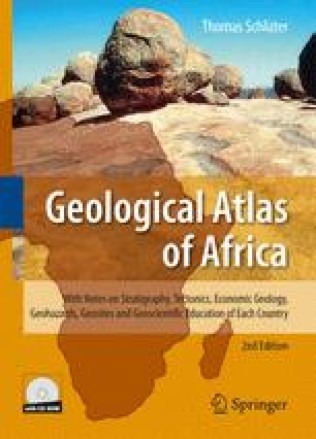
Geological atlas of Africa : With notes on stratigraphy, tectonics, economic geology, geohazards, geosites and geoscientific education of each country
T is atlas is intended primarily for anybody who is in-some background for the arrangement of how the terested in basic geology of Africa. Its originality lies atlas was done. T e second chapter is devoted to the in the fact that the regional geology of each African history of geological mapping in Africa, necessary nation or territory is reviewed country-wise by maps for a fuller appreciation of why this work in Africa is and text, a view normally not presented in textbooks worth doing. Chapter 3 provides an executive s- of regional geology. It is my belief, that there has long mary on the stratigraphy and tectonics of Africa as a been a need in universities and geological surveys, whole, i. e. in the context of no political boundaries.

Geodetic and geophysical observations in Antarctica : An overview in the IPY perspective
This book is a collection of papers on various aspects of the scientific investigation and observation techniques of the polar regions at both temporary and permanent observatories. Most papers focus on regional models based on data acquired in polar regions. Geodetic satellite positions systems (GNSS: GPS, GLONASS, GALILEO) will also be discussed as well as other space techniques (DORIS, VLBI). Gravimetry, absolute gravimetry, and tidal gravimetry are also discussed, as well as seismology and meteorology.

Flood Warning, Forecasting and Emergency Response
This book provides a comprehensive account of flood warning, forecasting and emergency response processes, including techniques for predicting the development of flood events and for issuing appropriate warnings. Topics such as telemetry and information systems, flood warning economics, and river and coastal monitoring are also discussed. This book brings together many aspects of this interesting multidisciplinary topic and will serve as a valuable reference for researchers, policy makers and engineers.

Environmental Challenges in Civil Engineering II
Rports on findings concerning structural material behavior, and new methods and technologies in constructions. A special emphasis is given to sustainable constructions practices, including material recycling and reuse, renovation and restoration of historical building and to those fostering sustainable development of cities and rural areas, and a better integration of buildings with the environment. Offering a good balance of theory and practice, and covering both technical and organizational aspects in civil engineering and architectural projects, this book offers extensive information on solutions and current challenges in construction projects and structural interventions in the context of environmental protection and earthquake prevention.

Encyclopedia of Soil Science
The Encyclopedia of Soil Science provides a comprehensive, alphabetical treatment of basic soil science in a single volume. It constitutes a wide ranging and authorative collection of about 160 academic articles covering the salient aspects of soil physics, chemistry, biology, fertility, technology, genesis, morphology, classification and geomorphology.

Economic evaluations in exploration
This textbook, now in its second English edition, is originally a translation of the G- man textbook “Rechnen für Lagerstättenkundler und Rohstoffwirtschaftler, Teil 1”, also translated into the Chinese and Russian languages. Compared to the previous English and German editions the chapters have been updated with new examples and in many cases amended. The textbook is intended for the economic geologist who deals with the evaluation of deposits at an early stage of development. Once an exploration project has reached the feasibility stage, the exact calculations that are necessary for a comprehensive te- nical and economic assessment will be performed by a team of geologists, mining engineers, metallurgists, and economists. In the early stages of exploration, however, any evaluator of deposits must be able to cover the whole spectrum himself. Since only order of magnitude parameters are available at this early stage, the c- culations can only yield order of magnitude results.
Earthquakes : Simulations, Sources and Tsunamis
This book includes a variety of studies that focus on the modeling of tsunamis and earthquakes, both large-scale simulation and visualization programs, as well as detailed models of small-scale features. Particular attention is paid to computational techniques, languages, and hardware that can be used to facilitate data analysis, visualization, and modeling. Also included are studies of several earthquake forecasting techniques and associated comparisons of their results with historic earthquake data. Finally, the volume ends with theoretical analyses of statistical properties of seismicity by internationally recognized experts in the field. This volume will be of particular interest to researchers interested in the multiscale simulation and visualization of large earthquakes and tsunamis.
