



الصفحة 1
الصفحة 1

On the Moon : The Apollo Journals
This book explains how the Apollo crews learned to work on the lunar surface. Its lively and informative text draws heavily on transcripts and photographs to illustrate points. It puts the reader on the lunar surface with the astronauts, sharing their observations, excitement, and frustrations.

Neural Nets ; 16th Italian Workshop on Neural Nets, WIRN 2005, International workshop on natural and artificial immune systems, NAIS 2005, Vietri sul Mare, Italy, June 8-11, 2005, Revised Selected Papers
This book constitutes the thoroughly refereed postproceedings of the 16th Italian Workshop on Neural Nets, WIRN 2005, as well as the satellite International Workshop on Natural and Artificial Immune Systems, NAIS 2005, held in Vietri sul Mare, Italy in June 2005. The 41 revised papers presented together with a lecture by the winner of the Premio Caianiello award were carefully reviewed and improved during two rounds of selection and refereeing.

NASAs Scientist-Astronauts
Mounting pressure in the early 1960s from the National Academy of Sciences (NAS) to study ways of expanding the role of astronauts to conduct science on future space missions led to NASA’s conclusion that flying scientifically trained crewmembers would generate greater returns from each mission. NASA and industry studies continued investigating possibilities that could lead to the eventual creation of the first space stations using surplus Apollo hardware, through the Apollo Applications Programme (AAP).

How Apollo flew to the moon
Out of the technological battlefield of World War II came a team of gifted German engineers and designers who developed the vengeance weapon, the V-2, which evolved into the peaceful, powerful Saturn V rocket to take men to the Moon. David Woods tells the exciting story, starting from America’s post war astronautical research facilities, that used the V-2 for the development of the robust, resilient and reliable Saturn V launcher. He describes the initial launches through manned orbital spaceflights, comprehensively detailing each step, including computer configuration, the role of ground control, trajectory planning, lunar orbiting, separation of the lander, walking and working on the Moon, retrieval of the lunar astronauts and returning to Earth in this massive technical accomplishment.

Exploring the Moon : The Apollo Exped.s
the book develops the scientific theme of lunar geology, and therefore will be of use as background reading for undergraduate students of planetary sciences. In addition, with the prospect of a resumption of human missions, it will help journalists understand what Apollo achieved after the 'flags and footprints' of the Apollo 11 landing in July1969 and will commemorate the fortieth anniversary of that momentous event.
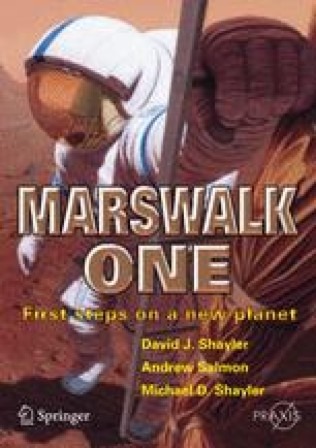
Marswalk One : First Steps on a New Planet
MARSWALK ONE: First Steps on a New Planet addresses the question of why we should embark on a journey to Mars, documenting what the first human crew will do when they place their feet in the red dust of the planet. The book also addresses why we need to carry out these tasks and, more importantly, what a human crew could achieve that an automated mission could not. Understanding the clear benefits of sending a human crew to the surface of Mars, and how these benefits can be seen back on Earth, is the key to sustained long-term public and political support for the programme in terms of cash and commitment. The book accepts that the journey will be made, but does not specify precisely when. Flight time, and how to get to and from the planet are discussed briefly, to understand why the suggested duration spent at Mars is reasonable. The main objective of the work is to look at what science will be done on the surface – supported by orbital operations – and what hardware and technology will be employed to achieve the mission objectives. This analysis is drawn from previous experiences in manned and unmanned space programmes, including Apollo, Skylab, Salyut/Mir, Shuttle and ISS, Viking, Luna/Lunokhod, and recent Mars missions such as Pathfinder and Global Surveyor.
Machine Learning and Robot Perception
Presents some of the most recent research results in the area of machine learning and robot perception. The chapters represent new ways of solving real-world problems. This book will appeal to researchers, senior undergraduate/postgraduate students, application engineers and scientists.
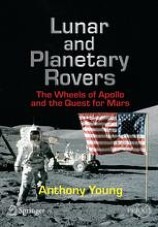
Lunar and planetary rovers : The wheels of apollo and the Quest for Mars
Provides extensive quotes from the astronauts who drove the LRV on the Moon from interviews conducted especially for the book. It also details new material from interviews of engineers and managers at the Jet Propulsion Laboratory covering the robotic rovers, Sojourner, Sprit and Opportunity. The Foreword is written by David R. Scott, Commander of Apollo 15. Chapter 1: From Concept to Reality; Chapter 2: Lunar Roving Vehicle Subsystems; Chapter 3: Training for the Moon; Chapter 4: To the Hadley Plains; Chapter 4: Mysterious and Unknown Descartes; Chapter 5: Destiny at Taurus-Littrow; Chapter Six: The Quest for Mars-Chapter Seven: The New Vision of Exploration.

Knowledge-Based Intelligent Information and Engineering Systems ; 11th International Conference, KES 2007, Vietri sul Mare, Italy, September 12-14, 2007, Proceedings, Part III
Annotation The three volume set LNAI 4692, LNAI 4693, and LNAI 4694, constitute the refereed proceedings of the 11th International Conference on Knowledge-Based Intelligent Information and Engineering Systems, KES 2007, held in Vietri sul Mare, Italy, September 12-14, 2007. The papers present a wealth of original research results from the field of intelligent information processing in the broadest sense.

Knowledge-Based Intelligent Information and Engineering Systems ; 11th International Conference, KES 2007, Vietri sul Mare, Italy, September 12-14, 2007, Proceedings, Part II
Annotation The three volume set LNAI 4692, LNAI 4693, and LNAI 4694, constitute the refereed proceedings of the 11th International Conference on Knowledge-Based Intelligent Information and Engineering Systems, KES 2007, held in Vietri sul Mare, Italy, September 12-14, 2007. The papers present a wealth of original research results from the field of intelligent information processing in the broadest sense.

Knowledge-Based Intelligent Information and Engineering Systems ; 11th International Conference, KES 2007, Vietri sul Mare, Italy, September 12-14, 2007, Proceedings, Part I
This book is part of a three-volume set that constitutes the refereed proceedings of the 11th International Conference on Knowledge-Based Intelligent Information and Engineering Systems, KES 2007.

Biological and artificial intelligence environments
The book reports the proceedings of the 15th Italian workshop on neural networks issued by the Italian Society on Neural Networks SIREN. The longevity recipe of this conference stands in three main points that normally renders the reading of these proceedings so interesting as appealing. 1. The topics of the neural networks is considered an attraction pole for a set of researches centered on the inherent paradigm of the neural networks, rather than on a specific tool exclusively. Thus, the subsymbolic management of the data information content constitutes the key feature of papers in various fields such as Pattern Recognition, Stochastic Optimization, Learning, Granular Computing, and so on, with a special bias toward bioinformatics operational applications. An excerpt of all these matters may be found in the book. 2. Though managed at domestic level, the conference attracts contributions from foreign researchers as well, so that in the book the reader may capture the flavor of the state of the art in the international community. 3. The conference is a meeting of friends as well. Thus the papers generally reflect a relaxed atmosphere where researchers meet to generously exchange their thought and explain their actual results in view of a common cultural growing of the community.
Apollo: The definitive sourcebook
This book provides an overview of the origins of the Apollo program and descriptions of the ground facilities, launch vehicles and spacecraft that will serve as an invaluable single-volume sourcebook for space enthusiasts, space historians, journalists, and programme-makers on radio and TV. It supplements tha other books that have focused on the politics and management of the Apollo program, the astronauts, and their training and exploits.
