



الصفحة 1
الصفحة 1
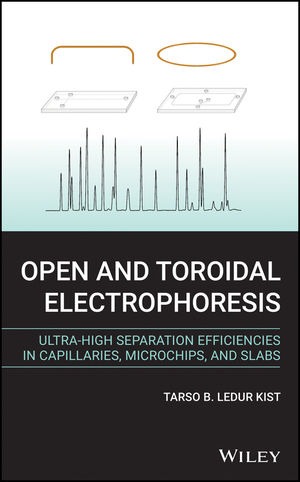
Open and Toroidal Electrophoresis : Ultra-High Separation Efficiencies in Capillaries, Microchips and Slabs
Written by one of the developers of Toroidal Capillary Electrophoresis (TCE), this book is the first to present this novel analytical technique, in detail, to the field of analytical chemistry. The exact expressions of separation efficiency, resolution, peak capacity, and many other performance indicators of the open and toroidal layouts are presented and compared.

Oncogenes Meet Metabolism : From Deregulated Genes to a Broader Understanding of Tumour Physiology
In 1920s, Otto Warburg described the phenomenon of ‘aerobic glycolysis’, the ability of tumour cells to convert glucose to lactate in the presence of normal oxygen conditions. Warburg’s hypothesis of an altered metabolism in cancer cells found no immediate acceptance, though it was latter confirmed for most human tumours. With the advent of molecular biology the focus in tumour research has shifted towards the search for oncogenes. However, the interest in cancer molecular profiling eventually led to a renaissance of the Warburg effect trying to combine genetic alterations with effects on metabolism with the help of modern analytic technologies to rapidly analyze broad varieties of metabolites in various tissues and bodyfluids (metabonomics).

New Techniques in Solid-State NMR
After the discovery of nuclear magnetic resonance, [1, 2] the new spectroscopy was used for the study of 1 H nuclei in liquids, but then the signal from copper in the receiver coil itself, the first observation of NMR in the solid state, was found.“Wide-line NMR”, named thus because of the line-broadening effects of dipolar interaction and chemical shift anisotropy, was not far behind, and soon led to significant advances through the analysis of spectral lineshapes. Inthis way Richards and Smith [3] demonstrated the presence of H3O+ cations in solid hydrates of strong acids, while Andrew and Eades [4] investigated the details of molecular motion in three solid benzenes. Even now, 50 years later, it is difficult to think of a technique which would provide a more convincing demonstration of the reality of these effects.

Nanobiosensors : From design to applications
Nanobiosensors - From Design to Applications covers several aspects of biosensors beginning from the basic concepts to advanced level research. It will help to bridge the gap between various aspects of biosensors development technology and applications. It covers biosensors related material in broad spectrum such as basic concepts, biosensors & their classification, biomarkers & their role in biosensors, nanostructures-based biosensors, applications of biosensors in human diseases, drug detection, toxins, and smart phone based biosensors.

Monographs in contact allergy ; Vol.4 : Systemic drugs
Presents : Identification section; Occupational allergic contact dermatitis; and Cutaneous adverse drug reactions from systemic drugs caused by type IV (delayed-type) hypersensitivity, as shown by positive patch tests (e.g. maculopapular eruption, acute generalized exanthematous pustulosis [AGEP], symmetrical drug-related intertriginous and flexural exanthema [SDRIFE], fixed drug eruption, drug reaction with eosinophilia and systemic symptoms [DRESS], and photosensitivity). Separate chapters present an overview of the spectrum of allergic cutaneous drug reactions, diagnostic tests, immediate contact reactions (contact urticaria), and systemic drugs that have acquired delayed-type hypersensitivity only by cross-reactivity.

Monitors of Organic Chemicals in the Environment : Semipermeable Membrane Devices
Modern, industrialized societies depend on a wide range of chemical substances such as fuels, plastics, biocides, pharmaceuticals and detergents for maintaining the high quality lifestyle to which we aspire. The challenge is to ensure that while we enjoy the benetsof thes esubstances,theirinevitablereleaseintoourbiosphere does not result in unwanted human and ecosystem exposures, and the risk of - verse effects. One response to this challenge has been the extensive effort to detect and analyze or monitor a multitude of chemicals in a variety of environmental media, especially toxic organic compounds in air, water, soils and biota. An extensive literature on these traditional techniques has evolved over the years.

Modeling in membranes and membrane-based processes
This book explores almost every major aspect of modeling and the techniques applied in membrane separation studies and applications. This includes first principle-based models, thermodynamics models, computational fluid dynamics simulations, molecular dynamics simulations, and artificial intelligence-based modeling for membrane separation processes. These models have been discussed in light of various applications ranging from desalination to gas separation.
Microfluidics diagnostics : Methods and protocols
Explores a wide range of microfluidic-based approaches that exploit the unique features of microfluidic devices, which hold significant potential in the field of diagnosis. Beginning with a section on microchips for sample preparation, including cell-free DNA, exosomes, and cells, the book continues by covering protein marker analysis and detection, single-cell analysis, analysis of bacteria and viruses, as well as human cell-based culture and analysis. Written for the highly successful Methods in Molecular Biology series, chapters include introductions to their respective topics, lists of the necessary materials and reagents, step-by-step and readily reproducible laboratory protocols, and tips on troubleshooting and avoiding known pitfalls.

Introduction to Pharmaceutical Analytical Chemistry
Enables students to gain fundamental knowledge of the vital concepts, techniques and applications of the chemical analysis of pharmaceutical ingredients, final pharmaceutical products and drug substances in biological fluids. A unique emphasis on pharmaceutical laboratory practices, such as sample preparation and separation techniques, provides an efficient and practical educational framework for undergraduate studies in areas such as pharmaceutical sciences, analytical chemistry and forensic analysis. Suitable for foundational courses, this essential undergraduate text introduces the common analytical methods used in quantitative and qualitative chemical analysis of pharmaceuticals.

Introduction to food chemistry
Bridges this gap in the relevant literature, as it employs the latest pedagogical theories in textbook writing to present the subject to students with broad range of cognitive skills. This book presents specific learning objectives for each chapter and is self-contained so students will not need to search for essential information outside the textbook. This new edition has been expanded to include chapters on sweeteners, glass transition, amino acids, proteins for major food commodities and food additives. All of the original chapters have been updated and expanded to include new research and technologies.

Immobilisation of DNA on Chips II
DNA chips are gaining increasing importance in different fields ranging from medicine to analytical chemistry with applications in the latter in food safety and food quality issues as well as in environmental protection. In the medical field, DNA chips are frequently used in arrays for gene expression studies to identify diseased cells due to over- or under-expression of certain genes, to follow the response of drug treatments, or to grade cancers), for genotyping of individuals, for the detection of single nucleotide polymorphisms, point mutations, and short tandem reports, or moreover for genome and transcriptome analyses in the quasi post-genomic sequencing era. Furthermore, due to some unique properties of DNA molecules, self-assembled layers of DNA are promising candidates in the field of molecular electronics.the main focus of these two volumes is on the immobilization chemistry, considering the various aspects of the immobilization process itself, since different types of nucleic acids, support materials, surface activation chemistries and patterning tools are of key concern.

Imaging Technologies and Transdermal Delivery in Skin Disorders
This important, timely book covers the latest understanding about today's major skin disorders, the development of imaging technologies for skin diagnosis, and the applications of micro/nano-technologies for the treatment of skin complications. It also places great emphasis on the critical role that interdisciplinary science occupies to achieve the requisite level of understanding of skin conditions and their management, which is essential to creating technologies that work.

Handbook of modern sensors. physics, designs, and applications
Presents a comprehensive and up-to-date account of the theory (physical principles), design, and practical implementations of various sensors for scientific, industrial, and consumer applications. This latest edition focuses on the sensing technologies driven by the expanding use of sensors in mobile devices. These new miniature sensors will be described, with an emphasis on smart sensors which have embedded processing systems. The chapter on chemical sensors has also been expanded to present the latest developments.

Handbook of high field dynamic nuclear polarization
This comprehensive handbook is a compendium of the current state-of-the art of high field Dynamic Nuclear Polarization—from long-proven, early developments, up to today’s hot topics. It covers all the relevant subjects that have made a direct or indirect contribution toward advancing this field, and focuses on topics such as: the theory behind the effects seen within DNP; instrumentation required for carrying out DNP; and specific applications of DNP including protein monitoring, catalysis, nanoparticles, biological and clinical studies.

Halogen bonding : Fundamentals and applications
The articles in this volume specifically address halogen bonding, and two aspects of it … . The contributions to this volume are reasonably up-to-date … . each chapter begins with a detailed table of contents and most of them also provide a list defining abbreviations. In summary, this is a very useful book that contains a great deal of information.

Groundwater Geochemistry : A Practical Guide to Modeling of Natural and Contaminated Aquatic Systems
Numerical groundwater flow, transport, and geochemical models are important tools besides classical deterministic and analytical approaches. Solving complex linear or non-linear systems of equations, commonly with hundreds of unknown parameters, is a routine task for a PC. Modeling hydrogeochemical processes requires a detailed and accurate water analysis, as well as thermodynamic and kinetic data as input. Thermodynamic data, such as complex formation constants and solubility-products, are often provided as databases within the respective programs. However, the description of surface-controlled reactions (sorption, cation exchange, surface complexation) and kinetically controlled reactions requires additional input data. Unlike groundwater flow and transport models, thermodynamic models, in principal, do not need any calibration.

Green techniques for organic synthesis and medicinal chemistry
Presents comprehensive coverage of green chemistry techniques for organic and medicinal chemistry applications, summarizing the available new technologies, analyzing each technique’s features and green chemistry characteristics, and providing examples to demonstrate applications for green organic synthesis and medicinal chemistry.

Fundamentals of analytical toxicology : Clinical and forensic ; 2nd ed.
An integrated introduction to the analysis of drugs, poisons, and other foreign compounds in biological and related specimens. Assuming only basic knowledge of analytical chemistry, this invaluable guide helps trainee analytical toxicologists understand the principles and practical skills involved in detecting, identifying, and measuring a broad range of compounds in various biological samples. Clear, easy-to-read chapters provide detailed information on topics including sample collection and preparation, spectrophotometric and luminescence techniques, liquid and gas-liquid chromatography, and mass spectrometry including hyphenated techniques. Focuses on analytical, statistical, and pharmacokinetic principles / Describes basic methodology, including colour tests and immunoassay and enzyme-based assays / Outlines laboratory operations, such as method validation, quality assessment, staff training, and laboratory accreditation / Follows IUPAC nomenclature for chemical names and recommended International Non-proprietary Name (rINN) for drugs and pesticides / Includes discussion of 'designer drugs' (novel pharmaceutical substances NPS)

Fundamentals of analytical chemistry ; 10th ed.
Presents the latest developments in analytical chemistry today using a reader-friendly yet systematic and thorough approach. Each chapter begins with a compelling story and stunning visuals. Dynamic photos from renowned chemistry photographer Charlie Winters capture attention while reinforcing key principles. New features highlight chemistry-related careers. You also learn how to use Excel 2019 as a problem-solving tool in analytical chemistry with new exercises, examples and a no-cost supplement by the text authors. OWLv2 online homework tool is also available to help you master the principles of analytical chemistry today.

Fundamentals of analytical chemistry
Offers coverage of the principles and practices of analytic chemistry and consistently shows students its applied nature. This book begins each chapter with a story and photo of how analytic chemistry is applied in industry, medicine, and all the sciences.
