



الصفحة 1
الصفحة 1

Nutraceuticals in insomnia and sleep problems
Sleep is one of the most important and crucial physiological needs for maintaining a healthy life. However, in today’s day and age, insomnia and other sleep disorders, such as sleep apnea, are increasing rapidly. This new book details the nutraceuticals from foods that help to promote good health and optimum sleep. The authors discuss the importance of sleep, the role of diet in sleep, the role of specific vitamins and minerals, amino acids and opioids as nutraceuticals for sleep, newer technologies for use and delivery of nutraceuticals for treating insomnia, and more. The book not only explores nutraceuticals that promote optimum sleep but also details foods that cause insomnia, such as processed, chemical-rich, and refined foods. Chapters also cover commensal and symbiotic microbes, microbial metabolites, and bacteriocins and their impact on sleep. A chapter on the ethical issues related to addiction to nutraceuticals for sleep induction is also included.

Neurochemical Aspects of Excitotoxicity
Leading researchers offer cutting-edge information on glutamate metabolism in the brain, examining the role of glutamate transporters and the involvement of glutamate receptors in the pathogenesis of acute neural trauma and neurodegenerative diseases.

Nectaries and Nectar
This book is a modern and interdisciplinary text on nectar and nectaries, prompted by the expansion of knowledge, especially in the more ecological and now molecular fields, and the strong recent interest in pollination biology.

Natural language and information systems ; 13th International Conference on Applications of Natural Language to Information Systems, NLDB 2008 London, UK, June 24-27, 2008 Proceedings
This volume contains the papers presented at NLDB 2008, the 13th Inter- tional Conference on Natural Language and Information Systems, held June 25-27,2008.It also containssome of the best researchproposalsas submitted to the NLDB2008 doctoral symposium heldonJune24,2008.Theprogrammealso includes three invited talks covering the main perspectives of the application of naturallanguageto informationsystems: the wayhumansprocess, communicate and understand natural language, what are the implications and challenges - wardssemanticsearchfor the new Webgeneration, how naturallanguageapplies to the well-established database way of querying as a means to unlock data and information for end users.

N-Acetylaspartate : A Unique Neuronal Molecule in the Central Nervous System
N-acetylaspartate (NAA), the acetylated form of the amino acid aspartate, is one of the most highly concentrated chemicals in the brains of humans, yet its function remains elusive. This book reviews research from around the world in the study of NAA, and the roles it plays in neuronal development and functioning.

Multifunctional Barriers for Flexible Structure : Textile, Leather and Paper
The intent of this book is to give a complete overview of the present state of the art of flexible barrier materials such as textile, paper and leather, including methods for barrier evaluation. It will be of interest to readers in industries, consumers, and members of the scientific community. The scope of the field is clearly delineated here for the first time, and it deals with a number of specific topics such as barrier to fire, antibacterial properties, resistance to waves (electrostatic, electromagnetic, acoustics), anti-odor, etc. combined with characterization techniques as well as material nanotechnology.

Mucins : Methods and protocols
Explores the latest advancements in mucin research. The chapters in this book are organized into 8 parts and cover a wide range of topics such as mucin extraction, isolation, physicochemical property analysis, and experimental methods. The chapters also discuss the origins of mucins in jellyfish, feces, saliva and salivary glands, bronchi, stomach, and cervical tract; organic synthesis of peptides glycosylated at specific sites; analysis of mucin gene expression and methylation-specific electrophoresis of genes; imaging of mucin networks by AFM; and experimental methods using supported molecular matrix electrophoresis. Written in the highly successful Methods in Molecular Biology series format, chapters include introductions to their respective topics, lists of the necessary materials and reagents, step-by-step, readily reproducible laboratory protocols, and tips on troubleshooting and avoiding known pitfalls.
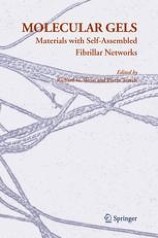
Molecular Gels : Materials with Self-Assembled Fibrillar Networks
Molecular gels and fibrillar networks – a comprehensive guide to experiment and theory Molecular Gels: Materials with Self-Assembled Fibrillar Networks provides a comprehensive treatise on gelators, especially low molecular-mass gelators (LMOGs), and the properties of their gels. The structures and modes of formation of the self-assembled fibrillar networks (SAFINs) that immobilize the liquid components of the gels are discussed experimentally and theoretically. The spectroscopic, rheological, and structural features of the different classes of LMOGs are also presented. Many examples of the application of the principal analytical techniques for investigation of molecular gels (including SANS, SAXS, WAXS, UV-vis absorption, fluorescence and CD spectroscopies, scanning electron, transmission electron and optical microscopies, and molecular modeling) are presented didactically and in-depth, as are several of the theories of the stages of aggregation of individual LMOG molecules leading to SAFINs. Several actual and potential applications of molecular gels in disparate fields (from silicate replication of nanostructures to art conservation) are described. Special emphasis is placed on perspectives for future developments.

Mitochondria : The Dynamic Organelle
This volume discusses the death pathways that are initiated by the mitochondria. Novel therapeutic interventions are proposed which interfere with the death cascades, thereby rescuing the cell from mitochondria-linked apoptosis and necrotic oncosis.

Microbial Sulfur Metabolism
In nature, sulfur occurs in many different oxidation states and is one of the most versatile elements in life. It is an integral part of many important cell constituents, such as the amino acids cysteine and methionine, and many sulfur compounds serve as the basis for energy-related processes in prokaryotes. In recent years, new methods have been applied to study the biochemistry and molecular biology of reactions of the global sulfur cycle, the microorganisms involved and their physiology, metabolism and ecology. These activities have uncovered fascinating new insights for the understanding of aerobic and anaerobic sulfur metabolism.

Microbial nutraceuticals : Products and processes
Discussion of the recent advances in the application of microbial nutraceuticals and their implementation in the health, food, and agriculture sectors. The book begins with an overview of microbial nutraceuticals before moving on to discussions of more specific topics, including microbial cell factories for the production of essential amino acids, microbial production of dietary short-chain fatty acids, and microbial sources for bioactive peptides conferring health benefits.

Introduction to food chemistry
Bridges this gap in the relevant literature, as it employs the latest pedagogical theories in textbook writing to present the subject to students with broad range of cognitive skills. This book presents specific learning objectives for each chapter and is self-contained so students will not need to search for essential information outside the textbook. This new edition has been expanded to include chapters on sweeteners, glass transition, amino acids, proteins for major food commodities and food additives. All of the original chapters have been updated and expanded to include new research and technologies.

Inherited inborn errors in amino acids metabolism
Proteins are the most abundant organic molecules in animals, playing important roles in all aspects of cell structure and function. Proteins are biopolymers of acids, so named because the amino group is bonded to the carbon atom, next to the carbonyl group.

Information Geometry : Near Randomness and Near Independence
This volume will be useful to practising scientists and students working in the application of statistical models to real materials or to processes with perturbations of a Poisson process, a uniform process, or a state of independence for a bivariate process. We use information geometry to provide a common differential geometric framework for a wide range of illustrative applications including amino acid sequence spacings in protein chains, cryptology studies, clustering of communications and galaxies, cosmological voids, coupled spatial statistics in stochastic fibre networks and stochastic porous media, quantum chaology. Introduction sections are provided to mathematical statistics, differential geometry and the information geometry of spaces of probability density functions.

Industrial enzymes : Structure, function and applications
Man's use of enzymes dates back to the earliest times of civilization. Important human activities such as the production of certain types of foods and beverages, and the tanning of hides and skins to produce leather for garments, serendipitously took advantage of enzyme activities. Important advances in our understanding of the nature of enzymes and their action were made in the late 19th and early 20th centuries, seeding the explosive expansion from the 1950s and 60s onward to the present billion dollar enzyme industry. Recent developments in the fields of genetic engineering and protein chemistry are bringing ever more powerful means of analysis to bear on the study of enzyme structure and function that will undoubtedly lead to the rational modification of enzymes to match specific requirements as well as the design of new enzymes with novel properties.

Immunogenetics of Autoimmune Disease
Utoimmunity is the downstream outcome of a rather extensive and coordinated series of events that include loss of self-tolerance, peripheral lymphocyte Aactivation, disruption of the blood-systems barriers, cellular infiltration into the target organs and local inflammation. Cytokines, adhesion molecules, growth factors, antibodies, and other molecules induce and regulate critical cell functions that perpetuate inflammation, leading to tissue injury and clinical phenotype. The nature and intensity of this response as well as the physiological ability to restore homeostasis are to a large extent conditioned by the unique amino acid sequences that define allelic variants on each of the numerous participating mol ecules. Therefore, the coding genes in their germline configuration play a primary role in determining who is at risk for developing such disorders, how the disease progresses, and how someone responds to therapy. Although genetic components in these diseases are clearly present, the lack of obvious and homogeneous modes of transmission has slowed progress by prevent ing the full exploitation of classical genetic epidemiologic techniques. Furthermore, autoimmune diseases are characterized by modest disease risk heritability and m- tifaceted interactions with environmental influences. Yet, several recent discoveries have dramatically changed our ability to examine genetic variation as it relates to human disease. In addition to the development of large-scale laboratory methods and tools to efficiently recognize and catalog DNA diversity, over the past few years there has been real progress in the application of new analytical and data-manage ment approaches

Hyaluronic Acid
Hyaluronic acid, also known as hyaluronan, is a clear, gooey substance that is naturally produced by your body, Hyaluronic acid is generally very safe to use, with few reported side effects. The largest amounts of it are found in your skin, connective tissue and eyes, and Hyaluronic acid has a variety of uses. Many people take it as a supplement, but it’s also used in topical serums, eye drops and injections, and the almost indications are Promotes Healthier, More Supple Skin, accelerate wound healing, Relieve Joint Pain by Keeping Bones Well Lubricated, reduce symptoms of acid reflux, Relieve Dry Eye and Discomfort, Preserve Bone Strength and Prevent Bladder Pain.

Homocysteine
Homocysteine is a non-proteinogenic α-amino acid. It is a homologue of the amino acid cysteine, differing by an additional methylene bridge (-CH2-). It is biosynthesized from methionine by the removal of its terminal methyl group. In the body, Homocysteine (HCY) can be recycled into methionine or converted into cysteine with the aid of certain B-vitamins. A high level of Homocysteine in the blood (hyperhomocysteinemia) makes a person more prone to endothelial cell injury, which leads to inflammation in the blood vessels, which in turn may lead to atherogenesis, which can result in ischemic injury. Therefore, hyperhomocysteinemia is a possible risk factor for coronary artery disease (CAD). Coronary artery disease occurs when an atherosclerotic plaque blocks blood flow to the coronary arteries, which supply the heart with oxygenated blood.

High value fermentation products ; Vol.1 : Human health
This book describes relevant aspects of industrial-scale fermentation, an expanding area of activity, which already generates commercial values of over one third of a trillion US dollars annually, and which will most likely radically change the way we produce chemicals in the long-term future. From biofuels and bulk amino acids to monoclonal antibodies and stem cells, they all rely on mass suspension cultivation of cells in stirred bioreactors, which is the most widely used and versatile way to produce.

High performance computing and communications ; Vol.3726 ; 1st International Conference, HPCC 2005, Sorrento, Italy, September, 21-23, 2005, Proceedings
Constitutes the refereed proceedings of the First International Conference on High-Performance Computing and Communications, HPCC 2005, held in Sorrento, Italy. This book includes 76 revised full papers and 44 revised short papers. These papers are organized in topical sections on network protocols, routing, and algorithms; and others.
