



الصفحة 1
الصفحة 1

Modern architecture and climate design before air conditioning
explores how leading architects of the twentieth century incorporated climate-mediating strategies into their designs, and shows how regional approaches to climate adaptability were essential to the development of modern architecture. Focusing on the period surrounding World War II'before fossil-fuel powered air-conditioning became widely available'Daniel Barber brings to light a vibrant and dynamic architectural discussion involving design, materials, and shading systems as means of interior climate control. He looks at projects by well-known architects such as Richard Neutra, Le Corbusier, Lúcio Costa, Mies van der Rohe, and Skidmore, Owings, and Merrill, and the work of climate-focused architects such as MMM Roberto, Olgyay and Olgyay, and Cliff May. Drawing on the editorial projects of James Marston Fitch, Elizabeth Gordon, and others, he demonstrates how images and diagrams produced by architects helped conceptualize climate knowledge, alongside the work of meteorologists, physicists, engineers, and social scientists. Barber describes how this novel type of environmental media catalyzed new ways of thinking about climate and architectural design.

Modeling Solar Radiation at the Earth’s Surface : Recent Advances
Solar radiation data is important for a wide range of applications, e.g. in engineering, agriculture, health sector, and in many fields of the natural sciences. A few examples showing the diversity of applications may include: architecture and building design e.g. air conditioning and cooling systems; solar heating system design and use; solar power generation; weather and climate prediction models; evaporation and irrigation; calculation of water requirements for crops; monitoring plant growth and disease control; skin cancer research.

Heating, cooling, lighting : Sustainable design methods for architects
Helps architects minimize mechanical systems and energy usage over the life of the building by siting, building design, and landscaping to maximize natural heating, cooling, and lighting. This new fourth edition includes new information on integrated design strategies and designing for the Tropics. Resources include helpful case studies, checklists, diagrams, and a companion website featuring additional cases, an image bank, and instructor materials. Designing buildings that require less energy to heat, cool, and light means allowing the natural energy of the sun and wind to reduce the burden on the mechanical and electrical systems. Basic design decisions regarding size, orientation, and form have a great impact on the sustainability, cost, and comfort of a building. Heating, Cooling, and Lighting provides detailed guidance for each phase of a design project.

Fundamentals of building performance simulation
Pares the theory and practice of a multi-disciplinary field to the essentials for classroom learning and real-world applications. Authored by a veteran educator and researcher, this textbook equips graduate students and emerging and established professionals in engineering and architecture to predict and optimize buildings’ energy use. It employs an innovative pedagogical approach, introducing new concepts and skills through previously mastered ones and deepening understanding of familiar themes by means of new material. Covering topics from indoor airflow to the effects of the weather, the book’s 19 chapters empower learners to: Understand the models and assumptions underlying popular BPS tools ; Compare models, simulations, and modelling tools and make appropriate selections ; Recognize the effects of modelling choices and input data on simulation predictions

Data-driven BIM for Energy Efficient Building Design
Conceptualises the scale and spectrum of Building Information Modelling (BIM) and Artificial Intelligence (AI) approaches in energy efficient building design and to develop its functional solutions with a focus on four crucial aspects of building envelop, building layout, occupant behaviour and heating, ventilation and air-conditioning (HVAC) systems. Drawn from theoretical development on the sustainability, informatics and optimisation paradigms in built environment, the energy efficient building design will be marked through the power of data and BIM-intelligent agents during the design phase.

Construction and Building Automation : From Concepts to Implementation
Intended to be used as a textbook in undergraduate civil engineering and construction courses to introduce cutting edge mechanical, electrical and computer science topics that are needed for civil and construction engineers to collaborate in inter-disciplinary automation projects. Introduces hardware and software needed for automating engineering tasks ; Presents examples of applications in the control of building systems ; Illustrates of the use of automation for improving construction processes ; Provides a lucid introduction to advanced computing concepts, machine learning, artificial intelligence, and control algorithms to construction and engineering students.

Chudley and Greeno's building construction handbook
The principles and processes of construction are explained with the concepts of design included where appropriate. Extensive coverage of building construction practice, techniques and regulations representing both traditional procedures and modern developments are included to provide the most comprehensive and easy to understand guide to building construction.
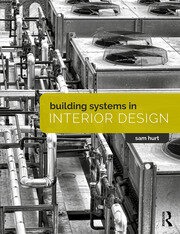
Building systems in interior design
Takes an entirely new approach to teaching this essential topic for Architects, Designers and Building Engineers. Written to prepare students for the real world and packed with practical examples, the book will foster an understanding of specific issues that are critical to those features of technical systems that most directly affect design. The book stresses the ever-present nature of these systems: they are everywhere, all the time. Taking a design oriented view, it outlines what can and cannot be done, and provides the student with the know-how and confidence to defend and promote their design intent when working with other industry professionals.
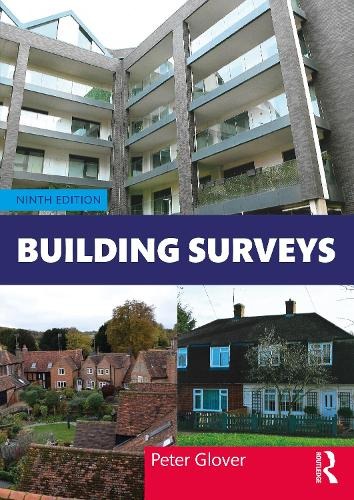
Building Surveys
A trusted guide for both students and professionals for nearly 40 years, evolving to address the challenges and responsibilities of the building surveying role. It covers everything needed for initial inspections such as equipment, know-how and procedures to writing an accurate report. This updated edition features new material on modern methods of construction, new sustainable materials, new surveying technologies, and industry developments in the wake of the Grenfell Fire. Essential reading for building construction students, professional surveyors, and others who may be required to inspect and report on buildings
Building Services Design for Energy Efficient Buildings
"The following issues are addressed: background issues on climate change, whole-life performance and design collaboration / generic strategies for energy efficient, low-carbon design / health and wellbeing and post occupancy evaluation / building ventilation / air conditioning and HVAC system selection / thermal energy generation and distribution systems / low-energy approaches for thermal control / electrical systems, data collection, controls and monitoring / building thermal load assessment / building electric power load assessment / space planning and design integration with other disciplines."
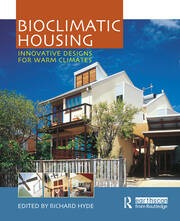
Bioclimatic housing : Innovative designs for warm climates
In the search for sustainable architecture, there is growing interest in the relationship between nature and design. In this context, Bioclimatic Housing covers creative, vernacular architecture to present both the theory and practice of innovative, low-energy architecture.The book interweaves the themes of social progress, technological fixes and industry transformation within a discussion of global and country trends, climate types, solutions and technologies. this is a truly international and authoritative work, providing an essential primer for building designers, builders, developers and advanced students in architecture and engineering.

A Handbook of Sustainable Building Design and Engineering : An Integrated Approach to Energy, Health and Operational Performance
Equips students with the tools they will need to tackle the challenges of sustainable building design and engineering. The book looks at how to design, engineer and monitor energy efficient buildings, how to adapt buildings to climate change, and how to make buildings healthy, comfortable and secure. New material for this edition includes sections on environmental masterplanning, renewable technologies, retrofitting, passive house design, thermal comfort and indoor air quality. With chapters and case studies from a range of international, interdisciplinary authors, the book is essential reading for students and professionals in building engineering, environmental design, construction and architecture

A commercial tower in Damascus
The project is the Vietnam commercial tower in Damascus. It consists of two basements the first a shelter & tanks & a parking garage. The second ticket sales offices & shipping office & control center & room (generators, air conditioning, and filters) It consists of a ground, first, second and third floor.
